
How to Approach B2B Sales Effectively?

-
B2B sales struggles frequently stem from a fundamental misalignment where companies aggressively pursue lead generation while entirely neglecting demand generation.
-
Demand generation acts as the vital long-term foundation that builds market awareness and nurtures interest, ensuring a brand remains top-of-mind before buyers reach a purchasing decision.
-
Pushing direct lead generation tactics too early onto an audience that does not fully grasp or acknowledge their business problem creates immediate sales friction and yields low conversion rates.
-
Modern B2B buyers distribute their research across numerous touchpoints, and companies that fail to build an early content presence are routinely excluded from RFIs and RFPs.
-
Achieving optimal trade show and sales ROI requires a balanced, farm-not-hunt approach that harmonizes market education with structured, immediate post-event lead follow-ups.
This is the summary based on The FEEL Podcast with Subhanjan Sarkar.
Approach B2B sales effectively — When we talk about how to approach B2B sales effectively, most professionals will agree—it's never as straightforward as pushing leads down a funnel. In fact, many B2B companies struggle not because they lack leads, but because they skip a crucial step in the process: balancing demand generation with lead generation.
Here's the big question: if B2B sales conversion rates remain low, could it be that the way we're approaching sales is fundamentally misaligned?
The Missing Link: Demand vs Lead Generation
One of the most overlooked aspects of B2B sales is the imbalance between demand generation and lead generation.
- Demand generation is about building long-term awareness, nurturing interest, and making sure your brand is top of mind when buyers finally recognize their problem.
- Lead generation focuses on capturing intent once buyers already show interest and want to learn more about your solution.
Too many brands rush into lead generation because it's measurable and easier to justify to stakeholders. But here's the trap: when you skip demand-gen, you're planting seeds on barren soil. No matter how hard you push leads, conversions will remain stubbornly low.
Timing is Everything
To approach B2B sales effectively, the key is knowing when to focus on demand-gen and when to switch to lead-gen. If your audience doesn't yet see their problem or understand its significance, pushing sales conversations too early will only create resistance.
On the other hand, when buyers are already aware and actively seeking solutions, that's the perfect moment for lead-gen to take over. The handoff between marketing and sales must be seamless—otherwise, opportunities slip away.
Content & Channels: The Hidden Drivers
Another overlooked piece is content and channel strategy. Buyers today have countless touchpoints—social media, websites, webinars, or even exhibition booths. If your content doesn't match where they are in their journey, engagement won't stick.
Think about it: when B2B buyers send RFIs or RFPs, they usually go to the brand already on their radar. If your company only focuses on lead-gen without building presence earlier, you'll lose before the conversation even starts.
This is why effective B2B sales strategy feels more like farming than hunting. You nurture the soil (demand-gen), then sow the seeds (lead-gen). That's how trust and engagement are built.
So, What's the Right Approach?
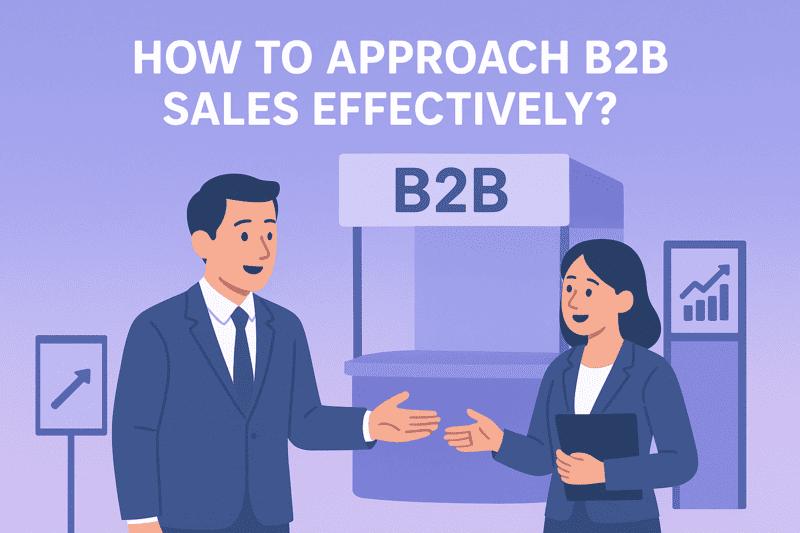
The real question isn't whether demand-gen or lead-gen is more important. The real challenge is: how do you orchestrate both so they work together seamlessly?
This is exactly what we uncovered in The FEEL: Future of Event Experience & Learning podcast with Subhanjan Sarkar. His insights from years in B2B sales reveal why so many companies struggle—and how a subtle shift in approach can transform results.
And when it comes to exhibitions, this balance between demand-gen and lead-gen becomes even more critical. Collecting names at the booth is only half the battle—the real success comes from following up booth leads effectively.
Curious about the strategies that actually work in today's B2B landscape?
Don't just read about it—watch the full conversation and uncover the missing pieces yourself.
Watch the conversation on The Feel Podcast.
Need personalized guidance on approach B2B sales effectively?
Follow Mike Gunawan on Linkedin.

Frequently Asked Questions
Q1: What is the difference between demand generation and lead generation when trying to approach B2B sales effectively?The difference lies in where the prospect is positioned within their buying journey. Demand generation focuses on long-term market education, building brand awareness, and nurturing interest so that your company is top-of-mind when a buyer eventually recognizes a business challenge. Lead generation, conversely, is a short-term tactic designed to capture contact data and intent once a prospect is already actively seeking a specific solution.
Q2: Why do B2B companies experience low sales conversion rates when they prioritize lead generation over demand generation?Conversion rates remain stubbornly low because focusing strictly on lead generation is equivalent to planting seeds on barren soil. When brands skip the demand-generation phase to satisfy stakeholder demands for quick, measurable data, they try to force sales conversations with an audience that does not yet understand their problem, resulting in immediate friction and cold, unresponsive pipelines.
Q3: How does a brand's channel and content strategy impact its inclusion in corporate RFIs or RFPs?A brand's content and channel strategy directly determines its inclusion in RFIs and RFPs because modern corporate buyers complete the majority of their research independently across social media, websites, and webinars before ever contacting a vendor. If your organization fails to build a trusted informational presence early through multi-channel demand generation, you will remain completely off the buyer's radar and lose the deal before the formal bidding process even begins.
Q4: When is the ideal moment to transition a B2B marketing strategy from demand-gen to active lead-gen?The ideal moment to transition occurs when your target audience moves from passive awareness of a problem to actively seeking solutions for it. A seamless handof between marketing-driven demand generation and sales-focused lead generation ensures that your team avoids pushing sales messages prematurely while capitalizing instantly on high-intent buyer behavior on the exhibition floor or digital channels.
Q5: How do demand generation and lead generation principles apply directly to trade show execution and booth lead follow-up?At a trade show, the exhibition booth functions as a dual-purpose environment where interactive displays and expert content drive immediate demand generation by highlighting unrecognized industry challenges. Success is only achieved, however, when this initial curiosity is paired with a disciplined, post-event lead generation follow-up system that swiftly captures visitor intent and transitions casual conversations into structured, long-term commercial relationships.
Main Article

Related Articles
Banner

Write a comment