
The Art of Storytelling: Shoe Design
Author: Michael Arief Gunawan
Created: Sunday, 21 Jun 2020
Updated: -
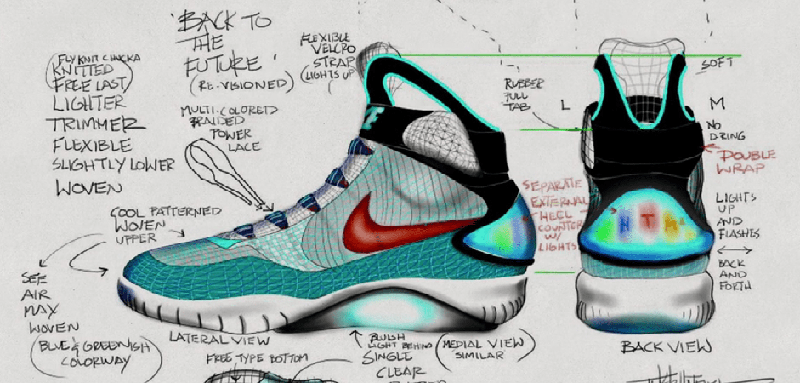
All of us, especially sports lovers must have seen or worn some really nicely designed Nike shoes. Like the legendary Air Jordans that not only redefine the shoes industry, but also creating the sneakershead culture around the world. Ever wonder the artistry that goes into designing them?
Introducing you Tinker Hatfield, the lead designer of Nike, who was in charge of Air Jordans. As his name, he tinkers through and shares his insightful creative process on how he came up with those designs. And no, they are not simply beautiful designs, they are filled with stories of what inspires him, his views on art & design, and what makes a great product.
He said ''A basic design is always functional, but a great one will say something." I wrote down some other magical quotes, enjoy!
"I think there's art involved in design. But to me, I don't think of it as art. My perception of art is that it's really the ultimate self-expression from a creative individual. For me as a designer, it's not the ultimate goal to become self-expressive. The end goal is to solve a problem for someone else, and hopefully it looks great to someone else, and it's cool to someone else." (from 09:45~)
"This is how design works for me. I started drawing (outer) space. I was really just trying to reflect my mood at the time. I started to have a little bit of fun with the actual planets, and put faces on them, I put George Jetsen. You know, I have a Volkswagen bus, Porche Spedster, peace symbolks, and fingers. I don't even know why I am doing this, I'm just doing it. I drew a cheetah foot that's actually embedded inside of a sneaker. And I'm kind of moving through from that first page of space.
Now I'm getting more specific about innovation in general. I remember somebody telling me it'd be great if Nike could do shoes that were invisible and I drew the Invisible Man. This is just all stuff that's coming to my head, and I'm just sketching. All of this stuff ended up in a drawing of a shoe. A stream of consciousness can lead you some place. You might not even know where you're headed, but somehow you end up somewhere, and here I ended up with a shoe." (from 10:20~)

"[Tinker Hatfield:] Nike had grown up very fast. We were leading the industry, focused on basketball and running. Reebok came along, there was this aerobics craze. Reebok invented aerobics shoes. It was a whole new thing. They had the right product at the right time, and they actually passed Nike in size. So there was a bit of panic and Nike was laying people off right and left. They were also thinking that they needed to upgrade their design group. So I was invited to be a part of a 24-hour design contest.
[Mark Parker, CEO of Nike:] Tinker wasn't a shoe designer at the time. He was designing trade shows and displays and retail. [Tinker:] I worked the whole 24 hours. I didn't go to bed that night. Most of the other designers, I think, just tried to work off of what they were already doing, and it wasn't really anything very unique in terms of storytelling. I came back in with a big presentation, sort of having fun with the fact that this was the perfect shoe to ride a motor scooter in. And then get out and then jog around and walk around a little bit. Two days after the competition, I was...I wasn't even asked, I was told that I was now a footwear designer for Nike. In a very short period of time, I pretty much became the lead designer." (from 11:28~)
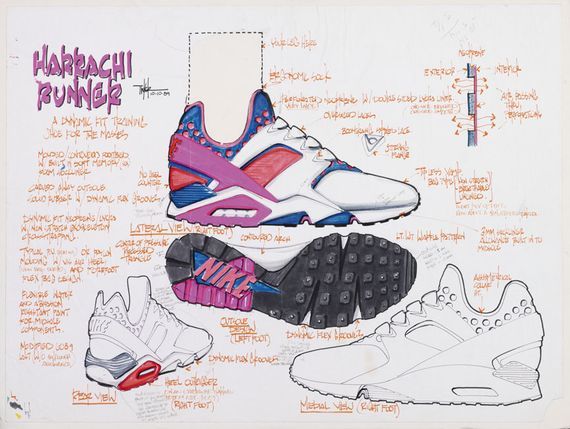
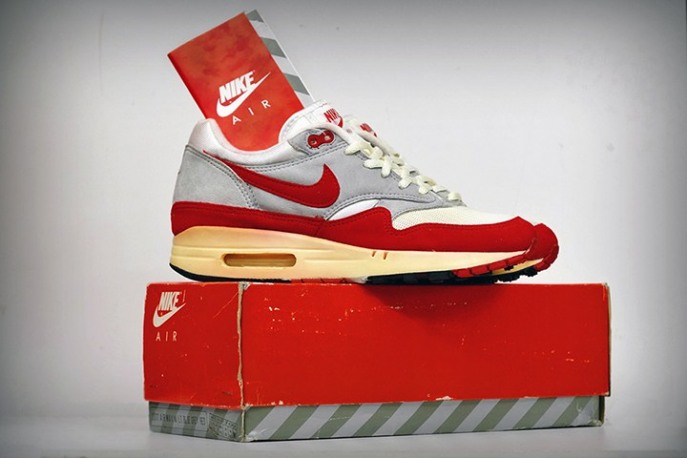
"One of my very first projects was the Air Max. I felt like this was an opportunity to think way differently. Nike was encapsulating gas inside a urethane airbag for a cushioning component. I thought. 'Let's make the bag a little bit wider, make sure it's stable, but then let's remove part of the midsole, so we actually see it. [Michael Hainey, Executive Director of Editorial Esquire Magazine] The closest you'd come to anything before that was, I remember as a kid, seeing Elton John having high-heeled shoes with a goldfish inside of them. Right? I mean, it was simply, like, very...punk even.'
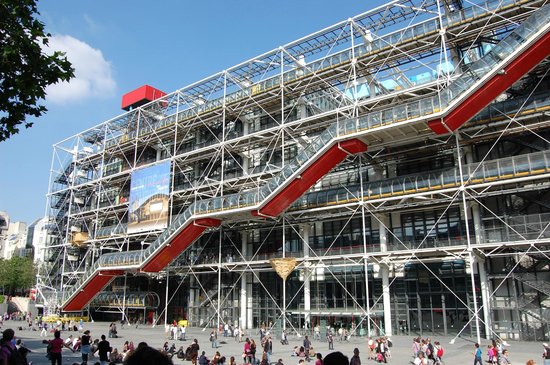
[Tinker:] I had gone to Paris and seen a very controversial and loved or mostly hated building, The Georgeous Pompidou Center, designed by Renzo Piano. It was a building with all of the inside mechanics on the outside of the building. He painted everything in primary colors just to piss off people even more. I was very much inspired by that building, and that's how I ended up exposing these airbags in the Air Max.
After those sketches came out, it was widely discussed that I had pushed it too far. People were trying to get us fired, they were screaming like there was no way in the world that we could ever sell a shoe with an exposed airbag that looked fragile, like it could be punctured. The Air Max One took off. It was an amazing success story for not just Nike, but for all of footwear design. It's built on taking a risk for a good reason, which was to tell a story and also to make a better product." (from 12:53~)
"People struggle with stuff they don't understand, design that's different than whay they're used to. Yet what creates excitement and gets people to pay attention, and may actually lead to some breakthroughs in performance ...is to kind of force the disruptive nature of like, 'Whoa, that's a big idea.' That's what I do, that's my job.' (from 18:50~)

"A basic design is always functional, but a great one will say something. In 1988, Andre Agassi is gonna be the next big American tennis star. I think he was 19 maybe, and I hadn't heard of him. I went to Las Vegas, and I spent some time with him. He had long hair, kind of, basically like a long mullet. He was just very youthful and young, and just not like any tennis player I'd ever worked with. [Mark Parker:] Everything in tennis at that time was kind of the same and boring. [Tinker] It was a new kind of style of tennis, which was basically just get at the baseline and just hit the ball hard as you can.
I really started to explore the fact that this young tennis player did not grow up going to country clubs. He did not grow up wearing white. So I'm like 'Man, this is so unlike tennis.' [Mark:] He (Tinker) didn't only design the shoes which were quiet outrageous, they were kind of hot pink, and the outfit was wild.' [Tinker:] So we drew Andre wearing that denim short with a Lyca under-short. Absolutely meant to be anti-tennis. I coined the phrase 'anti-country club,' because it's not always just about the shoe design. If you have an athlete with the right personality, you can challenge the perception of the entire sport." (from 19:33~)
.jpg)
"Michael Jordan was Nike's big star. He was unhappy with some of his early shoes and was getting close to leaving. Nike leadership and Phil Knight, Nike's CEO, told me I was designing the next Air Jordans. I don't think I understood the gravity of the situation. You know, how important Michael Jordan was to Nike. It was six months behind schedule by the time that it was given to me. So it had to be another hurry up, no sleep for weeks and months... traveling back and forth to Asia with all the developers and getting a prototype in. We were going to have a big meeting with Michael Jordan... Phil Knight, myself, head of Sports Marketing, both of Michael's parents.
Michael didn't show up for four hours. He was actually on the golf course with some other people. And they had convinced him he should just jump ship. But ultimately Michael shows up, and he was kind of in a bad mood, came in and just said, 'Well, what do you got?' Phil Knight took over from that point and just said, 'Well, thanks for coming. I mean, we've been waiting a while, but we hope it's worth it. Take it away, Tinker!'
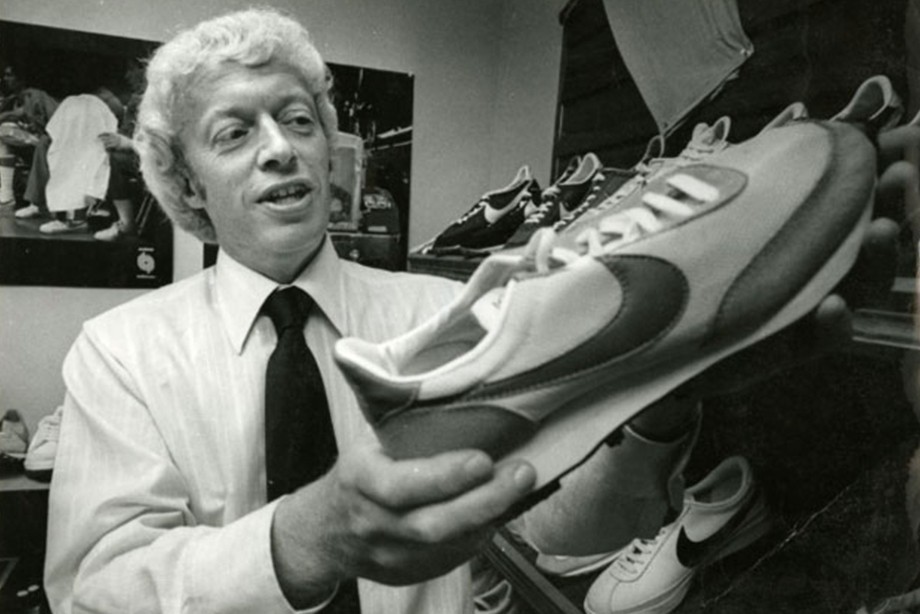
[Michael Jordan:] 'I'm more of a ... You've got to actually show me the shoe, you know? He storytells and then he draws and then, you know, he shows me all the pictures of it, and I still can't visualize it until you put it in my hand.' [Tinker:] And I pull the shroud off the shoe, and there it was right in front of him. Phil Knight's sitting on pins and needles, his parents are over there. He looks at the shoe, looks at me and he goes, 'Tell me more.'
And I said 'Remember when we talked about how you wanted a midcut, and no one had ever done a midcut height for a basketball shoe? It's just what you wanted. Remember when we talked about how the shoe should already feel like they're broken-in and perfect to wear when they're brand-new right out of the box? This shoe is made out of really soft leather so it's reinforced in the right places, but when you put this on, it's gonna be like glove leather, and it's just gonna fit great. And then remember picking some new materials that no one had ever seen on a basketball shoe before? And so that elephant print.

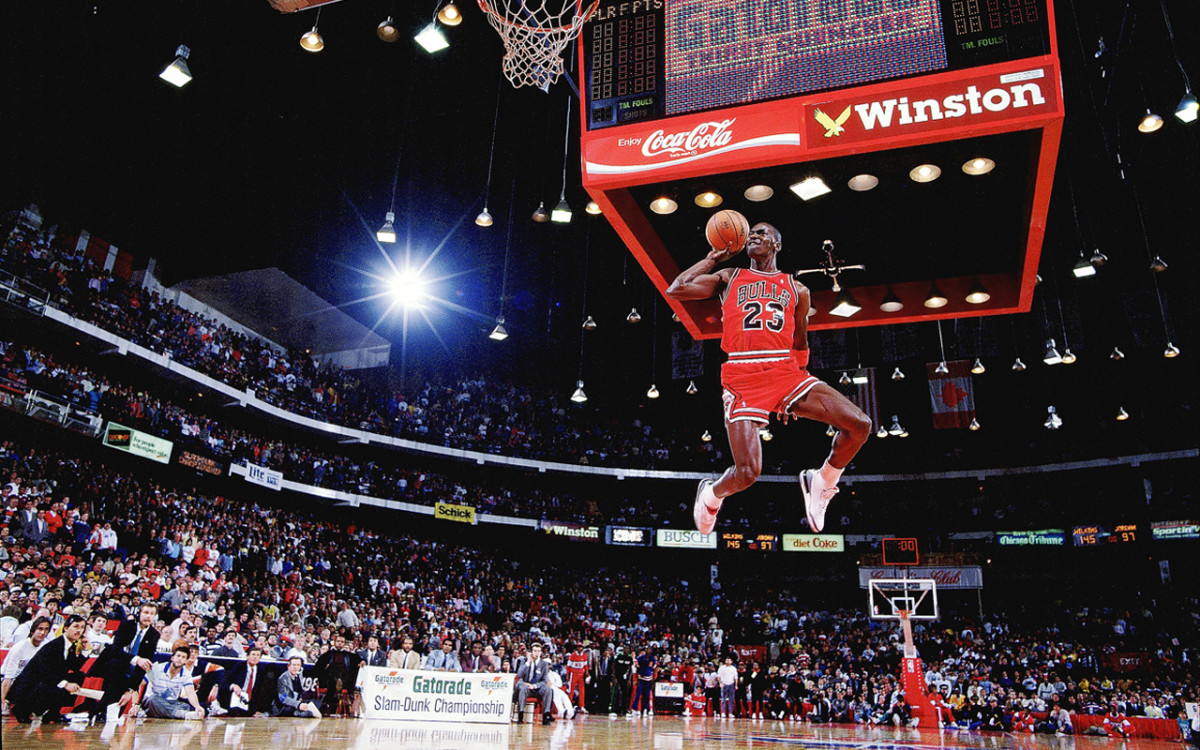
[Michael Jordan:] When he told me about the leather itself and the elephant print, things of that nature, you know he kinda won me over.' [Tinker:] 'But wait! There's more!' And I had, without him even knowing it, I had designed an entire collection of apparel to go with that shoe. And the models were ready to come in. It was like the exclamation point at the end of the sentence. He (Jordan} started off this next season in this Air Jordan 3. That was the year that he won the slam dunk contest. There's that famous shot of him taking off from the free throw line wearing those Air Jordan 3s. That was a rush. I think to this day, Phil Knight actually really thinks I helped save Nike." (from 21:39~)
"[Film Director:] The 15 was really the first Jordan that had negative reviews. Was this shoe somehow a turning point for you? [Tinker:] So I think this was all about maybe... designing a shoe that maybe it wasn't gonna be loved by everyone, but it certainly made a statement. And there were a lot of things going on in my life at that time. And I was very, very saddened by the passing of Bill Bowerman (co-founder of Nike). My father passed away three years before. And Michael's father had passed away a few years before, and... you know, a few years back.... Just a lot. Yeah, it was a lot going on, and I was ready to be done.
I was trying to extricate myself from designing any more Air Jordans. I was tired. I was kind of worn out, but also I felt like I'd done enough. And Bill Bowerman passing away was huge. Without the story and the meaning, you can look at performance as a driving force, but these shoes are more than that to me and, I think, to millions of people. They have meaning and it might be different for different people, but this one (Air Jordan 15) and all the other ones we've just talked about have... There's a story with each one. So it's not just scribbling on a piece of paper and coming up with a design, it's a lot of effort that goes into trying to be meaningful." (from 31:15~)
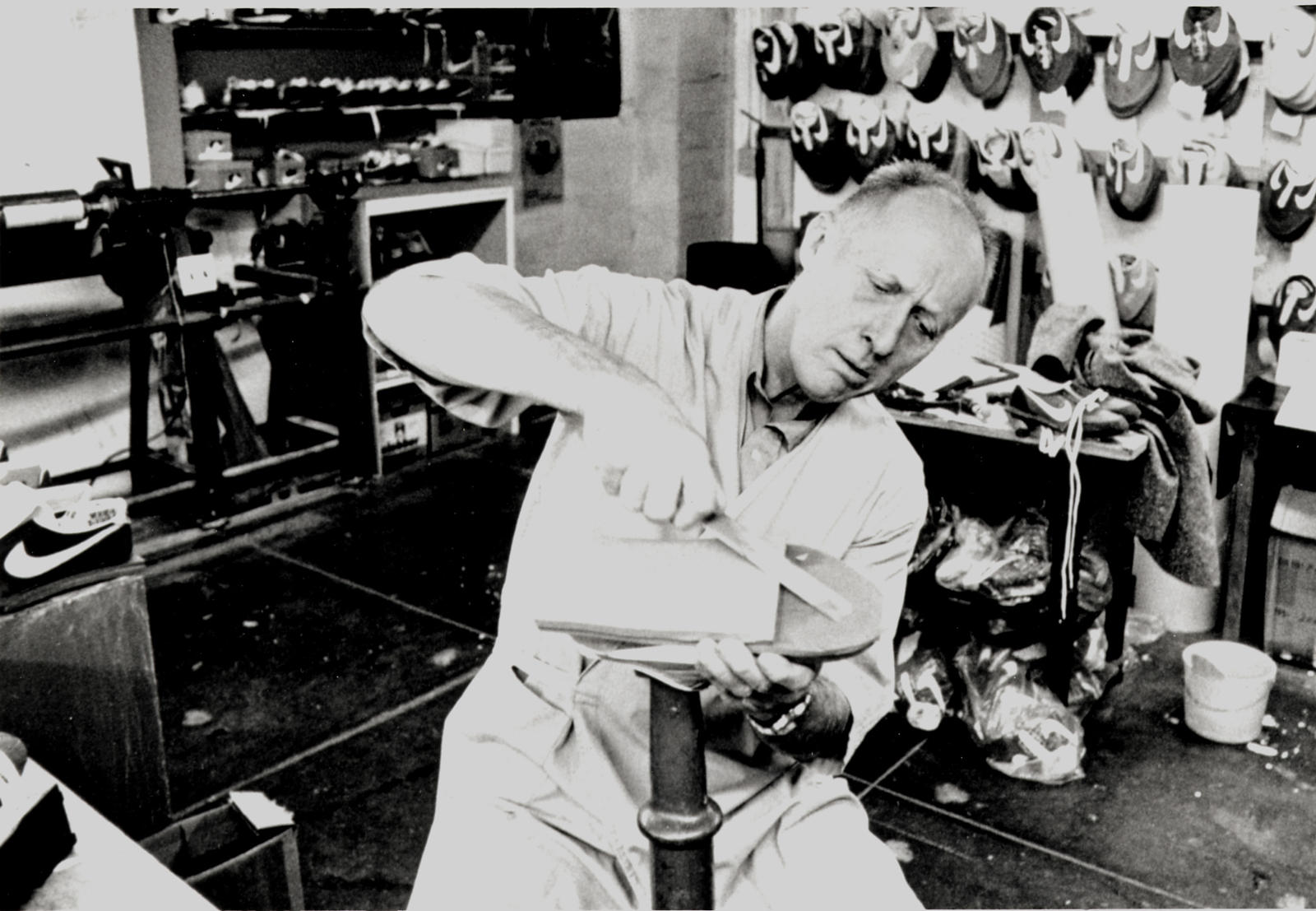
"I think that when you're younger, you're just trying to, I think, win. Reaching for glory. I like to go and coach young people because I can pass along what I know. On the surface, you're trying to help kids go higher in the pole valut. But the real purpose it to help them overcome fear and do something they've never done before and to develop confidence in themselves. Even though I'm not finished, I'd reached this point where I could continue to be creative and design products, but the next step is to actually be a mentor and a teacher, and maybe inspire people as well. " (from 33:40~)
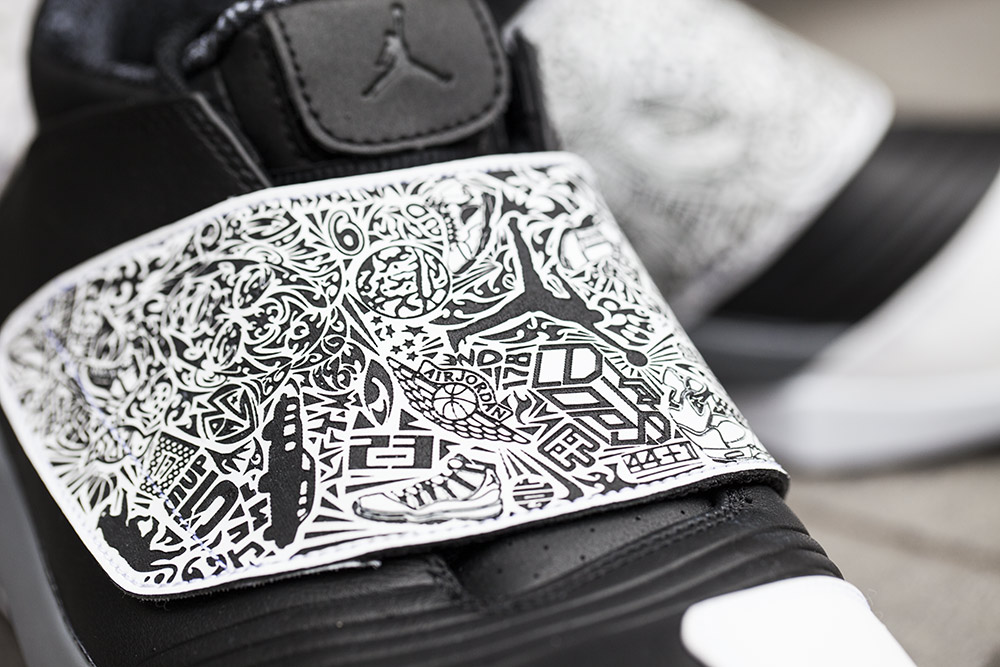
"In 2005, I came out of Jordan retirement and designed the Jordan 20. [Michael Jordan:] I asked him to come back because 20 was somewhat of a special shoe. [Tinker:] I really wanted to, for the first time, talk to Michael Jordan about his life over these past 20 years. He absolutely did not want to do that. I said: 'C'mon man!' For the first time, let's just look back a little bit and that will help us go forward, too. It became less about me asking questions... and just more about him telling me, like a stream of consciousness, stuff that was coming into his head. And I'm like taking notes like crazy.
I started to realize that I could start designing a symbol that would represent each and every one of those stories. There are thing in here that I don't think he ever told anybody. That became the heart of this shoe. Some of them are emotional. And some of them are just funny. It's really a kind of an avant-garde approach to a basketball shoe design. To me, it's part of what makes it special. It's really, really out there. [Michael Jordan:] For him to come up with that concept and then have the consumers connect. If I had to pick the best storytelling product we've ever done, it was probably the 20s.[Tinker:] Yeah, I think it's one of my favourite shoes that I've ever worked on, partly because of that wonderful experience of finally getting Michael to open up and give me stories." (from 35:00~)
"I think if you just stay in your studio and try and dream up new ideas, there's not a good foundation for your idea. Just get out there and experience life. That just gives you the library in your head... to then translate that into unique, new design work. There are many designers out there that are really great at refining and interpreting existing stuff and moving the needle just a little bit. And there's a fine art to that, not overdoing it.
For me though, my job as a provocateur... that's all about thinking further out into the future. You have to look at the landscape of the world and go, 'Okay, I'm going to solve some problems. I'm gonna add to some design features, sort of mix it all together, take a few risks, make a few assumptions and just blend it all together. That job doesn't go without its pitfalls. But if people don't either love or hate your work, you just haven't done all that much." (from 38:45~)
Enjoying this kind of contents? At LiveLife, people who enjoy creative activity can gather, learn, and collaborate for a great experience. If are interested in sharing your artwork, experience, or even attending interesting events, sign up here. Cya!
LiveLife - Connecting People with Activities

Banner

Write a comment