
Trade show Goals: The Secret to Exhibiting with Impact
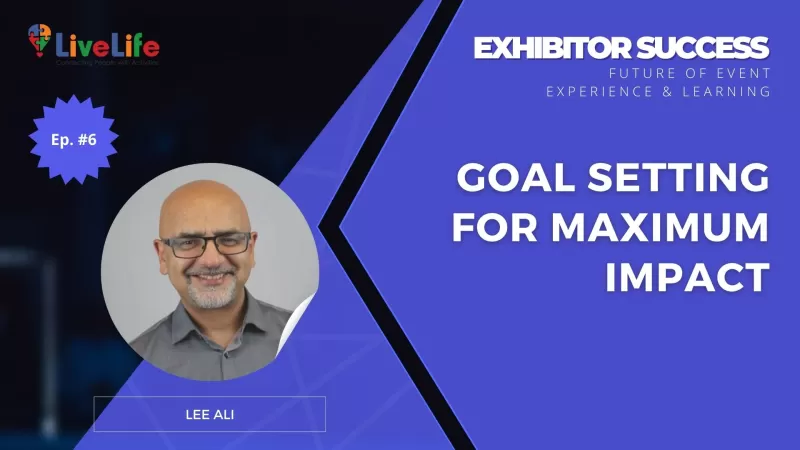
This is the summary based on The FEEL podcast with Lee Ali.
Why trade show goals matter more than you think? When it comes to exhibitions, most companies jump straight into booth design, giveaways, or flashy presentations.
But here's the hard truth: without clear trade show goals, all of that effort risks becoming just another "nice to have" expense.
During The FEEL: Future of Event Experience & Learning podcast, Lee Ali emphasized that too many exhibitors skip the "why." Instead, responsibilities are handed down from one department to another—marketing, sales, sometimes even a personal assistant—without clarity.
The result? Repeating the same tactics year after year, without measuring whether they truly work.
As Lee put it: "You don’t know what you don’t know. And sometimes what you do know isn’t the right thing."
So, the real question becomes: how do you set trade show goals that actually move the needle?
Trade show Goals That Align with Business Impact
The first step is alignment. Your event team—executives, sales, marketing, and operations—must come together to define the business case. Ask yourself:
- Are we here to generate qualified leads?
- Is brand awareness through exhibitions our top priority?
- Do we want to build a stronger sales pipeline from events?
This conversation ensures your exhibition objectives support measurable event outcomes. It also makes it much easier to secure budget approval, since leadership will see the link between event marketing goals and business ROI.
Examples of Trade show Goals for Exhibitors
If you're unsure where to begin, here are some practical starting points:
- Lead generation: Capture a specific number of qualified leads during the event.
- Brand awareness: Increase booth traffic and social media mentions.
- Accelerate Sales: Shorten the sales cycle by scheduling on-site demos or meetings.
- Thought Leadership: Position your brand as an industry authority through speaking slots or panel discussions.
Each of these can be tied back to booth performance metrics, making event success measurement more precise.
Setting SMART Trade show Goals
Random targets like "collect as many leads as possible" rarely lead to meaningful outcomes. Instead, use the SMART framework:
- Specific: Define exactly what you want (e.g., 200 qualified leads).
- Measurable: Track KPIs like engagement, booth visits, or scheduled demos.
- Achievable: Make sure your goal matches your resources.
- Relevant: Tradeshow goals are aligned with business goals.
- Time-bound: Set time when to achieve goals.
By setting SMART trade show goals, you create a roadmap that your entire team can follow—and measure.
Aligning Trade show Goals with Business Objectives
Here's where most companies miss the mark: they don't connect trade show goals with their business goals. For example, if the business is focused on expanding into new regions, your event strategy planning should target attendees from those markets.
Aligning these priorities ensures your tradeshow strategy isn't just about showing up—it's about proving the business case for exhibiting.
Measuring Success of Trade show Goals
So, how do you know if your exhibition booth design strategy worked? Tracking trade show KPIs and exhibition ROI is key. Common ways include:
- Lead generation at tradeshows (number and quality).
- Event team alignment (did sales, marketing, and ops work seamlessly?).
- Engagement & conversion (surveys, follow-up engagement, or scheduled meetings).
- Sales pipeline from events (potential revenue from leads?).
By monitoring these booth performance metrics, you can evaluate whether your event generated real ROI—or simply kept you busy.
Conclusion: Make Trade show Goals Your Superpower
Exhibiting without a strategy is like driving blindfolded. By clearly defining your trade show goals, aligning them with business objectives, and measuring success, you transform exhibitions from cost centers into growth engines.
The next time you're planning an event, ask yourself: are you chasing activity, or building outcomes?
Watch the conversation on The Feel Podcast.
Need personalized guidance on trade show goals?
Follow Mike Gunawan on Linkedin

FAQ: Trade show Goals
Q1: What are common trade show goals for exhibitors?The most common trade show goals include lead generation, building brand awareness, launching new products, strengthening customer relationships, and expanding into new markets. Each of these goals can be tracked using trade show KPIs and measurable event outcomes.
Q2: How to set trade show goals effectively?Start by aligning your event strategy planning with business objectives. Use the SMART framework—Specific, Measurable, Achievable, Relevant, and Time-bound—to set realistic trade show goals that your team can track and evaluate.
Q3: How do you measure success of trade show goals?Success can be measured through booth performance metrics such as the number of qualified leads, scheduled meetings, brand mentions, and ROI. Post-event sales pipeline growth is also a key indicator of success.
Q4: What are examples of trade show goals for sales and marketing teams?Examples include generating 200 qualified leads, scheduling 50 product demos, increasing brand awareness through social media engagement, or securing 10 new distributor partnerships. These measurable targets make it easier to track progress.
Q5: Why is aligning trade show goals with business objectives important?Without alignment, exhibitions risk becoming just an expense. When goals are connected to business outcomes—like entering new markets or boosting quarterly sales—it's easier to justify the business case for exhibiting and secure leadership buy-in.
Main Article

Related Articles
Banner
Write a comment