
Why B2B Exhibition Leads Follow-Up Often Fails and How to Improve
-
Post-event lead conversion fails not just due to poor execution, but because companies lack clear event goals and rely heavily on deceptive vanity metrics like high booth attendance or social media impressions.
-
Many B2B brands spend millions to attend trade shows purely out of fear of missing out (FOMO), leading to a nebulous approach where no one takes operational accountability for lost opportunities.
-
Implementing a structured follow-up system requires the formulation of SMART goals (Specific, Measurable, Achievable, Relevant, Time-Bound) before setting foot on the exhibition floor.
-
Maximizing event ROI requires strict cross-functional alignment between marketing and sales to define clear ownership, exact tracking timelines, and structured lead prioritization.
-
Pipeline acceleration depends on a disciplined feedback loop and a consistent, steady post-show lead management process rather than sporadic bursts of chaotic, uncoordinated outreach.
This is the summary based on The FEEL Podcast with Subhanjan Sarkar.
Many exhibitors struggle with suboptimal B2B exhibition leads follow-up after booth visits. The reasons are varied: low-quality leads, unclear next steps, undefined responsibility, or a lack of tracking and measurement. But the root cause often lies deeper than just execution—it begins with unclear event goals.
Improving results requires a structured B2B exhibition leads follow-up strategy that aligns objectives with actionable steps and ensures accountability across teams.
Subhanjan Sarkar shared during The FEEL: Future of Event Experience & Learning podcast that exhibitors often chase vanity metrics. High attendee numbers, thousands of LinkedIn impressions, and engagement metrics like likes and comments may look impressive—but how do they translate into real business results?
Defining SMART Goals for Better Leads Follow-Up
The first step to improving B2B exhibition leads follow-up is defining SMART goals:
- Specific: Every event stakeholder must clearly understand the objective.
- Measurable: Define metrics that objectively track progress, not just feelings.
- Achievable: Avoid aiming too high or too low; the goal should be realistic.
- Relevant: Ensure it directly contributes to business outcomes.
- Time-Bound: Establish deadlines to track and evaluate results.
Without SMART goals, follow-up becomes inconsistent and accountability is lost. Subhanjan emphasizes that most events suffer from a nebulous approach: there is rarely a clear “we will not repeat this” accountability.
A clear B2B exhibition leads follow-up plan ensures every lead is tracked and nurtured according to priority.
Why Follow-Up Often Fails
Many B2B brands still treat exhibitions as a “must-attend” due to FOMO—fear of being outshone by competitors. Others assume their mere presence guarantees business outcomes. Without clear objectives, measurable outcomes, and assigned responsibilities, leads simply slip through the cracks.
Even with substantial budgets—sometimes millions—events underperform if post-booth follow-up is neglected. Structured B2B exhibition leads follow-up is necessary to convert booth visits into actionable business opportunities.
How to Improve Your B2B Exhibition Leads Follow-Up
To optimize your B2B exhibition leads follow-up, focus on:
- Aligning marketing and sales on objectives and next steps.
- Assigning clear responsibility for post-event engagement.
- Tracking every lead using measurable metrics and timelines.
- Implementing feedback loops to refine your approach for future exhibitions.
When executed correctly, B2B exhibition leads follow-up transforms your exhibition investment into measurable business impact.
Closing Thoughts
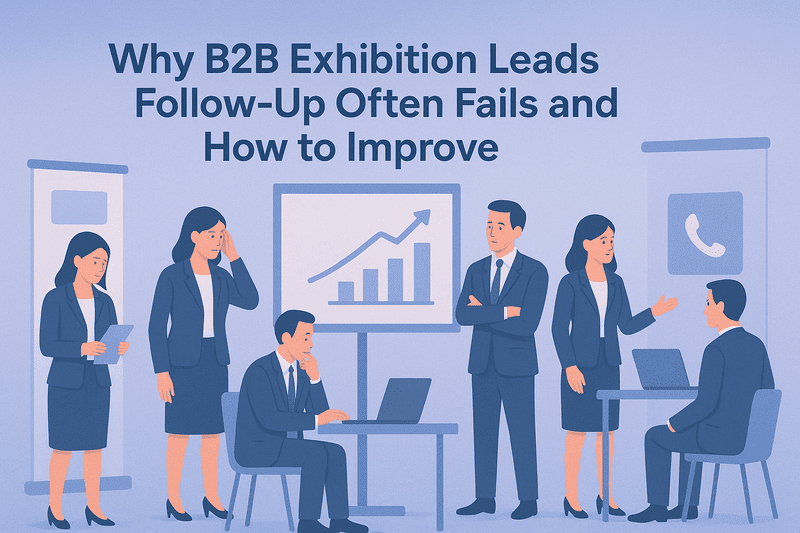
Suboptimal follow-up isn't inevitable. By defining SMART goals, ensuring accountability, and tracking leads meticulously, your exhibition can become a high-performing sales engine.
Improvement starts with one principle: follow up booth leads effectively and consistently, not just intensely.
Exhibitors who adopt B2B exhibition leads follow-up as a structured strategy gain higher conversion rates and better ROI from every event.
Watch the conversation on The Feel Podcast.
Need personalized guidance on B2B exhibition leads follow-up?
Follow Mike Gunawan on Linkedin.

Frequently Asked Questions
Q1: Why do many exhibitors face suboptimal B2B exhibition leads follow-up results after a trade show?Exhibitors face suboptimal follow-up results because they fail to establish clear, strategic event goals from the outset, leading to undefined team responsibilities and poor tracking systems. Additionally, companies often get distracted by vanity metrics like high booth foot traffic or social media impressions, which creates a false sense of success while high-quality leads quietly slip through the cracks.
Q2: How can setting SMART goals systematically improve a company's trade show follow-up strategy?Setting SMART goals improves the follow-up strategy by introducing absolute clarity and objective metrics into the lead-nurturing workflow. By ensuring goals are Specific, Measurable, Achievable, Relevant, and Time-Bound, every event stakeholder understands their exact role, a realistic path to conversion is mapped out, and firm deadlines are established to prevent leads from cooling down.
Q3: What role does corporate FOMO play in the underperformance of expensive B2B trade show investments?Corporate FOMO (Fear of Missing Out) drives companies to invest heavily in exhibitions simply because their competitors are attending, rather than because they have a defined commercial objective. This reactionary approach results in a lack of pre-event planning and uncoordinated cross-functional execution, causing even multi-million dollar event budgets to underperform due to neglected post-booth follow-up systems.
Q4: What practical operational steps should marketing and sales teams take to optimize post-event lead management?To optimize lead management, marketing and sales departments must completely align on post-event objectives and exact next steps before the exhibition begins. Organizations must assign clear personal ownership for individual lead accounts, utilize data-driven metrics to track every outreach milestone, and implement structured feedback loops to continuously refine their communication approach for future trade shows.
Q5: Why is consistent lead tracking and accountability more effective than intense, short-term outreach bursts?Consistent tracking and accountability are more effective because a complex B2B sales pipeline requires steady, predictable nurturing to guide a prospect through their buying journey. Short-lived bursts of high-intensity outreach often lead to generic email blasts that alienate buyers, whereas a structured, ongoing strategy ensures that no lead is left behind and that the company maintains an analytical, repeatable framework for long-term growth.
Main Article
Related Articles
Banner
Write a comment