
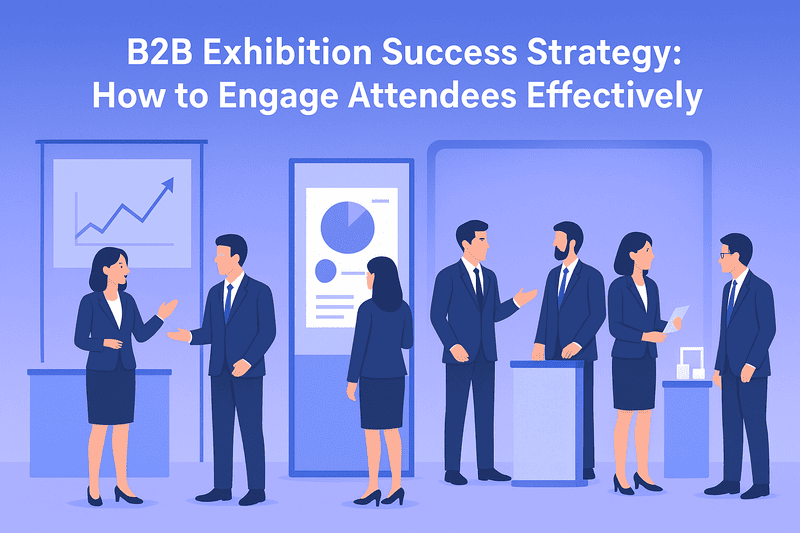
B2B Exhibition Success Strategy: How to Engage Attendees Effectively
-
Relying heavily on booth aesthetics and flashy visuals yields diminishing returns, as excessive design elements make booths blend together instead of driving commercial success.
-
Field research involving 200 exhibitors and attendees shows that most trade show encounters leave zero lasting impressions, with buyers unable to recall specific booths or standout sales conversations.
-
Achieving true trade show ROI requires shifting focus from aesthetic presentation to systematically mapping, tracking, and fulfilling the strategic objectives of attendees.
-
Shifting away from untargeted mass marketing toward strict Ideal Customer Profile (ICP) mapping allows exhibitors to substitute random interactions with structured, goal-oriented engagements.
-
Long-term corporate growth relies on an interconnected ecosystem where pre-event planning ensures attendee success, directly accelerating pipeline conversion and organizer retention.
This is the summary based on The FEEL Podcast with Subhanjan Sarkar.
Many B2B exhibitors focus heavily on booth aesthetics, but Subhanjan Sarkar revealed a surprising truth during The FEEL: Future of Event Experience & Learning podcast: this alone rarely drives B2B exhibition success strategy. Beyond a certain point, flashy visuals are like a Disneyland ride—they all start to look the same.
This is why building a clear B2B Exhibition Success Strategy is essential—not only to stand out visually but also to create meaningful engagement with attendees.
During his interviews with 200 B2B exhibitors and attendees across Toronto, Calgary, San Francisco, and Los Angeles, Subhanjan found an alarming trend:
- When asked which booth stood out, attendees had no answer.
- When asked if any salesperson or conversation felt different, again—none.
- The most memorable moments were personal, like reconnecting with a friend after years.
This highlights a critical gap. Exhibitions may be functional or interactive, but they rarely leave lasting impressions. Attendees arrive with specific objectives, yet very few organizers or exhibitors track whether those goals are met.
Understanding Attendee Objectives for B2B Exhibition Success
The key to a successful B2B exhibition success strategy is understanding what attendees want to achieve. Organizers and exhibitors can take proactive steps to map out:
- Who attendees should meet.
- What topics or questions should be discussed.
- How to make attendees feel comfortable engaging with exhibitors, speakers, or peers.
Behavioral observation and pre- and post-event interviews can reveal insights that help exhibitors tailor their engagement approach. When attendees feel heard and supported, they are far more likely to interact meaningfully with exhibitors.
A structured B2B Exhibition Success Strategy ensures that these objectives are consistently mapped, tracked, and fulfilled.
From Attendee Success to Exhibitor and Organizer Success
Subhanjan emphasizes that attendee success drives exhibitor success, which in turn drives organizer success. When organizers design events that genuinely help attendees achieve objectives, exhibitors can convert interactions into tangible business opportunities.
Instead of "throwing darts in the dark" by targeting thousands of attendees, mapping the Ideal Customer Profile (ICP) and facilitating structured interactions ensures higher engagement and memorable experiences.
This mapping process is a cornerstone of every effective B2B Exhibition Success Strategy and helps exhibitors maximize ROI.
Making Your Exhibition Memorable
To truly excel in a B2B exhibition, organizers and exhibitors must:
- Track and measure attendee objectives before, during, and after the event.
- Encourage authentic conversations rather than purely transactional exchanges.
- Provide multiple opportunities for meaningful interactions with SMEs, peers, and speakers.
- Continuously refine engagement strategies based on feedback and observations.
By aligning with a strong B2B Exhibition Success Strategy, organizers and exhibitors can transform simple feedback into long-term growth and stronger attendee relationships.
A memorable exhibition experience is not about flashy booths—it's about helping attendees achieve their goals and creating genuine connections.
Closing Thoughts
If exhibitors and organizers align on driving B2B exhibition success strategy, everyone benefits: attendees, exhibitors, and organizers alike.
In the end, a well-executed B2B Exhibition Success Strategy becomes the bridge that connects memorable attendee experiences with measurable business outcomes.
Engagement at the booth sparks interest, but only effective booth lead follow-up converts it into success.
Watch the conversation on The Feel Podcast.
Need personalized guidance on B2B Exhibition Success Strategy?
Follow Mike Gunawan on Linkedin.

Frequently Asked Questions
Q1: Why do expensive booth aesthetics and flashy visual designs fail to drive a successful B2B exhibition strategy?Flashy booth visuals fail because they create an environment where every company looks identical, functioning more like a standard theme park ride rather than a distinct business solution. Beyond a baseline level of professional presentation, visual aesthetics do not address attendee business objectives or create memorable human connections, causing your brand to blend into the background noise of a saturated exhibition floor.
Q2: What shocking trends did field research reveal regarding trade show attendee brand recall and sales conversations?Extensive field research across major trade show cities revealed that the vast majority of attendees could not name a single exhibition booth that stood out to them, nor could they recall any salesperson or business conversation that felt unique or differentiated. Instead, the only memorable moments reported by attendees were purely personal encounters, highlighting a massive structural gap in how corporate teams execute live B2B event engagement.
Q3: How can exhibitors use an Ideal Customer Profile (ICP) framework to stop throwing darts in the dark at trade shows?Exhibitors can use an ICP framework by replacing generic, mass-audience attraction tactics with highly targeted, pre-planned engagement pathways. Instead of trying to speak with thousands of random floor visitors, defining your exact target buyer persona before the event allows your booth team to design specialized technical conversations, host specific subject matter experts, and deliver context-rich solutions that resonate deeply with high-intent decision-makers.
Q4: What specific steps must trade show organizers and exhibitors take to track and measure attendee success?To measure attendee success accurately, organizations must deploy a structured data system that maps buyer objectives before, during, and after the event. This process involves conducting pre-event registration surveys to identify what technical questions attendees need answered, utilizing behavioral observations on the floor to assess engagement, and following up with post-show interviews to ensure the attendee's corporate goals were thoroughly fulfilled.
Q5: How does prioritizing the individual attendee's business objectives secure long-term revenue growth for exhibitors?Prioritizing attendee objectives creates a highly efficient business ecosystem where customer success directly drives exhibitor pipeline conversions, which subsequently secures long-term organizer retention. When your booth strategy actively helps a visitor solve a major operational challenge or connects them with the right corporate peer, you establish an immense level of professional trust that easily transitions casual on-site curiosity into qualified, high-value sales revenue.
Main Article
Related Articles
Banner
Write a comment