
Building an Effective Association Growth Strategy That Actually Works
Every leader wants to grow their association. Yet the truth is… most don't know where to start. An effective association growth strategy isn't just about adding more events, launching new programs, or recruiting more members.
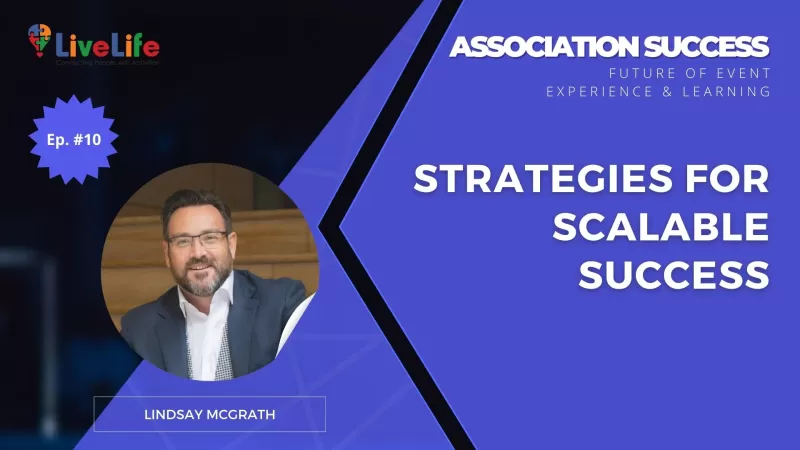
This is the summary based on The FEEL Podcast with Lindsay McGrath.
Growth requires something far deeper—mindset, governance, and a willingness to break old habits.
If your association feels stuck, plateauing, or repeating the same playbook year after year, you're not alone. And more importantly—you're not without solutions.
Insights from The FEEL #10: Association as Strategic Marketing Organization (podcast) with Lindsay McGrath reveal a transformative way to rethink association growth entirely… but there's one game-changing approach you'll only fully understand at the end of this article.
Let's uncover what truly drives sustainable growth.
Why Most Associations Struggle to Grow
Growth Starts at the Top—But Many Boards Miss This Step
Effective associations don't grow by accident—they grow by design. Yet many boards operate reactively instead of strategically.
The podcast discussion highlights a common pattern: associations often jump into activities without first aligning on purpose, governance, and accountability.
But here's the part most people miss:
No association growth strategy can succeed without strong directors who:
- Set clear vision and purpose
- Hold executives accountable
- Understand the needs of the industry
- Ensure strategy, not routine, drives decisions
It sounds simple, but many associations skip this foundational step… which is exactly why they stagnate.
The Three C's: The Real Engine Behind Association Growth
Curiosity — Growth Begins With the Courage to Ask "What If?"
According to the podcast, curiosity actually comes before courage. It means challenging old habits and refusing to accept "we've always done it this way."
Curiosity pushes associations to explore:
- New revenue models
- Different membership structures
- Fresh event formats
- Innovative technology
- Untapped industry segments
And yet—this is the strategy rarely discussed. Most association leaders look inward instead of outward, missing opportunities hiding in plain sight.
Courage — The Power to Pursue Uncomfortable Growth
Real growth requires uncomfortable decisions. Courage means giving leaders the authority to implement large-scale change—and the freedom to experiment.
In the case study from the podcast, growth required:
- Delegation of authority
- Clear objectives and key results
- Accountability frameworks
- Empowering the right people
But here's the part most associations avoid: courage also means admitting when the wrong people have been given the wrong roles. Few leaders will talk about this openly… yet it's one of the most common barriers to success.
Clarity — The Skillset to Execute Big-Picture Thinking
Even with curiosity and courage, associations fail when they lack clarity—specifically the knowledge and capabilities to execute.
This includes:
- Strategic planning skills
- Financial literacy
- Partnership building
- Data-driven decision making
- Long-term resource management
Without clarity, a well-funded association growth strategy can crumble. You may have the budget… but not the ecosystem required to sustain transformation.
Clarity is the discipline that turns big dreams into measurable results.
The Business Model Shift That Accelerates Association Growth
Creating Value Centers (The Framework That Actually Worked)
The podcast shares an important case study: SPASA as an association that started with a single employee and a modest budget—yet eventually grew into a nationally dominant organization.
The secret? Value centers.
Each value center was designed to create:
- Medium-term and long-term assets
- Sustainable revenue streams
- Member-focused programs
- Scalable offerings
The Three Pillars of Each Value Center
The strategy revolved around a Venn diagram of:
- Positioning
- Programs
- People
When these three overlap, associations achieve:
- Attraction ? between positioning and programs
- Retention ? between positioning and people
- Growth ? between programs and people
This triple-pillar framework formed the backbone of their growth engine—and it can be applied to almost any association aiming to scale.
Modern Growth Requires a New Structure: The TEAMS Framework
Training, Engagement, Advocacy, Marketing & Support
To ensure clarity and execution at scale, the association adopted the TEAMS model, a powerful operational framework:
- T — Training: Build capability for the entire industry
- E — Engagement: Strengthen member connection and community
- A — Advocacy: Amplify the industry's voice with unified action
- M — Marketing: Communicate value and expand reach
- S — Support: Equip members with ongoing resources
Every initiative was measured by value and volume KPIs. This elevated internal alignment, improved communication, and clarified what members actually receive from the association.
But here's the strategy rarely discussed…
The TEAMS framework not only organizes internal work—it transforms how members perceive value. Members begin to see what they're paying for, not just what they receive.
Why Event Tech Is Now Non-Negotiable
The FEEL #10 podcast makes it clear: modern associations can't scale without technology. Event tech helps associations:
- Improve attendee experience
- Track engagement with data
- Optimize events with ROI insights
- Personalize member journeys
- Create hybrid (and global) participation
This isn't an optional enhancement—it's a core pillar of a successful association growth strategy today.
And one technology trend highlighted in the podcast has the potential to redefine how associations grow… but you'll discover the full details inside the episode.
Closing
A powerful association growth strategy is built on curiosity, courage, clarity—and a willingness to break the mold that kept the association stagnant.
But there's one more transformative insight that ties all these elements together… and it's explored in depth in the full conversation.
Want to dive deeper with real case studies and expert insights?
Watch the conversation on The Feel Podcast.
Need personalized guidance on association growth strategy?
Follow Mike Gunawan on Linkedin.

Frequently Asked Questions
Q1: What is an effective association growth strategy?It's a structured approach that aligns governance, programs, people, and technology to deliver consistent value and scale membership sustainably.
Q2: Why do associations struggle to grow?Most associations struggle due to weak governance, unclear purpose, old habits, and lack of innovation—especially when leadership avoids difficult strategic changes.
Q3: How can associations create long-term value?Through value centers, strategic programs, strong talent, and a unified brand positioning that attracts and retains members.
Q4: Why is event tech important for association growth?Event tech enhances engagement, scalability, and data insights—turning events into long-term engines for value and revenue.
Q5: How can small associations grow with limited budget?By prioritizing clarity, building targeted programs, leveraging technology, and reinvesting revenue into scalable value centers.
Main Article

Related Articles
Banner

Write a comment