
Reviving Stagnating Associations Through Unified Strategy
Stagnating associations don't happen overnight—they slowly drift into irrelevance. And stagnating associations often don't even realize the decline has begun.
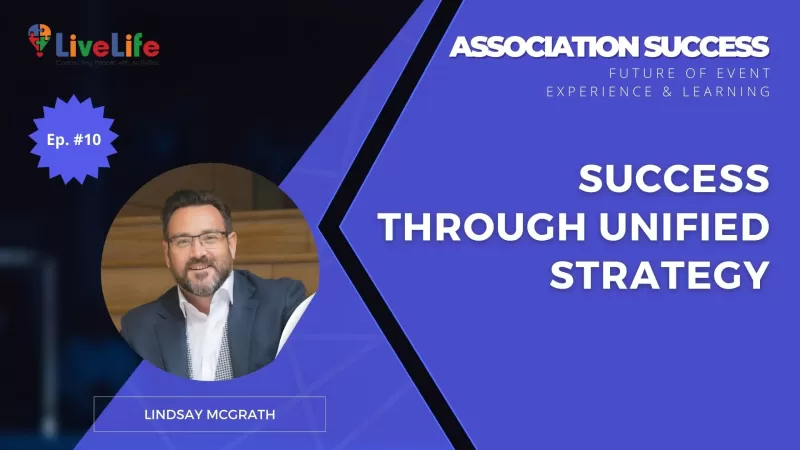
This is the summary based on The FEEL Podcast with Lindsay McGrath.
The events feel repetitive. Membership value weakens. Decision-making becomes slower and more political. Yet here's the twist: in many cases, the problem isn't the market… it's the structure.
This article reveals hidden causes behind stagnation—insights inspired by The FEEL #10: Association as Strategic Marketing Organization (podcast) with Lindsay McGrath — and the overlooked strategies leaders rarely talk about.
But there's one insight you'll only understand fully after exploring the full discussion.
Let's dive in.
Why Associations Stagnate—and What Most Leaders Overlook
The Hidden Structural Problem Behind Most Stagnating Associations
When an association stops evolving, members feel the impact immediately. Benefits look outdated. Communications become reactive. Events feel copy-paste. But here's the part most people miss…
The root cause is rarely a lack of talent or intention.
It's governance.
Many stagnating associations operate in fragmented ecosystems—regional bodies, sub-groups, specialized committees, and legacy boards all pulling in different directions. That fragmentation creates:
- Conflicting priorities
- Slow decision cycles
- Diluted advocacy
- Reactive (not proactive) strategy
- Minimal innovation
In the case study discussed in The FEEL #10 podcast, six separate organizations shared a name and industry—but offered completely different agendas, communications, and standards.
Over a dozen staff reported to six CEOs, who collectively reported to 74 directors. Too many cooks. Not enough builders.
But here's the part leaders rarely admit:
Stagnation often begins with good intentions… but poor alignment.
When "We've Always Done it This Way" Becomes Dangerous
In many stagnating associations, a silent culture forms around legacy habits:
- "We always run this type of conference."
- "We always publish this magazine."
- "We always follow last year's calendar."
These activities once worked—but they become rituals, not strategies.
And here's the uncomfortable truth:
Associations often don't realize decline until the symptoms become impossible to ignore:
- Membership flatlines
- Engagement drops
- Industry relevance weakens
- Younger professionals disengage
- Sponsors look elsewhere
Why does this pattern persist? Because stagnation feels safe. Change feels risky. But as the podcast highlights, the bigger risk today is not changing at all.
The Leadership Mindset Shift That Reverses Stagnation
Purpose Before Programs
Rebuilding momentum begins with redefining why the association exists—not what it offers.
High-performing associations today start with:
- A single clear purpose
- Unified strategic outcomes
- Defined accountability
- A forward-looking governance structure
They don't cling to legacy offerings. They evolve them.
The Rarely Discussed Strategy—Governance Simplification
Many stagnating associations don't need more committees, more programs, or more events.
They need fewer decision layers.
In the case shared in the podcast, unification took nearly a decade—but once complete, it transformed the entire industry. A single national entity replaced six fragmented groups. Education aligned. Advocacy strengthened. Communications unified. Value skyrocketed.
This is the strategy few talk about—because it requires courage, politics, and long-term commitment.
Why Small Staff Teams Struggle to Break the Cycle
Another overlooked factor is operational capacity. Many associations operate with teams of 1–6 staff expected to:
- Grow an entire industry
- Run national events
- Manage compliance
- Serve members
- Innovate
- Execute advocacy
- Modernize systems
It's unrealistic.
These small teams become reactive. They fight fires instead of building futures. Over time, stagnation becomes structural.
But here's the part most leaders miss:
Stagnation is rarely an operational failure—it's a structural one.
Modernizing Value: How Associations Reignite Relevance
Once unified governance is established, associations unlock transformative opportunities:
Revitalizing Member Value
Modern associations reinvest in:
- High-impact networking formats
- Industry-wide certification
- Digital learning ecosystems
- Data-driven advocacy
- Specialized event tech
- Cross-region collaboration
Fresh value replaces stale offerings—because members expect more.
The Role of Event Tech in Breaking Stagnation
As discussed in The FEEL #10, technology is no longer optional.
Event tech helps associations:
- Personalize experiences
- Measure engagement
- Connect members beyond geography
- Improve event ROI
- Deliver hybrid value
And there's one powerful event-tech strategy rarely discussed publicly… but explored in-depth inside the podcast.
Closing
Stagnating associations are not failing—they're simply stuck. The good news? With unified governance, fresh value creation, and modern event tech, transformation is entirely possible.
But there's one powerful tactic that truly accelerates renewal… and it's revealed inside the full podcast.
Want to dive deeper with real case studies and expert insights?
Watch the conversation on The Feel Podcast.
Need personalized guidance on stagnating associations?
Follow Mike Gunawan on Linkedin.

Frequently Asked Questions (FAQ)
Q1: What causes associations to stagnate?Stagnation often happens when governance becomes fragmented, legacy programs remain unchanged, and leadership avoids strategic reinvention. Over time, value declines while member expectations rise.
Q2: How can stagnating associations regain momentum?They can realign around a unified purpose, modernize governance, simplify decision-making, strengthen communication, and adopt technologies that enhance member experiences.
Q3: Why is governance so important for associations?Governance determines clarity, speed of decision-making, accountability, and strategic focus. Weak or fragmented governance often leads to inconsistent outcomes and slow innovation.
Q4: What role does event tech play in association growth?Event tech helps associations scale engagement, gather insights, personalize member experiences, and increase ROI from events—one of the biggest value drivers for most associations.
Q5: How long does it take to transform a stagnating association?Transformation can take years, especially when multiple regional or federated groups must be aligned. However, the long-term gains—in impact, relevance, and member value—are substantial.
Main Article

Related Articles
Banner

Write a comment