
Give and Take in B2B Tradeshows: Why Visitors Avoid Booths
-
Trade show friction occurs because exhibitors focus heavily on extracting lead data, while booth visitors actively resist being treated as mere transactional entries.
-
Buyers hold the power in modern B2B exhibitions, having heavily researched competitors and solutions via online and AI tools before ever walking onto the show floor.
-
Relying on rapid automation, aggressive lead scoring, and automated cold emails destroys prospect trust and alienates high-intent buyers who crave authentic human connection.
-
Adopting a balanced approach—offering unselfish insights, active listening, and even external solution recommendations—builds long-term commercial credibility and goodwill.
-
Maximizing exhibition ROI requires booth staff to slow down, replace rigid qualification scripts with open dialogue, and treat every visitor as a potential relationship or referral source.
This is the summary based on The FEEL Podcast with Subhanjan Sarkar.
give and take in B2B tradeshows - What truly happens at the heart of a B2B tradeshow? Many exhibitors step into the booth with one thing in mind—taking. They want details, qualifications, and meetings. But visitors are rarely excited to be treated as mere entries on a lead sheet. That mismatch is exactly why so many potential connections slip away unnoticed.
Understanding the concept of give and take in B2B tradeshows is key to transforming these missed opportunities into meaningful interactions. By focusing on balance—giving value before expecting anything in return—exhibitors can truly engage their audience.
This paradox of give and take in B2B tradeshows is reshaping how we think about sales and exhibitions. While sellers still cling to linear methods, buyers are quietly rewriting the rules of engagement.
Why Booth Visitors Hesitate to Engage
Ever walked past a booth, interested but reluctant to approach? You're not alone. Visitors fear being pressured, chased for follow-ups, or cornered into conversations that lead nowhere.
Ironically, exhibitors think speed and automation—more cold emails, more AI tools—will solve their engagement problem.
But the real issue is trust. Exhibitors who embrace give and take in B2B tradeshows understand that visitors respond better when they feel valued rather than targeted.
The Shift in Buyer Behavior
Since the 1990s, the seller's playbook hasn't changed much. Exhibitors still imagine themselves as the sole source of information. Yet today's buyers are in full control. With the internet, and now AI-powered search, they've already researched competitors, technologies, and solutions before ever stepping into the hall.
This evolution makes give and take in B2B tradeshows more relevant than ever: it's no longer just about extracting information, but about creating mutual value.
So why do sellers cling to the old way—qualify first, converse later? Perhaps it's habit. Or maybe it's fear of "wasting time." But this rigidity ignores the very reason people attend exhibitions: human connection.
From Transaction to Conversation
The exhibition booth is more than a temporary storefront. It's a living, breathing moment of face-to-face engagement. Instead of rushing to filter out who"fits" the target, why not treat visitors as you would a friend?
Ask what brings them there. Listen to their challenges. Share insights or even recommend a solution outside your own offering. This approach exemplifies give and take in B2B tradeshows, turning transactional exchanges into meaningful interactions.
Visitors remember exhibitors who take the time to listen and provide value first. It's this mindset that ultimately drives higher ROI from your tradeshow efforts.
Lessons from Human Interactions
Think of social events—networking mixers, even singles gatherings. If you cut conversations short the moment you realize someone isn't "your type," you miss out on the unexpected: introductions, new perspectives, or hidden opportunities.
Booths work the same way. By slowing down, asking open questions, and embracing give and take in B2B tradeshows, you create space for relationships to grow. In B2B marketing, these relationships often become the bridge to unseen deals.
Rethinking the Tradeshow Mindset
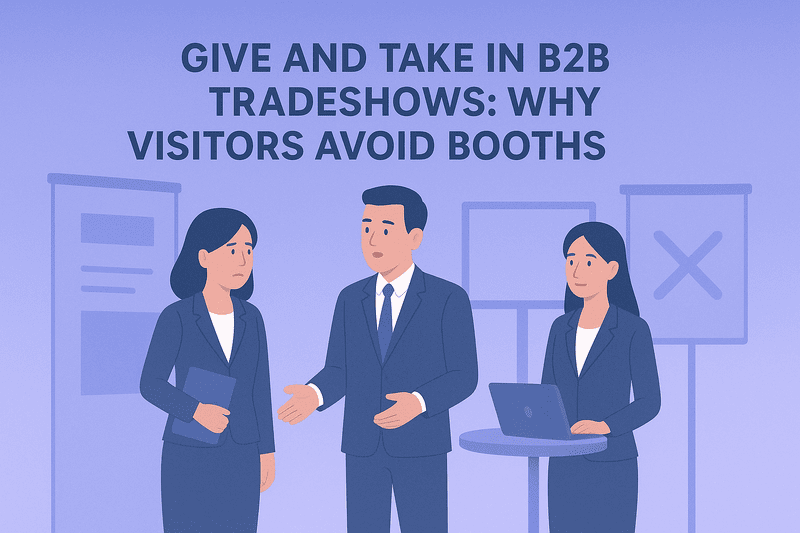
The real value of an exhibition isn't in the number of meetings booked. It's in the quality of conversations. Visitors don't want to be qualified—they want to be understood. Exhibitors who apply the principle of give and take in B2B tradeshows stand out.
Before jumping into lead scoring, ask: "How can I make this visitor feel heard?" This simple mindset shift can change the trajectory of your tradeshow ROI. Visitors avoid pushy booths but respond to genuine follow-up—underscoring why following up booth leads effectively is critical.
Watch the conversation on The Feel Podcast.
Need personalized guidance on give and take in B2B tradeshows?
Follow Mike Gunawan on Linkedin.

Frequently Asked Questions
Q1: What does the concept of give and take in B2B trade shows mean for modern exhibitors?The concept of give and take represents a strategic shift from transactional lead extraction to relationship-driven value creation. Instead of instantly demanding contact details, scheduling demos, or filtering buyers through rigid qualification scripts, exhibitors must first give value by listening to visitor challenges, offering selfless insights, and establishing authentic trust before asking for any commercial commitment in return.
Q2: Why do trade show booth visitors frequently hesitate to engage with B2B sales teams on the floor?Visitors hesitate to engage because they experience a well-founded fear of being pressured by aggressive sales pitches, cornered into irrelevant conversations, or aggressively targeted by automated cold email sequences. When exhibitors prioritize transaction speed and volume over human connection, attendees become defensive and choose to walk past booths to protect their time and data privacy.
Q3: How has the evolution of buyer behavior and AI search changed the role of the B2B exhibition booth?Modern buyers are in complete control of their purchasing journey and no longer rely on booth staff as their primary source of product information. Because prospects use digital networks and AI-powered search engines to deeply evaluate technical solution alternatives before entering the venue, the physical exhibition booth must shift from an informational storefront into a high-trust collaborative hub focused on tailored problem-solving.
Q4: What are the primary operational risks of using rigid lead-scoring models too early during a live event interaction?Using rigid lead-scoring models prematurely creates an unwelcoming, clinical environment that completely kills natural conversation and organic relationship-building. Dismissing or rushing past an attendee simply because they do not match an immediate buyer profile blinds exhibitors to hidden commercial opportunities, such as unexpected industry insights, major corporate introductions, or high-value word-of-mouth customer referrals.
Q5: How does a value-first booth mindset lay a better foundation for post-event lead follow-up success?A value-first mindset ensures that the initial on-site interaction leaves an unforgettably positive and distinct impression in the mind of the prospect. When a visitor feels genuinely heard and supported rather than targeted, they develop a strong emotional and professional connection to your brand, making them exceptionally receptive to subsequent personalized, strategic post-show lead nurturing workflows.
Main Article
Related Articles
Banner

Write a comment