
How Long-Term Assets for Associations Unlock Sustainable Growth
Most associations struggle with the same invisible problem: they're working so hard to create short-term wins that they forget the long-term assets for associations that actually determine whether they grow, stagnate, or slowly fade out.
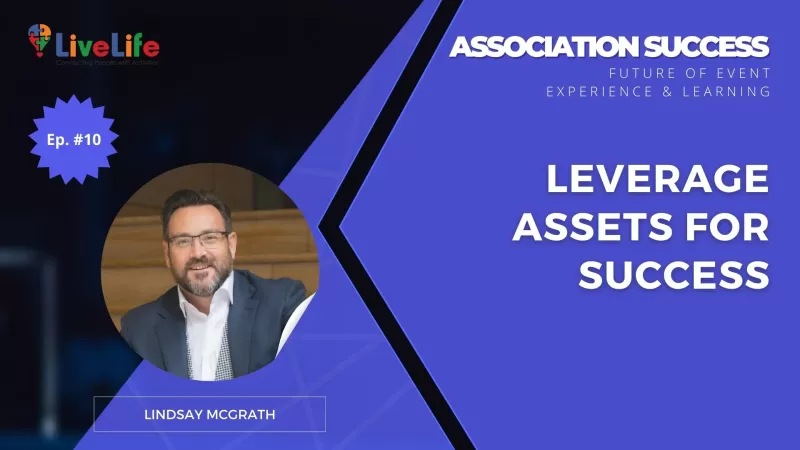
This is the summary based on The FEEL Podcast with Lindsay McGrath.
And here's the surprising part: Most leaders don't even realize they're missing these assets — until membership drops, engagement declines, or programs fail to scale.
This article reveals the mindset, strategy, and hidden levers behind long-term value creation… but the most powerful insight only became clear during The FEEL #10: Association as Strategic Marketing Organization (podcast) with Lindsay McGrath — and we'll get to that part soon.
Why Long-Term Assets Matter More Than Ever
Associations are built on continuity. While businesses pivot fast, associations carry legacy, trust, and generational impact. But that longevity becomes a weakness when organizations operate quarter-to-quarter instead of decade-to-decade.
That's why long-term assets for associations aren't just "nice to have."
They shape:
- Member trust
- Market relevance
- Revenue stability
- Industry influence
Most associations don't fail because of poor programs. They fail because the asset base is too shallow to support modern expectations.
But here's the part most people miss…
The Three Pillars of Long-Term Assets for Associations
In The FEEL #10, Lindsay emphasized that long-term value assets are multi-layered — not just financial or structural. They are strategic foundations that compound value far beyond a single program or fiscal year.
Let's break down the pillars.
1. Positioning: The Most Undervalued Asset
Positioning isn't a slogan. It's the promise your association represents today and 20 years from now.
A strong positioning becomes an enduring asset because it:
- Clarifies why members join
- Guides the programs you build
- Attracts partners who believe in the mission
- Separates your association from all alternatives
Positioning isn't a marketing exercise — it's a long-term strategic resource.
Yet many associations revisit their positioning only after engagement drops.
That's like fixing a roof after the storm already hits.
2. Programs: The Engine of Perceived Member Value
Programs — content, workshops, conferences, exhibitions, networking — are the most visible manifestations of long-term assets for associations.
But here's the surprising truth: Most programs decay faster than associations realize. They repeat the same formats, the same speakers, the same themes… and then wonder why engagement flatlines.
In the podcast, Mike summarized the pattern: Associations stay the same, so results stay the same.
The strongest associations do something different. They treat programs like compounding assets, not one-off projects.
That means:
- Continuous learning cycles
- Member-driven insight gathering
- Courage to experiment
- Clear alignment with long-term positioning
There's one strategy rarely discussed: Associations that scale fastest invest in evergreen content ecosystems, not temporary events — but the podcast explains this in detail.
3. People: The Most Powerful Multigenerational Asset
People are the heartbeat of any association. Not just staff — but members, partners, sponsors, volunteers, and community leaders.
Lindsay calls associations multigenerational organizations. They survive beyond individual careers… even beyond individual lifetimes.
This means:
- Mentorship becomes an asset
- Leadership legacy becomes an asset
- Member relationships become an asset
- Networks evolve into collective intelligence
And unlike financial assets, people assets compound exponentially when the organization invests consistently in community development.
Case Study: When Long-Term Thinking Created a Billion-Dollar Asset
During The FEEL #10, Lindsay shared that one of SPASA's (Swimming Pool & Spa Association in Australia and New Zealand) strongest assets wasn't a document, a program, or a financial reserve.
It was… a trade show.
What began as a simple annual gathering eventually became:
- A sustainable revenue engine
- A unifying industry platform
- A brand-defining signature asset
- A multigenerational economic catalyst
This wasn't luck. It was the result of long-term asset thinking:
- Strategic clarity
- Compounded learning
- Courageous experimentation
- Deep understanding of member needs
This is the difference between "running programs" and "building assets."
How Associations Can Start Building Long-Term Assets Today
You don't need a massive budget or large staff to start. Here are some practical starting points:
- Audit Your Current Asset Base
Ask: Which assets add value every year… and which ones drain energy? - Redesign Programs with Compounding Value in Mind
Shift from "one-time events" to repeatable, scalable, evergreen frameworks. - Strengthen People Assets
Develop leadership pipelines, member engagement systems, and partner ecosystems. - Invest in Positioning Continuously
Revisit how the association shows up — not when it's too late, but yearly. - Build Assets That Outlast You
As Lindsay said: "Your assets should survive not just your career — but your life."
These are the essentials. But the podcast dives deeper into the techniques associations rarely talk about — especially the part about asset compounding models.
Closing
Associations that thrive aren't the ones with the most programs or the biggest budgets.
They are the ones intentionally building long-term assets for associations — assets that compound value, elevate member experience, and shape the future of their industries.
But the most powerful asset-building strategy isn't in this article… It's the one Lindsay explained in full during the podcast.
Want to dive deeper with real case studies and expert insights?
Watch the conversation on The Feel Podcast.
Need personalized guidance on long-term assets for associations?
Follow Mike Gunawan on Linkedin.

FAQ: Long-Term Assets for Associations
Q1: What are long-term assets for associations?They are strategic resources — programs, positioning, people, brands, events, markets — that provide sustained value over many years.
Q2: Why do associations need long-term assets?Because short-term initiatives can't sustain member trust, revenue stability, or industry influence across generations.
Q3: What is an example of a long-term asset for associations?A recurring trade show, a strong brand, evergreen educational programs, or a leadership development pipeline.
Q4: How do associations build long-term assets on a small budget?Start with positioning, consistent learning, and member-driven insights — these require clarity, not capital.
Q5: WhatRepeating old programs without evaluating long-term value, causing stagnation and disengagement.
Main Article

Related Articles
Banner

Write a comment