
Searching for Meaning in Life
Author: Michael Arief Gunawan
Created: Monday, 22 Jun 2020
Updated: -
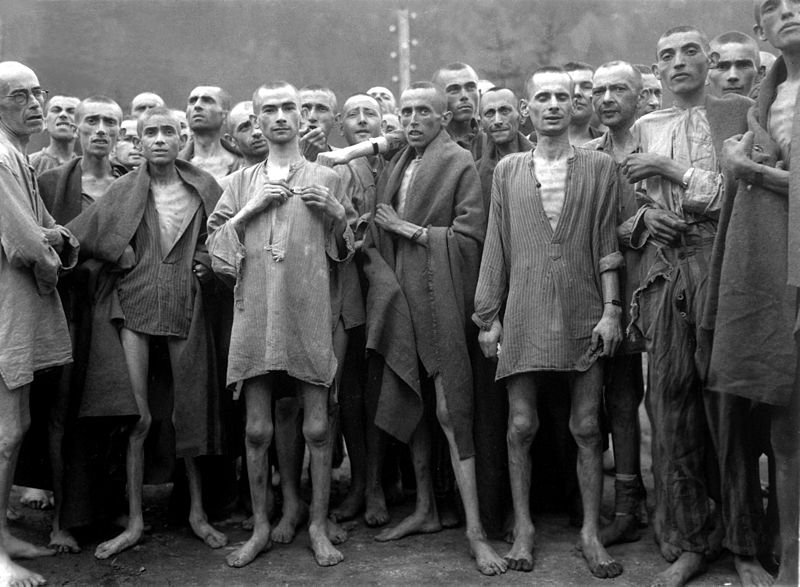
It was a dark period during the 2nd World War when the Nazi was conquering Europe and executing the Jews. In one of the concentration camps, an Austrian psychiatrist found himself having to endure this extreme situation with other prisoners being so frail and skinny to the bones. Some of them even died out of hunger and fatigue, only then to have their corpses just laying around without given any proper burial.
Fortunately, he managed to survive this horrendous experience, though tragedy strike as his father, mother, brother and wife were all killed in other concentration camps. Soon after returning to Vienna, he wrote Man's Search for Meaning in merely 9 days. At first he didn't want to have his name published on it, worrying that he might not be able to express himself freely. Although he wrote 30 books in his lifetime, interestingly this author-anonymous book became his most popular.
He said: “Don't aim at success. The more you aim at it and make it a target, the more you are going to miss it. For success, like happiness, cannot be pursued; it must ensue, and it only does so as the unintended side effect of one's personal dedication to a cause greater than oneself or as the by-product of one's surrender to a person other than oneself. Happiness must happen, and the same holds for success: you have to let it happen by not caring about it. I want you to listen to what your conscience commands you to do and go on to carry it out to the best of your knowledge. Then you will live to see that in the long-run—in the long-run, I say!—success will follow you precisely because you had forgotten to think about it”
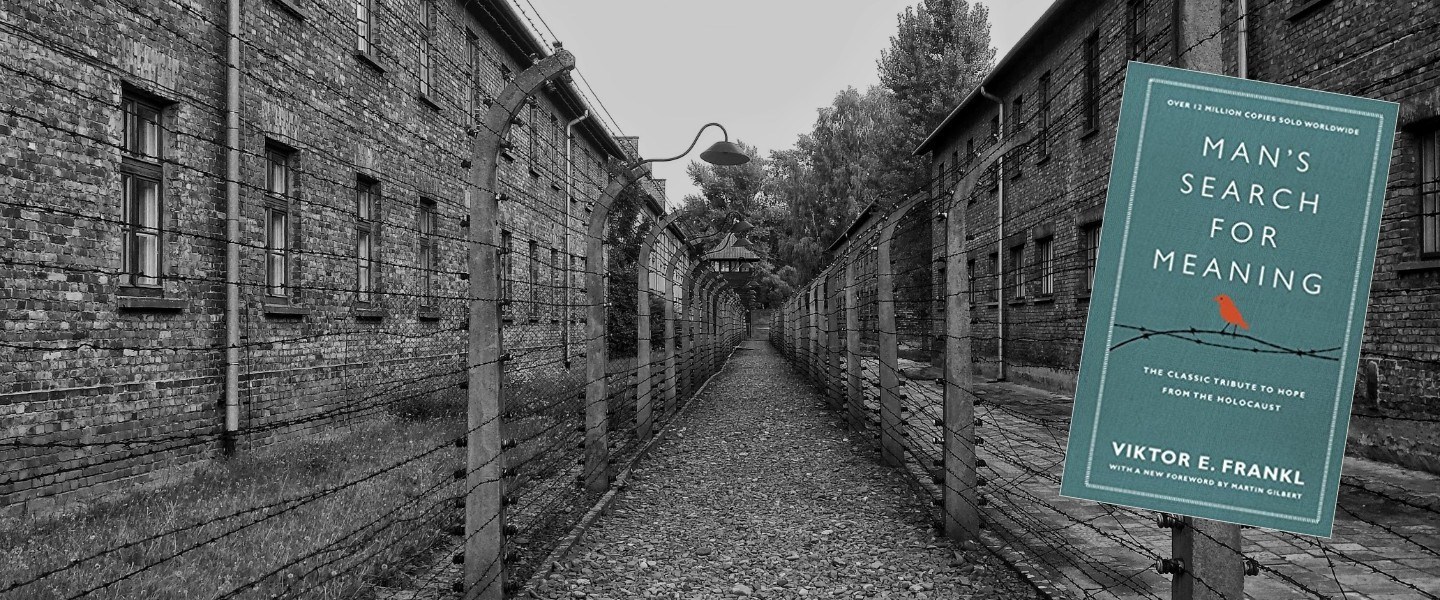
This man is Viktor Frankl, who founded the psychoteraphy method: Logotherapy, deriving from the Greek word Logos ('meaning'). He believes that “Everything can be taken from a man but one thing: the last of the human freedoms—to choose one’s attitude in any given set of circumstances, to choose one’s own way.” Without meaning, one tends to be struggling in life, just wondering aimlessly from one pleasure or addiction to another, not having the perseverence and commitment to purse a goal higher than oneself.
Frankl identified three main ways we can realize meaning in life: (1) by making a difference in the world through our actions, our work or our creations - referred to as “Creative Values“. (2) by experiencing something (such as truth, beauty) or encountering someone (love) - “Experiential Values“. (3) by adopting a courageous and exemplary attitude in situations of unavoidable suffering - “Attitudinal Values.“
As he said in one of his most popular quotes: “Those who have a 'why' to live, can bear with almost any 'how'.” Here is an audiobook, you can listen to it while laying down on bed at night, enjoy!
"It must be kept in mind however that optimism is not anything to be commanded or ordered. One can't even force oneself to be optimistic indiscriminately against all odds, against all hope. And what is true for hope, is also true for the other two components of the triad. In as much as faith and love can not be commanded or ordered either. To the European, there is a characteristic in the American culture that, again and again, that one is commanded and ordered to 'Be happy'.
But happiness can not be pursued, it must ensue. One must have a reason to be happy. Once the reason is found however, one becomes happy automatically. As we see, a human being is not one in pursuit of happiness, but rather in search of a reason to become happy. Last but not least, through actualizing the potential meaning inherent and dormant in a given situation.
This need for a reason is similar in another specifically human phenomenon, laughter. If you want anyone to laugh, you have to provide him with a reason, for example you have to tell him a joke. In no way it is possible to evoke real laughter by urging him, or having him urge himself to laugh. Doing so would be the same as urging people pose in front of a camera to say 'cheese'. Only to find in the finished photographs, their faces are frozen in artificial smiles." ( from 04:12:28~)
"As logotherapy teaches, there are three main avenues on which one arrives at meaning in life. The first is by creating a work, or by doing a deed. The second is by experiencing something or encountering someone. In other words, meaning can be found, not only in work, but also in love. Edith Weisskopf Joelson observes in this context that the logotherapeutic notion that experiencing can be as valuable as achieving, is therapeutic because it compensates for our one sided emphasis on the external world of achievement, at the expenses of the internal world of experience.
Most important however is the third avenue of meaning to life. Even the helples victim of a hopeless situation facing a faith he cannot change, may rise above himself, may grow beyond himself, and by so doing, change himself. He may turn a personal tragedy into a triumph." (from 04:25:14~)

Banner

Write a comment