
The 3 Key Areas to Start Event Tech Strategy for B2B Exhibitors
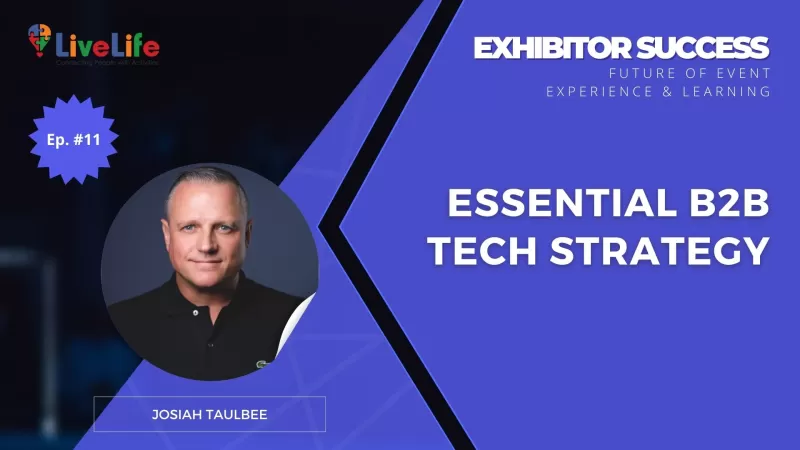
key areas to start event tech strategy — The hidden struggle behind event tech. Let's be honest—most B2B exhibitors feel overwhelmed when deciding where to begin with event technology. Everyone talks about "innovation," but when you ask what to implement first, the room goes silent.
This is the summary based on The FEEL Podcast with Josiah Taulbee.
And that's the real problem: without clear direction, even the most advanced tools become noise. You might collect endless data, integrate multiple platforms, or invest in flashy engagement apps—yet still feel disconnected from your audience.
That's why knowing the key areas to start event tech strategy isn't just useful—it's essential for success.
But here's the part most people miss: it's not about choosing the trendiest tech. It's about building the right foundation—the invisible structure that connects every digital touchpoint into one meaningful experience.
This exact topic was explored in The FEEL #11: Which Event Tech will Drive Exhibition Success? podcast, where Josiah Taulbee unpacked the practical ways B2B exhibitors can align technology with business outcomes.
Understanding the Ecosystem Before the Execution
The mistake most exhibitors make:
Too many exhibitors jump straight into tools—CRM systems, lead scanners, event apps—without first understanding how they all connect. The result? Data silos, inconsistent visitor experiences, and missed opportunities.
Before you choose any platform, take a step back and ask:
- What outcomes are we trying to drive?
- Which data do we actually need to collect?
- How will that data be used—during and after the show?
As discussed in The FEEL #11 podcast, the smartest exhibitors think ecosystem-first, not tech-first. They design a structure where technology supports the exhibitor journey—from booth interactions to post-event follow-ups.
The 3 Key Areas to Start Event Tech Strategy
Every exhibition is different, but there are three universal starting points that apply to almost every B2B exhibitor. Let's explore them one by one.
1. Data Collection and Integration
You can't improve what you can't measure. Yet many exhibitors still collect data in isolated systems—visitor scans, survey forms, social engagement—without any connection.
Start by mapping where your data lives. Is it easy to collect, compile, and analyze? Are you integrating data from all touchpoints—registration, booth traffic, digital engagement, and post-event feedback?
The insight from The FEEL #11 was clear: even large organizations struggle with this. The key isn't collecting more data—it's collecting the right data that directly relates to your objectives.
"Do you really know where the data lives? Is it easy to compile?" — These are the questions every exhibitor must ask before launching their event tech strategy.
2. Audience Experience Optimization
Technology should make the event smoother—not more complicated. Whether you're deploying smart badges, interactive displays, or matchmaking apps, the end goal should always be ease and engagement.
Ask yourself:
- Does the tech simplify visitor interactions?
- Does it empower sales teams to follow up more personally?
- Does it create a sense of connection, not friction?
Many exhibitors underestimate how much emotional engagement drives business results. Tech alone doesn't impress people—seamless experience does.
But here's the twist: optimizing audience experience requires aligning human and digital interactions. That's the strategy most exhibitors skip—and the one that can set you apart.
3. Post-Event Intelligence
The final pillar is what happens after the event. Post-event analytics are often treated as an afterthought, but they hold the most powerful insights for future growth.
Think beyond the usual reports. Combine behavioral data (who visited, how long, what they engaged with) with qualitative insights (what they felt, what they asked, what they shared).
A solid event tech strategy should make this data flow seamlessly into your CRM or marketing automation tools—turning insights into action.
As emphasized in The FEEL #11 discussion, this is where the winners separate themselves: The real success doesn't come from the event itself, but from how you use the data afterward.
But Here's What Most People Miss…
It's tempting to treat technology as a checklist. But the best B2B exhibitors view it as an ongoing ecosystem—a strategic framework that evolves with each event.
That's why there's no one-size-fits-all approach. Your strategy depends on:
- The event format (trade show, conference, hybrid)
- The internal team's capabilities
- Your target audience's behavior
The missing piece is usually alignment—getting every stakeholder on the same page about what the tech is supposed to achieve. Once that clarity exists, choosing vendors and tools becomes easy.
And that's exactly what Josiah in The FEEL #11: Which Event Tech will Drive Exhibition Success? unpacked in detail.
The Takeaway
Mastering the key areas to start event tech strategy isn't just about technology—it's about clarity, connection, and continuous improvement.
Whether you're an exhibitor or event organizer, the journey starts with asking the right questions and building an adaptable framework.
But there's one insight that most people miss—and it might completely change how you view event tech success.
Want to dive deeper with real case studies and expert insights?
Watch the conversation on The Feel Podcast.
Need personalized guidance on key areas to start event tech strategy?
Follow Mike Gunawan on Linkedin

FAQs about Key Areas to Start Event Tech Strategy
Q1: What are the first steps in creating an event tech strategy?Start with defining goals, understanding your ecosystem, and mapping existing tools. Then identify the gaps before investing in new tech.
Q2: How can exhibitors integrate multiple technologies effectively?Use middleware or integration platforms that connect registration, engagement, and CRM data to ensure a seamless flow of insights.
Q3: What data should exhibitors prioritize collecting?Focus on actionable data—visitor interests, engagement duration, and post-event feedback—rather than vanity metrics like traffic volume.
Q4: Why is post-event analysis important in an event tech strategy?It turns real-time engagement into future intelligence, allowing exhibitors to improve ROI and tailor strategies for upcoming events or booth-visitor follow up.
Q5: How do I measure the success of my event tech strategy?Combine quantitative KPIs (leads, conversions) with qualitative measures (visitor satisfaction, booth engagement) for a holistic view.
Main Article
Related Articles
Banner

Write a comment