
Contextual Design Strategies for Event Booth Experiences Drive Engagement

- Strategic Shift: Move beyond "one-size-fits-all" templates to intentional, contextual booth designs that align with the specific psychological and cultural needs of B2B personas.
- Regional Localization: Avoid "copy-paste" global designs in Asian markets; success requires adapting to local professional etiquette, such as building trust in Japan or facilitating high-volume networking in regional trade hubs.
- Spatial Zone Strategy: Optimize ROI by mapping the booth into functional zones: Engagement Zones for brand awareness, Consultation Hubs for technical rapport, and Product Showcases for interactive value demonstration.
- Psychological Alignment: Reduce attendee cognitive load by matching booth flow to the visitor’s mental state, transitioning from high-level visual value in the morning to deep-dive technical discussions in the afternoon.
- Quality Over Volume: Redefine success by shifting focus from vanity metrics (badge scans) to qualified touchpoints and intentional interactions that reflect high-intent buyer behavior.
- Data-Driven Nurturing: Use spatial feedback and visitor journey mapping to categorize leads in real-time, streamlining the post-show sales funnel and accelerating conversion cycles.
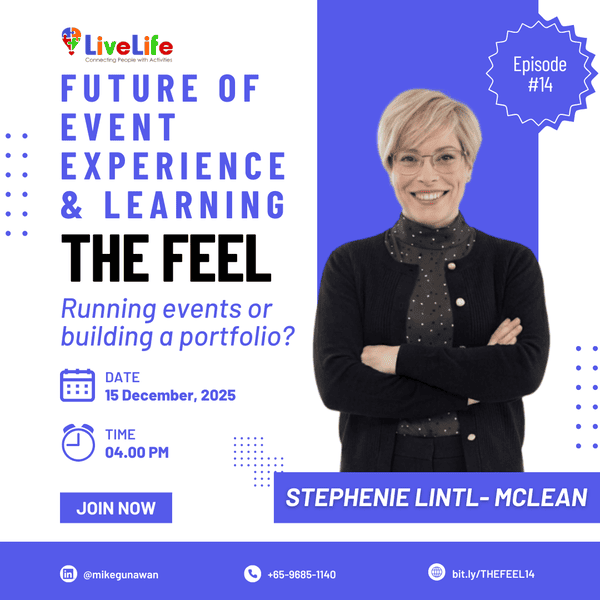
This is the summary based on The FEEL Podcast with Victoria Matey.
Many B2B organizations struggle with stagnant exhibition ROI because they treat booth design as a static asset rather than a strategic touchpoint.
To convert modern attendees, exhibitors must shift from "one-size-fits-all" templates to intentional environments.
Implementing contextual design strategies for event booth experiences ensures your space aligns with the specific psychological and cultural needs of your target persona.
This evolution from passive presence to active booth engagement is what separates market leaders from those simply filling floor space.
Understanding these subtle shifts in attendee behavior is the first step toward reclaiming your competitive edge on the trade show floor.
The Strategy of Space: Why Contextual Booth Design Drives B2B Conversion
Many SME leaders assume a successful booth design in Europe or the US will yield identical results at a trade show in Singapore or Bangkok.
This "copy-paste" approach often creates a cultural disconnect, leading to lower lead quality and wasted marketing spend in the Asian market.
Effective contextual design strategies for event booth experiences require a deep understanding of regional market nuances and visitor behavior.
In Asia, business relationships are built on trust and clarity; your physical space must reflect these values to drive meaningful engagement.
Success occurs when you apply event psychology to transform a static structure into a dynamic, high-converting sales environment.
By mapping out zone-specific strategies, you can guide prospects through different stages of the broader B2B sales lifecycle.
- Engagement Zones: Designed for rapid qualification and initial brand awareness through spatial storytelling.
- Consultation Hubs: Semi-private spaces meant for deep-dive technical discussions and building executive rapport.
- Product Showcases: Interactive areas that demonstrate value through clear positioning and hands-on experience.
This strategic alignment ensures that every square meter of your booth serves a specific KPI, rather than just acting as a backdrop.
Mastering these spatial dynamics is the first step toward reclaiming your exhibition ROI and building a sustainable lead pipeline.
Designing for Intent: Why Context Precedes Architecture
Success at a trade show doesn't start with a floor plan. It begins by mapping the high-stakes moments your audience encounters before they ever reach your stand.
For B2B decision-makers in Asia, the exhibition floor is a high-friction environment. Understanding their specific expectations is the key to meaningful engagement.
By applying contextual design strategies for event booth experiences, brands pivot from passive displays to active problem-solving hubs that resonate with visitors.
We focus on aligning the physical layout with the attendee's mental state. This approach reduces cognitive load and naturally increases dwell time within your space.
Strategic insights from MPI certification principles on event psychology suggest that mapping the attendee journey allows us to intercept leads at their peak curiosity.
When the booth flow matches the visitor's internal logic, lead qualification happens organically rather than through forced or awkward interactions.
This psychological alignment ensures your space serves as a strategic tool for conversion rather than just a visual landmark on the floor.
Moving beyond basic aesthetics requires a deeper look at how spatial configuration influences the decision-making process of your prospects.
Navigating Regional Expectations in Asia B2B Markets
In the diverse landscapes of Asia, a booth is more than a physical structure; it is a direct reflection of professional respect and hierarchy.
Strategic success depends on understanding how cultural nuances dictate the flow of business conversations and the physical openness of your space.
In markets like Japan, a semi-private layout often fosters the trust required for high-level B2B negotiations.
In contrast, high-energy trade hubs may require more accessible designs that facilitate rapid networking and high-volume engagement.
Adjusting your tactics based on local professional etiquette ensures your team moves beyond surface-level interactions to meaningful lead qualification.
Tailoring Visual and Sensory Elements to Local Audiences
Visual storytelling must align with regional color psychology and signage preferences to create immediate brand resonance.
Hospitality offerings should serve as a cultural bridge, reflecting local tastes while subtly reinforcing your corporate identity.
By implementing contextual design strategies for event booth experiences, you harmonize global brand standards with local sensory expectations.
This balance ensures your messaging remains consistent while demonstrating a sophisticated awareness of regional business cultures.
Thoughtful localization transforms a standard display into a high-performing asset that accelerates the sales cycle across borders.
Designing for the Attendee Mindset: Beyond the Physical Structure
Successful exhibition outcomes are rarely the result of chance; they are the product of aligning your booth with the attendee’s mental state.
A CMO’s focus shifts from high-energy exploration in the morning to data-driven solution seeking by the late afternoon hours.
Implementing contextual design strategies for event booth experiences allows you to adapt to these shifts, ensuring your brand remains relevant.
By creating micro-moments, you can trigger curiosity that facilitates natural lead qualification without the friction of a hard sell.
These moments act as cognitive anchors, drawing in SMEs who are looking for specific regional insights or technical trade show solutions.
- Morning: Visual clarity and high-level value propositions for fresh, exploratory minds.
- Mid-day: Interactive sensory triggers to cut through the noise and fatigue of peak traffic.
- Afternoon: Semi-private zones for deep-dive cognitive engagement and ROI-focused discussions.
Moving from passive observation to active participation requires a system that rewards the attendee’s curiosity at every touchpoint.
This strategic alignment ensures that every interaction is a step toward a measurable business outcome rather than a wasted lead.
Redefining Success Through Contextual Engagement
Many B2B leaders in Asia still measure exhibition success by the volume of badges scanned or general booth traffic.
However, high footfall often masks a lack of quality, resulting in a sales pipeline cluttered with cold or irrelevant leads.
Implementing contextual design strategies for event booth experiences shifts the focus toward qualified touchpoints that align with business goals.
This approach ensures every interaction is intentional, moving beyond vanity metrics to capture actionable data.
Streamlining the Lead Nurturing Process
A context-first layout allows your team to categorize visitors based on their physical engagement with specific product zones.
- Immediate Qualification: Distinguish between casual observers and high-intent buyers based on real-time booth behavior.
- Data Integration: Use spatial feedback to refine your long-term strategy and maximize exhibition ROI.
By mapping the visitor journey to your sales funnel, you simplify post-show lead scoring and accelerate the conversion cycle.
Ready to optimize your next exhibition? Book Free Consultation today or Complete DIY Assessment to audit your strategy.
With these KPIs established, we can now explore how physical space directly influences attendee behavior.

Frequently Asked Questions
Q1: What are contextual design strategies for event booth experiences?Contextual design strategies for event booth experiences involve shifting from static "one-size-fits-all" templates to intentional environments tailored to the psychological and cultural needs of a specific target persona. By aligning the physical layout with attendee behavior and regional nuances, brands can transform a passive display into an active engagement hub that drives higher B2B conversion rates and measurable ROI.
Q2: How do regional market nuances in Asia impact exhibition success?In Asian B2B markets, a trade show booth is viewed as a reflection of professional respect and corporate hierarchy. A "copy-paste" design approach from Western markets often fails because it overlooks local etiquette, such as the need for semi-private spaces to build trust in Japan or high-energy layouts for rapid networking in regional trade hubs. Success requires harmonizing global brand standards with local sensory expectations and business cultures.
Q3: How can event psychology improve lead qualification?Applying event psychology allows exhibitors to reduce the cognitive load on visitors by mapping the booth flow to the attendee's internal logic. By creating a layout that matches the visitor’s mental state—such as exploratory zones for the morning and deep-dive consultation hubs for the afternoon—brands can facilitate organic lead qualification. This strategic alignment ensures that interactions feel natural rather than forced, increasing the quality of the sales pipeline.
Q4: What are the essential spatial zones for a high-converting B2B booth?A high-performing booth is divided into three strategic zones: Engagement Zones for rapid qualification and brand storytelling, Consultation Hubs for semi-private technical discussions and executive rapport, and Product Showcases for interactive, hands-on value demonstrations. Mapping these zones to the B2B sales lifecycle ensures that every square meter of the exhibition space serves a specific KPI.
Q5: Why is it necessary to design for the attendee mindset throughout the day?Attendee needs shift as the exhibition progresses; for example, a CMO may focus on high-level value propositions in the morning but seek data-driven solutions and ROI-focused discussions by the afternoon. Implementing contextual design strategies for event booth experiences allows brands to adapt to these shifts through micro-moments and cognitive anchors, ensuring the brand remains relevant and engaging regardless of when a prospect enters the space.
Q6: How does a context-first booth layout streamline the lead nurturing process?A context-first layout allows booth staff to categorize visitors based on their physical engagement with specific zones. By monitoring how a prospect interacts with technical showcases versus awareness displays, teams can distinguish between casual observers and high-intent buyers in real-time. This spatial feedback integrates directly into post-show data, simplifying lead scoring and accelerating the overall conversion cycle.

Banner
Write a comment