
Does Knowing How To Shift To Event Portfolio Mindset Scale Your Roi
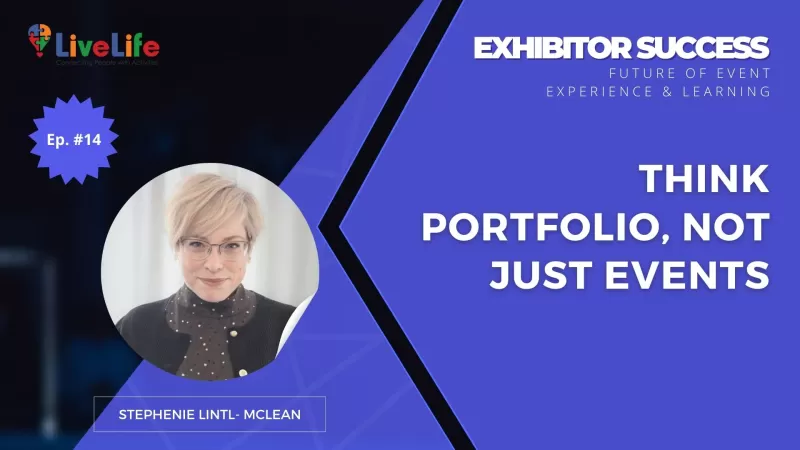
- The Portfolio Shift: Learning how to shift to event portfolio mindset turns isolated events into a connected, high-velocity growth engine.
- The Conversion Fallacy: Trade shows are designed for brand activation, not direct conversion, due to inherently high cost-per-lead metrics.
- Journey Velocity: Success is no longer measured by individual event ROI, but by how effectively Event A moves an account toward Event B.
- Strategic Mapping: Not every funnel stage requires a dedicated event; focus resources where your specific buyer activity is most concentrated.
- Data Integration: Tracking movement across the entire portfolio reveals the true customer journey that siloed event data consistently misses.
This is the summary based on The FEEL Podcast with Stephenie Lintl-McLean.
Why planning individual events limits your total marketing ROI
Most event managers are trapped on a logistical hamster wheel. They plan, execute, and move to the next date without ever seeing the big picture.
This siloed approach creates a massive blind spot in your marketing data. You see who attended one event, but you cannot see how they are moving through your funnel.
When events are treated as isolated islands, you lose the ability to track customer journey across events. You end up chasing the wrong metrics for the wrong reasons.
How to shift to event portfolio mindset for total journey visibility
The transition from "Event Planner" to "Growth Strategist" begins with a fundamental change in perspective. You must move from Mindset A to Mindset B.
Mindset A asks: "What is the ROI of this specific event?" Mindset B asks: "How does this event facilitate the next step in our customer’s journey?"
To start this process, you must evaluate your current calendar. Are your events working together, or are they competing for the same internal resources?
What are the key questions to ask when moving from A to B
The Portfolio Audit
- The Logistics Question: What are we doing at this event?
- The Strategy Question: What ROI are we chasing across the entire year?
- The Journey Question: How does this one event fit into the larger picture?
If you cannot answer how an event moves a lead forward, that event does not belong in your portfolio. Every touchpoint must have a destination.
Shifting the focus from what we are doing to why the event fits
Stop obsessing over the "what" and start documenting the "why." A portfolio mindset demands that every event serves a specific architectural purpose.
If your marketing activities are currently focused on mid-funnel engagement, your events should reflect that. Do not host a trade show just because it is on the calendar.
If you are struggling to align your events with your broader business goals, Join FREE consultations to help leadership teams bridge the gap between logistics and growth.
How to align events with buyer journey stages to increase velocity
A common mistake is assuming every stage of the buyer journey needs an event. This is rarely true and often leads to a bloated, ineffective budget.
You must identify where the most activity happens for your specific customers. Map your events to the "touchpoint density" of your unique sales cycle.
Why trade shows are bad for conversion but essential for activation
Many teams fail because they try to force conversions at trade shows. From a portfolio perspective, a trade show is a terrible place for conversion.
The cost-per-lead is too high for bottom-of-funnel metrics. Instead, use trade shows strictly for brand activation and top-of-funnel awareness.
The goal of the trade show is not to close the deal. The goal is to qualify the account so they can be invited to a high-touch environment.
Mapping the move from target accounts to leadership VIP dinners
This is where the portfolio mindset proves its value. You capture a target account at a massive, third-party trade show to create awareness.
You then immediately transition that account to a leadership VIP dinner. This is a controlled, high-touch environment designed specifically for business conversion.
By understanding how to align events with buyer journey stages, you stop blaming the trade show for "failing" to convert. It did its job by setting up the dinner.
How to track customer journey across events using portfolio data
Tracking movement is more important than tracking attendance. You need to know how many accounts moved from the trade show to the VIP dinner.
This requires a unified data layer. If your event data lives in separate spreadsheets, you will never see the velocity of your pipeline.
When you view events as a portfolio, you can finally see the "Journey Velocity." You measure success by the speed at which an account moves through your touchpoints.
To hear more about the tactical shift from individual events to strategic portfolios, listen to the latest episode of The FEEL Podcast.

Frequently Asked Questions
Q1: Why are trade shows considered bad for direct conversion?Trade shows are high-noise, high-cost environments. When you calculate the total cost of booth space, travel, and logistics against the number of closed deals at the event, the cost-per-lead is often unsustainable. A portfolio mindset treats trade shows as "activation" points to feed high-touch conversion events later in the journey.
Q2: How do I know which events to include in my portfolio?Start by auditing where your customers are already interacting with your brand. If your sales cycle is mid-funnel heavy, focus your event resources there. You don't need an event for every stage; you need events that bridge the gaps where your digital marketing or sales outreach loses momentum.
Q3: What is the biggest mistake when shifting to a portfolio mindset?The biggest mistake is continuing to measure each event in a vacuum. If you still judge a top-of-funnel awareness event by the number of immediate sales, you haven't truly shifted your mindset. You must measure the "assist" rather than just the "goal."
Q4: How do I measure the ROI of an event portfolio?Instead of individual event ROI, measure "Journey ROI." Track the total cost of all event touchpoints required to move an account from lead to customer. This provides a more accurate picture of how events contribute to the bottom line and justifies the budget for non-converting activation events.
Q5: Can small teams manage an event portfolio?Yes. A portfolio mindset actually makes small teams more efficient. It allows you to cut events that don't serve a clear journey purpose, freeing up budget and time to focus on the high-impact touchpoints that actually drive account velocity.
Main Article

Related Articles
Banner
Write a comment