
Is Your Event Measurement With Business Goals And Strategy Failing
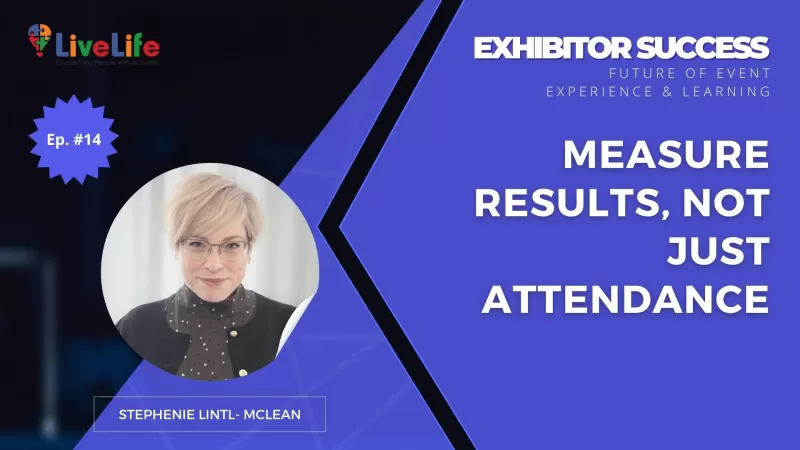
- Strategic Alignment: Mastering event measurement with business goals and strategy requires moving beyond tactical metrics to executive-level KPIs.
- The Portfolio Shift: Viewing events as a collective portfolio rather than isolated occurrences reveals the true health of your marketing engine.
- Stakeholder Consensus: Defining business impact must happen across departments to ensure every stakeholder agrees on what success looks like.
- Decision-First Data: The ultimate goal of event analytics is not to report on the past but to provide clarity for future corporate decisions.
- Mindset Over Software: Lasting transformation starts with a habit of data-backed thinking rather than simply purchasing the latest event tech stack.
This is the summary based on The FEEL Podcast with Stephenie Lintl-McLean.
Why most marketing teams fail at event measurement and strategic alignment
Most event teams are drowning in data but starving for insights. You have lead counts, booth scans, and attendance rates, yet you still struggle to justify your budget to the CFO.
The problem isn't a lack of numbers; it is a lack of translation. Executives don't speak the language of "logistics." They speak the language of business impact and strategic growth.
When you measure in a vacuum, you remain a cost center. To become a profit center, you must bridge the gap between tactical execution and the overarching corporate mission.
Why you need a portfolio view instead of an event view
Focusing on a single event is like watching a car drive by and only staring at one spinning wheel. You can see the wheel is moving, but you have no idea where the car is going.
An individual event view is narrow and deceptive. It fails to account for the long-term customer journey or how different touchpoints across the year compound to drive revenue.
By shifting to a portfolio view, you begin to see the "state of the car." You understand how each event contributes to the broader health of the organization.
Why the individual event view hides the truth about business health
A single "successful" show might actually be a drain on resources if it doesn't attract the right audience. Conversely, a small, quiet event might be the catalyst for your largest annual contract.
Without a portfolio lens, you risk cutting the very events that feed your high-value pipeline. You need to see the forest, not just the individual trees, to understand true performance.
Moving from better events to better business decisions
The goal of measurement isn't just to make the next event "better" in terms of catering or signage. The goal is to gain enough clarity to decide which events to keep, which to kill, and where to double down.
If you are struggling to move from tactical data to strategic clarity, book Free consultation to audit your current event framework.
How to define business impact of events for all stakeholders
Business impact is subjective. What "success" looks like to a VP of Sales is radically different from what it looks like to a Head of Product or a CMO.
Alignment must happen before the first invite is sent. If your stakeholders aren't aligned on the definition of success, your post-event report will always fall flat.
Identifying hidden event pockets across the organization
Events often happen in silos. Field marketing, HR, and regional sales teams often run "hidden" events that never show up on the master calendar.
To align with business goals, you must first centralize these pockets. Identifying every event-driven touchpoint allows you to standardize how impact is measured across the entire firm.
Standardizing the definition of strategic alignment across departments
Create a shared vocabulary. Does "alignment" mean brand awareness, pipeline acceleration, or customer retention? Force these conversations early to ensure everyone is rowing in the same direction.
How to make better decisions using event data and clarity
Data is just noise until it provides clarity. Clarity is the ability to look at a spreadsheet and know exactly what move to make in the next quarter.
High-performing teams don't wait for perfect data. They use the clarity they have to make informed bets, iterating their strategy as more information becomes available.
Why clarity beats complexity in the early stages of measurement
Don't wait for a complex attribution model to start measuring. Start with simple, high-impact questions that tie directly to your primary business objectives.
Complexity often leads to analysis paralysis. In the beginning, a clear "yes" or "no" on a strategic goal is more valuable than a thousand rows of uninterpreted data.
Starting with a mindset shift rather than a software purchase
Transformation is psychological, not technological. No software can fix a broken strategy. Start by building a habit of asking, "How does this event move our specific business goals?"
Once the mindset of alignment is baked into your culture, the data will naturally follow. You move from being a reporter of history to an architect of future growth.
For more insights on transforming your event strategy through data, listen to the latest episodes of The FEEL Podcast.

Frequently Asked Questions
Q1: How do I start aligning event measurement with business goals and strategy if I have no historical data?Start by interviewing your key stakeholders. Ask them what specific business outcomes would make an event a "win" in their eyes. Use these qualitative goals to build your initial quantitative tracking. You don't need years of data to begin aligning your current activities with the company's immediate strategic priorities.
Q2: What is the difference between an event view and a portfolio view?An event view looks at a single show’s metrics, such as cost per lead or total attendees. A portfolio view looks at how a collection of events works together over a fiscal year to move a prospect through the funnel. The portfolio view allows you to see if your total event spend is effectively supporting the broader corporate strategy.
Q3: Why is "alignment before measurement" so critical?If you don't define what you are measuring against, the data you collect is meaningless. Measurement is the process of verifying if you hit a target. If the target (the business goal) isn't agreed upon beforehand, you will end up with "vanity metrics" that don't impress leadership or drive better decision-making.
Q4: How can I identify "hidden pockets" of events in a large organization?Audit your internal expense reports and department calendars. Often, sales or HR teams run localized events that bypass the central marketing team. By bringing these into a unified portfolio, you can ensure they follow the same strategic alignment and measurement standards as your flagship conferences.
Q5: Does event measurement require expensive software?No. While software can automate the process, the core of event measurement is a strategic framework. You can achieve significant clarity using simple tools like spreadsheets and standardized stakeholder surveys, provided you have a clear understanding of your business goals and a mindset geared toward data-backed decisions.
Main Article

Related Articles
Banner
Write a comment