
Is Reactive Event Planning To Strategic Event Management Your Growth Key
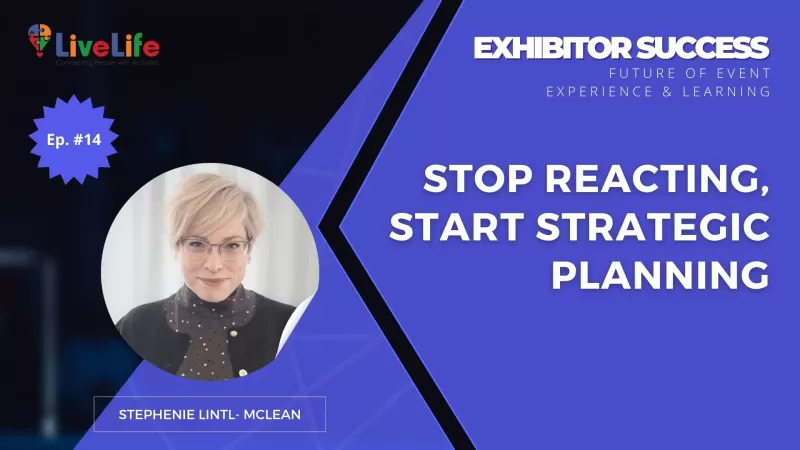
- The Strategic Shift: Moving from reactive event planning to strategic event management is the only way to scale ROI without increasing headcount.
- The Why Filter: Asking "why" before "how" prevents the organization from falling into the trap of executing low-impact, replica events.
- Cross-Functional Alignment: Wearing the "Everybody Else Hat" ensures every event serves RevOps, marketing, and sales targets simultaneously.
- Portfolio Vision: Analyzing your entire event portfolio prevents resource waste on redundant projects that fail to move the needle.
- Budget Authority: Strategic managers use data-backed insights to justify budgets or pivot resources away from underperforming models.
This is the summary based on The FEEL Podcast with Stephenie Lintl-McLean.
Most event planners start their day as order-takers, responding to urgent requests from sales teams without questioning the underlying business objective.
This reactive cycle creates a high-volume, low-impact environment where burnout is inevitable and ROI remains a mystery to leadership.
To break free, you must transition from a logistics coordinator to a revenue architect by implementing a "Pause and Ask Why" methodology.
Why event planners need to ask why before starting a project
The "Reactive Trap" is a comfortable place where "yes" is the default answer to every stakeholder request.
When a sales leader demands a new event to hit a target, the instinct is to jump straight into operations and logistics.
However, moving from reactive event planning to strategic event management requires a "No Shame, No Judgment" pause to facilitate real conversation.
Identifying the Replica Event trap in your current schedule
A common symptom of reactive planning is the "Replica Event," where an organization launches a new project to solve a problem an existing event failed to fix.
If an existing event isn't performing, throwing more resources at a duplicate version won't change the outcome; it only doubles the waste.
Strategic managers identify these replicas early, choosing to optimize existing assets rather than starting from scratch every time.
How to align event strategy with sales and marketing goals
Strategic alignment isn't about agreeing with every department; it is about facilitating a cross-functional conversation before a single box is checked.
You must move beyond the "I'm on it" mindset and begin asking how a specific event impacts the broader revenue ecosystem.
This transition requires you to act as a bridge between siloed departments that often have competing definitions of success.
Putting on the Everybody Else Hat for RevOps and Marketing
To be an architect, you must wear the "Everybody Else Hat" to determine if an event hits targets for RevOps and Marketing, not just Sales.
Ask yourself: Where does this event sit in the funnel? Does it integrate with our current data stream, or is it a standalone silo?
By viewing the event through the lens of the entire revenue engine, you ensure the resources spent contribute to holistic company growth.
Strategic Growth Note: Need to help your team transition to a strategic model? book Free consultation to audit your event architecture and stop the resource drain.
How to analyze event portfolio performance for better roi
You cannot optimize what you view in isolation, which is why a "Single Event Vision" is the enemy of scalable growth.
Strategic management demands a "Portfolio Vision," where every event is evaluated based on its relationship to every other project in the calendar.
When you understand the portfolio, you gain the leverage to justify larger budgets or pivot resources away from legacy events that no longer serve the mission.
How to move from reactive event planning to strategic event management through measurement
The final step in this evolution is moving from anecdotal success to a formalized measurement framework that tracks multi-touch attribution.
This framework allows you to come back to your "dear sales colleagues" with data-backed proof of why a replica event should be canceled or optimized.
By connecting the initial "Why" to a final ROI metric, you transform from a cost center into a vital driver of the company’s revenue strategy.
Ready to evolve? For more insights on the evolution of event marketing and revenue architecture, subscribe to The FEEL Podcast and join the conversation with industry leaders.

Frequently Asked Questions
Q1: How do I tell Sales "no" to a new event request?Instead of a hard "no," use the "Pause and Ask Why" method. Ask how the event specifically hits RevOps and marketing targets. If it is a replica of an underperforming event, present the data and suggest optimizing the existing event first to protect the budget and resources.
Q2: What is the "Everybody Else Hat" in event planning?It is a strategic mindset where the planner considers the goals of every department—not just the one making the request. This includes checking if the event aligns with the marketing funnel, supports RevOps data requirements, and fits into the overall company revenue goals.
Q3: How do I identify a "Replica Event" in my portfolio?Look for new event requests that target the same audience or solve the same problem as an event you already have on the calendar. If the existing event is underperforming, the new request is likely a "replica" attempt to fix a strategy problem with more logistics.
Q4: Why is RevOps important for event strategy?RevOps provides the data infrastructure to measure an event's true impact. By aligning with RevOps, strategic event managers can track how attendees move through the sales funnel, providing the ROI proof needed to justify future budgets.
Q5: What are the first steps to strategic event management?The first step is moving from execution to facilitation. Before planning logistics, host a stakeholder meeting to define the "Why." Use this clarity to determine if the event should exist or if resources are better spent elsewhere in your portfolio.
Main Article

Related Articles
Banner

Write a comment