
B2B Sales Follow Up: Why Most Exhibitions Fail and How to Improve It
-
Despite crowded booths and numerous business cards collected, most trade show investments fail due to poor sales follow-up execution once the exhibition ends.
-
Leads frequently freeze and vanish because organizations fail to assign clear outreach ownership, neglect to track communication results, and suffer from operational delays upon returning to the office.
-
True conversion and revenue generation do not happen on the trade show floor; they occur during post-event engagement when buyers have the time and space to evaluate business solutions.
-
High-impact follow-up systems require a complete shift from aggressive sales pitches to value-driven relationship nurturing by providing relevant industry case studies, data insights, or strategic introductions.
-
Maximizing event ROI demands deliberate, consistent, and structured follow-up processes after every exhibition rather than relying on sporadic, intense bursts of uncoordinated outreach.
This is the summary based on The FEEL Podcast with Subhanjan Sarkar.
Every exhibition looks like a success—crowded booths, plenty of conversations, dozens of business cards collected. But here's the painful truth: most B2B sales follow up efforts fail once the event is over. And when that happens, the money and effort spent on trade shows simply evaporate.
So the critical question is this: how to improve B2B sales follow up after exhibitions so every lead gets converted instead of forgotten? Mastering B2B sales follow up can transform your post-event ROI and turn fleeting interest into lasting business relationships.
The Silent Killer of Trade Show Leads
The reason so many opportunities vanish isn't the booth design or the pitch—it's the exhibition follow up strategy. Common mistakes in B2B sales follow up process include:
- No one clearly assigned to follow up.
- Zero tracking of outreach results.
- Delays caused by “back-to-office” busyness.
- Sending generic emails that add no value.
Each missed step reduces trust, and prospects simply move on to competitors who act faster. Companies that master B2B sales follow up know that consistency and structure are far more important than any flashy booth design.
Why Follow Up Is the Real Game
The booth is just the beginning. True sales conversion happens after the event, when buyers have the space to evaluate solutions. This is why best practices for B2B trade show follow up make all the difference.
Done right, post-event engagement strengthens relationships, nurtures prospects, and dramatically increases sales conversion after exhibitions.
Done wrong, it leaves leads cold and unresponsive. Understanding B2B sales follow up is the bridge between collecting business cards and closing deals.
How to Improve B2B Sales Follow Up After Exhibitions
Here's where many companies go wrong—and how to fix it:
- Assign ownership: Make follow up someone's job, not an optional task.
- Track every step: Monitor who was contacted, who replied, and which approach worked.
- Provide genuine value: Offer insights, case studies, or introductions instead of just asking for a sale. That's how nurturing prospects builds credibility.
Structured B2B sales follow up processes ensure that no lead is left behind and every visitor feels valued.
From Missed Chances to Loyal Clients
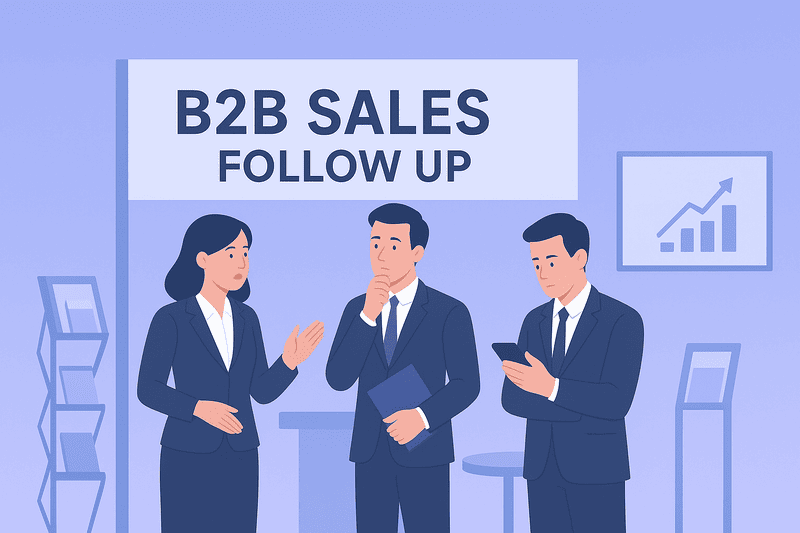
Think about it: how many valuable trade show leads have slipped away in your past events? The answer might surprise you.
The good news is that by addressing why B2B sales fail after exhibition events and following a structured strategy, you can transform missed chances into long-term business growth.
The deeper question is: which frameworks actually make this work—and how can you apply them at your next event? The secret lies in consistency. Improvement doesn’t come from intensity—it comes from deliberate, ongoing B2B sales follow up after every event.
Watch the conversation on The Feel Podcast.
Need personalized guidance on B2B sales follow up?
Follow Mike Gunawan on Linkedin.

Frequently Asked Questions
Q1: What are the main organizational mistakes that cause B2B sales follow-up efforts to fail after an exhibition?B2B sales follow-up efforts typically fail because companies lack a structured post-event workflow and fail to assign definitive ownership to specific team members for lead outreach. Additionally, organizations frequently neglect to track their communication results, allow back-to-office busyness to delay engagement, and distribute generic, low-value mass emails that quickly destroy prospect trust.
Q2: Why is post-event engagement considered the most critical phase for driving trade show sales conversions?Post-event engagement is the most critical phase because the physical booth interaction is merely the introduction; true sales conversion only occurs when buyers return to their normal routines and have the quiet space to evaluate corporate solutions. A disciplined follow-up process bridges the gap between a casual business card exchange and a closed deal, turning initial curiosity into lasting revenue pipelines.
Q3: How can companies systematically improve their B2B sales follow-up process after trade shows?Companies can improve their post-show conversion rates by converting their outreach into an mandatory, tracked workflow. This includes assigning strict personal ownership to each lead, utilizing CRM systems to monitor who was contacted and which messages worked, and providing genuine, tailored value through industry insights or targeted case studies instead of demanding an immediate sale.
Q4: What is the difference between nurturing prospects and delivering a standard sales pitch during event follow-up?Nurturing prospects focuses entirely on building credibility and trust by offering helpful, relevant solutions that solve the attendee's specific business challenges. Conversely, a standard sales pitch is self-serving and transactional, which often alienates high-intent prospects who are looking for strategic corporate partners rather than immediate, aggressive product pitches.
Q5: How does consistency in post-event lead management transform missed trade show opportunities into long-term business growth?Consistency transforms missed opportunities because sustainable conversion rates are driven by deliberate, ongoing execution rather than short-lived, chaotic bursts of outreach. Implementing a repeatable, structured lead-management framework after every exhibition ensures that no collected contact slips through the cracks, allowing your brand to stay top-of-mind and outpace slower competitors.
Main Article
Related Articles
Banner
Write a comment