
Exhibition Engagement Strategy: Turning Attention into Emotional Connection at Trade Shows
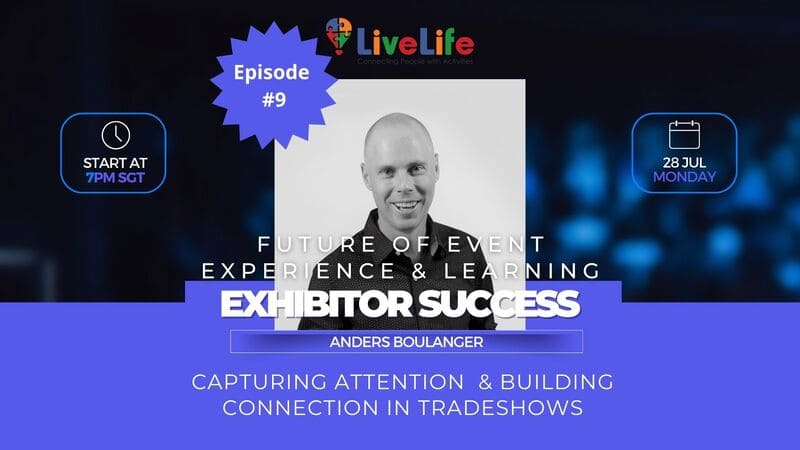
Exhibition engagement strategy — The quiet art of being remembered. Exhibition engagement strategy begins in the first five seconds — the glance, the hello, the small ritual that says "you are welcome."
This is the summary based on The FEEL Podcast with Anders Boulanger.
On a trade show floor packed with logos, lights, and competing voices, that tiny moment is the fulcrum.
In The FEEL #9: Capturing Attention & Building Connection in Tradeshows, Anders Boulanger explains why exhibitors who design for feeling — not only facts — create memories that outlive the exhibition and the gifts.
This article pulls those lessons into a practical, emotional playbook to help you stop being a noise and start being felt.
But here's the part most people miss: engagement isn't a checklist. It's a posture. It's a choice to lead with curiosity and to design every micro-moment so a visitor feels invited, not sold to.
Why Emotion Matters More Than Messaging
People don't remember specs — they remember emotional peaks. The brain bookmarks feelings like surprise, relief, and joy; the rest becomes white noise.
An exhibition engagement strategy asks: what feeling will you attach to your brand? The answer is the north star for booth design, staff training, presentations, and giveaways.
There's one strategy rarely discussed: design a single "aha" in every interaction. That doesn't mean gimmicks.
It means a deliberate small twist, a metaphor, or a tactile element that makes a concept click. When done correctly, that small twist creates an emotional peak — and memory.
The Four Levels of Exhibitor Maturity
Anders described four levels in his trade show triangle: booth buyers (build it and hope visitors come), exhibitors (the majority with untrained staff), experimenters (trained staff and try to stand out), and experiencers (emotionally engage visitors).
A robust exhibition engagement strategy intentionally climbs those levels:
- Level 4 - Booth Buyers: Simply build a booth and hope visitors will come
- Level 3 - Exhibitors: Try to engage visitors buy with untrained staff
- Level 2 - Experimenters: Train staff and set booth theme to stand out
- Level 1 - Experiencers: Design emotional engagement for booth visitors
What separates Level 4 & 3 with Level 2 & 1 is what Anders called the Train & Track Line. Whether exhibitors track their results and train their staff.
Earn Attention — Don't Buy It
A barista in your booth or a flashy prize can stop a passerby. But stops alone don't create value.
Too many teams fall into common trade show mistakes: loudness without relevance, giveaways that create queues of unqualified visitors, and presentations that talk at people rather than invite them into an experience.
An exhibition engagement strategy uses pattern interruption plus relevance: the surprise you deliver must be tethered to your message.
There's a difference between a spectacle and a story. The latter becomes a reason to stay.
Design Presence: How To Become Magnetic
Your booth is less about banners and more about energy. Exhibitor presence tips include: stand near the aisle, close the physical and psychological distance, and use open body language.
Energy spreads fast; a single confident host can turn a quiet corner into a gathering place.
A magnetic presence is how your people behave. That's why booth engagement techniques that prioritize warm approachability beat static displays nearly every time.
Storytelling as The Engine of Every Presentation
Trade shows reward short, vivid stories. Consider trade show presentations styles that feel conversational; adopt presentation flow techniques to warm the crowd, provide a surprise, and hand off to the demo.
The presentation should be a journey: set context quickly, deliver an unexpected pivot, and then show relevance.
But here's what most people miss: timing. Long demos on the floor kill momentum. Keep your on-floor performances tight, then invite people to a deeper demo where more time is appropriate.
Giveaways That Actually Glue (Not Just Clutter)
Most freebies become landfill. Effective trade show giveaways are tools in your narrative: they require a small action, they prompt curiosity, or they become a token of the experience.
Anders calls this "sticky feet" — the giveaway that creates a story loop and keeps someone wanting the resolution, then linking it to the exhibitor product. If a prize requires a short demo or an instruction, it becomes part of your logic, not a distraction.
Shifting Crowds Into Qualified Conversations
At the center of any exhibition engagement strategy is the handoff. Performers warm a crowd; the team converts the engaged into prospects.
Use booth conversation strategies that open with curiosity: "What pulled you over?" or "What would change your work day tomorrow?" These openers surface context without interrogation and help to separate qualified leads.
Embed booth lead qualification methods as natural steps. A single well-timed question will triage interest far better than a long form jammed into someone's hand, and it flows naturally vs being an obligation.
Staff: The Human Engine of Your Strategy
A booth is only as alive as its staff. Booth staff motivation tips matter: rotate roles, schedule micro-breaks, and celebrate small wins.
An unmotivated team looks tired; a well coached team invites energy. Train for "stealing rapport" — briefly match crowd energy and tone, then guide attendees with a different cadence to regain attention.
This is an advanced but practical move in modern exhibition engagement strategy.
Presentation Mistakes That Erase Momentum
Over-rehearsed scripts, going too long, or pitching features before rapport — these are classic exhibitor presentation mistakes.
The fix is simple: make your speech a conversation. Pause for a reaction. Ask one question. Notice who is leaning in, and bring them forward.
There's also a trap in giveaways: if your audience is only there for a prize, they'll stay for the wrong reason. Use rewards as sweeteners, not crutches.
Practical Playbook — What to Run Next Week
(Concrete, reproducible moves you can test)
- Entrance rituals — craft a two-sentence opener for every staffer.
- Aisle activator — one trained person to work the perimeter and create gentle pattern interrupts.
- Micro-theatre — run five short sessions per day (10–20 min) rather than one long scheduled talk.
- Sticky giveaways — items that require instruction or reveal part of your demo.
- Handoff protocol — rehearsed escort to demo tables with a 3-line transfer script.
- One-question triage — embed one qualifying question in the demo.
- Rotation & stamina — role-swap every 45–60 minutes to keep energy high.
- Quick CRM notes — a three-line summary per lead in the moment.
- Post-show ritual — a 30-minute team debrief to capture stories and immediate lessons.
These are practical steps from an exhibition engagement strategy you can deploy without a big budget — just discipline.
Real Example: Small Change, Big Lift
A mid-sized software vendor swapped passive screens for a tactile object and a 90-second challenge. The object required a simple action; that action created curiosity.
Staff used a one-question triage and escorted likely prospects to a seated demo. The result: a 40% increase in qualified meetings and a lasting uptick in inbound leads.
It wasn't dramatic — it was methodical. That is the power of an intentional exhibition engagement strategy.
Measuring What Matters
Don't be obsessive about badge scans. Measure dwell time, handoffs to demos, follow-ups within 24 hours, and the ratio of meaningful conversations to total scans.
Capture qualitative notes: which line made people laugh? Which metaphor landed? Those are your key trade show insights — the stories that explain numbers.
The Small Mistakes That Cost the Most
- Passive staff — Fix: train greeters with authentic openers.
- Noise without relevance — Fix: tie activation to message.
- Long on-floor demos — Fix: short insight + invite to a private demo.
- Fuzzy CTA — Fix: "Join us at table X in five minutes" beats "contact us."
Avoid these common traps and your exhibition engagement strategy will work far more efficiently.
Conversation Scripts (short templates)
- Opener: "Hey — quick question: have you seen a tool that does X before?"
- Diagnostic: "What's the biggest challenge with X in your day-to-day?"
- Handoff: "Great — if you're open, follow me for a two-minute demo at the table."
These trade show conversation scripts are scaffolding — not a prison. Teach your staff to adapt them with empathy.
Closing — The Piece Most People Miss
Design, craft, and measure — but never forget the human in the loop. An exhibition engagement strategy is not a stunt; it is a sustained ethic: design for feeling, rehearse for presence, and follow up with humility.
The halls will still hum with noise, but when you commit to making someone feel remembered, your brand becomes a part of the story attendees tell on the ride home.
Watch the conversation on The Feel Podcast.
Need personalized guidance on exhibition engagement strategy?
Follow Mike Gunawan on Linkedin

FAQ (People Also Ask)
Q1: What is an Exhibition Engagement Strategy?A coherent plan that prioritizes emotional hooks, presentation flow, staff training, and measured handoffs to turn trade show attention into business outcomes.
Q2: How many times should we present per day?Short, frequent sessions (e.g., five micro-sessions) timed to traffic often out-perform a single long scheduled presentation.
Q3: What giveaways actually help?Giveaways that create a mini-experience or require action. They become memory anchors rather than throwaways.
Q4: How to qualify without sounding salesy?Embed one lightweight diagnostic question into the flow — it surfaces fit without a hard sales feel.
Q5: How to measure emotional impact?Combine dwell time, handoffs, qualitative team notes, and 24-hour follow-up rates.
Banner
Write a comment