
How to Create Curiosity at a Trade Show Booth Using Cliffhangers
You are probably familiar with the feeling of binge-watching a gripping drama. Just as the mystery is about to be solved, the screen fades to black, and the credits roll. You are left on the edge of your seat, immediately hitting the button for the next episode.
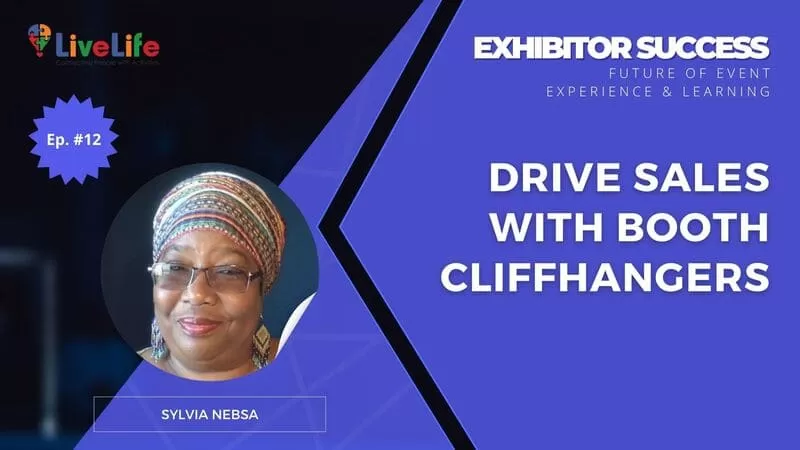
This is the summary based on The FEEL Podcast with Sylvia Nebsa.
In the world of B2B exhibiting, we rarely use this psychological trigger. Instead, we do the opposite. We see a prospect and try to give them every bit of information we have. We show them the full demo, explain the pricing, and introduce them to the lead engineer.
By the time they leave, their curiosity is dead. You haven't started a relationship; you’ve completed an encyclopedia entry.
If you want to hear this moment explained directly, including the tension required to keep a prospect leaning in rather than backing away, listen to the raw conversation behind these psychological triggers at The FEEL Podcast.
Learning how to create curiosity at a trade show booth is about mastering the "cliffhanger." It is the art of designing an interaction that concludes at the peak of emotion, leaving the visitor hungry for the next engagement.
Why Most Booths Kill Curiosity Instead of Building It
The average exhibitor approaches a trade show with a "completionist" mindset. They feel that if they don't answer every possible question, they have failed at their job.
However, trade shows are not the place for deep, complex technical dives. Those belong in the office or on a structured Zoom call. When you dwell on complicated conversations on the show floor, two things happen:
- You exhaust your mental energy by over-thinking every interaction.
- You provide a "full meal" that leaves the prospect with no reason to follow up.
The hidden cost of being too helpful is a stagnant sales pipeline. If there is no mystery left, there is no "next episode" for the customer to tune into.
The Turnkey System for Curiosity
You cannot leave curiosity to chance. If you try to "wing it," you will default to over-explaining because it feels safer. To effectively learn how to create curiosity at a trade show booth, you need a turnkey system—a step-by-step process that allows your team to stop thinking and start executing.
Think of it like a McDonald’s restaurant. Teenagers can manage complex operations because every step is laid out. They don't have to improvise. Your booth staff should have the same luxury.
A curiosity-driven system follows a specific arc:
- The Hook: A visual or verbal "Show" that triggers a peak emotion.
- The Tease: An "Ask" that identifies a gap in the prospect's current strategy.
- The Cliffhanger: A "Tell" that provides a glimpse of the solution but stops before revealing the full mechanics.
This system only works smoothly when your trade show booth experience is designed to support the flow of that storytelling.
How to Create Curiosity at a Trade Show Booth: The Cliffhanger Method
To create a "cliffhanger" at your booth, you must purposefully design the interaction to end when the prospect is most engaged. Here is how to implement this without feeling abrupt or rude.
Identify the Peak Emotion
The peak usually happens right after a "mini-win" or a revelation. If you are demonstrating a software shortcut or a unique physical product, the moment they say "Wow" or "I didn't know it could do that," you have reached the peak.
The "Next Episode" Pivot
Instead of continuing the demo for ten more minutes, pivot to the follow-up immediately.
- "I’d love to show you how this specifically integrates with your data, but that requires a bit more focus than we have here on the floor. Should we dive into that on Tuesday?"
- "That's just the first step of the framework. The second step is actually where most of our clients see the biggest ROI. Let's set a time to walk through that part properly."
Leave Them Wanting More
By concluding the interaction at the height of interest, you ensure the prospect leaves your booth with a high energy level. They aren't drained by a long presentation; they are energized by a new possibility.
Why Systems Reduce Trade Show Exhaustion
Trade events are notoriously exhausting because of the constant improvisation required. When you have to figure out how to navigate every conversation from scratch, your brain burns through its fuel by lunch.
A turnkey sales system removes this mental load. When your team knows exactly how to create curiosity at a trade show booth using a repeatable "Show, Ask, and Tell" methodology, they don't have to "think" as hard. They just follow the steps.
If you are currently reflecting on how to balance this methodology with your specific brand personality, Mike Gunawan remains an open invitation for discussion, reflection, or a deeper strategic exchange on high-ticket B2B conversion.
This allows them to stay upbeat and authentic. It moves the sales process from the "head"—which is draining—to the "heart"—which is energizing.
How This Connects to the Bigger System
Generating curiosity is the engine of the B2B deal, but it works best when combined with a full framework. This approach is part of a broader system designed to convert fleeting aisle attention into long-term business relationships.
When your booth is designed to facilitate these "peak emotion" moments, and your staff is trained to handle the cliffhanger, your follow-up calls become much easier. You aren't a stranger trying to remind them who you are; you are the person providing the "next episode" they’ve been waiting to watch.

Frequently Asked Questions
Q1: Does creating a cliffhanger feel rude to the visitor?Not if it is framed as a matter of giving them the attention they deserve. By saying, "This deserves a more focused environment than a loud trade show floor," you are actually showing respect for their time and their problem.
Q2: Do I need a system for trade show sales if I only have a small booth?Especially if you have a small booth. Small teams have less room for error and less energy to waste. A turnkey system ensures that every person who stops by gets a high-quality, curiosity-driven experience without wearing you out.
Q3: How do I train my staff to stop talking?The best way is through roleplay. Practice the "Show, Ask, and Tell" method and set a timer for three minutes. Training your staff to recognize the "peak emotion" and use that as their cue to exit is the secret to a high-converting booth.
Main Article

Related Articles
Banner
Write a comment