
Why Saying Hello Doesn’t Work at Trade Shows: The Shopkeeper Trap

You see a prospect approaching your booth. They look like a perfect fit for your B2B solution. Naturally, you want to be friendly, so you smile and offer a warm, "Hello! How are you doing today?"
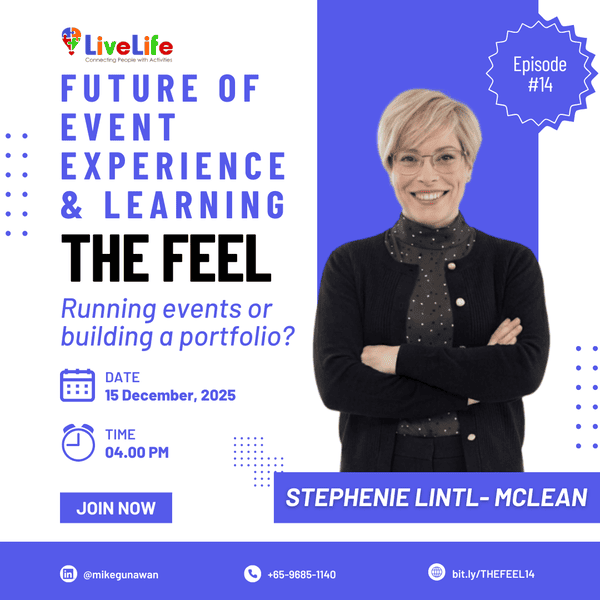
This is the summary based on The FEEL Podcast with Sylvia Nebsa.
The prospect replies with a polite, "I’m good, thanks," and keeps walking.
In that moment, you’ve just experienced why saying hello doesn’t work at trade shows. While it feels like the polite thing to do, it is actually a conversational dead end. In a high-traffic exhibition hall, "Hello" is a signal for the brain to switch on its sales filters and move to the next aisle.
If you want to hear this moment explained directly, including the psychological friction that occurs when a greeting falls flat, you can listen to the deeper emotional context of these interactions at The FEEL Podcast.
If you want to triple your engagement, you have to move away from the passive "shopkeeper" mentality and adopt a more proactive, stage-based approach to your booth interactions.
The Hidden Cost of the "How Are You" Greeting
The primary reason why saying hello doesn’t work at trade shows is that it invites a reflexive, autopilot response. If you ask a room full of people "How are you?", ninety-nine percent will say "Fine" or "Good," even if they are exhausted or stressed.
In a trade show environment, this reflexive response allows the visitor to maintain their physical momentum. When you say "Hello," the visitor hears: "I am a hungry seller waiting for your money." It triggers a defensive wall that makes them feel they need to keep moving to avoid being cornered.
By the time you try to pivot to your product, they are already looking at your neighbor's booth. You haven't started a conversation; you've simply confirmed their suspicion that you are a vendor they don't have time for.
This avoidance often happens when the trade show booth experience feels passive instead of intentionally engaging.
Why Your Booth Is a Stage, Not a Store
Most exhibitors treat their space like a mini-store. They wait for people to enter, allow them to linger, and hope that "good customer service" will lead to a sale. But a trade show booth is more like a stage than a store.
A shop owner has the luxury of time. Their space is permanent, and people enter with the express intent to shop. At a trade show, you are trying to engage thousands of people in a single weekend. You don't have time to let people linger.
The Danger of the "Lingering" Visitor
In a standard 10x10 booth, space is your most valuable currency. If you have five people just "lingering" or having a casual "How are you" chat, they are effectively shutting down your entire operation.
- They block your displays.
- They create a physical barrier for high-value prospects walking past.
- They drain your team's energy without moving toward a transaction.
If you find yourself reflecting on how to clear the congestion in your strategy and replace it with high-value movement, Mike Gunawan provides an open invitation for discussion, reflection, or strategic exchange.
The goal isn't just to get people into your booth; it’s to move them through a specific process—In, Engaged, and Out—so the next person can step up.
The Better Way: Lead With a Hook, Not a Greeting
Instead of a greeting, you need a "conversation starter" that makes a great first impression by solving a problem or sparking curiosity. This requires moving from the "head"—where you are overthinking the social norms of saying hello—to the "heart," where you are focused on serving the customer’s immediate pain points.
Replace "Hello" With a "Pattern-Interrupt"
A pattern-interrupt is a question or statement that forces the brain to stop its "aisle-walking" monologue.
- The Problem-Focus: "Are you currently finding that [Industry Process] is taking twice as long as it should?"
- The Insight-Focus: "Most people walking past think our display is about [X], but it's actually solving [Y]. Want to see the shortcut?"
These hooks are designed to make people swivel their heads. Once they stop, you move directly into a loose script—a proven set of steps that ensure the words roll off your tongue without you having to "wing it."
How This Connects to the Bigger System
Mastering why saying hello doesn’t work at trade shows is the first step in a broader system. It transitions you from a "vendor" to an "engagement professional."
This works best when combined with a full framework of role-play and script practice. By knowing exactly what to say to stop someone in three seconds, you manage the traffic flow of your booth more effectively. You ensure that every second spent with a visitor is driving toward a B2B deal, rather than wasting precious exhibition hours on empty pleasantries.

Frequently Asked Questions
Q1: Why saying hello doesn’t work at trade shows specifically?Trade shows are high-momentum environments. When you say "Hello," you aren't offering value; you are asking the visitor for their time without a clear trade-off. This triggers their "sales filter," making them view you as a distraction rather than a solution. A successful interaction needs to lead with curiosity or a specific hook to break that momentum.
Q2: Should exhibitors approach visitors or wait?Exhibitors must be proactive. Waiting for visitors to enter your booth is a "shopkeeper" strategy that fails in a crowded hall. You should step toward the aisle and pick up the "ball" by initiating contact with a hook. Waiting assumes the visitor knows they need you; approaching with a hook proves they need you.
Q3: How to manage traffic flow in a small booth?In a small 10x10 booth, traffic management is vital. You want people "in and out" quickly. This is achieved by having a "speed element" to your engagement. Deliver a high-impact, three-minute demonstration and then move to a follow-up transaction. This prevents "lingering" visitors from blocking your booth from new prospects.
Q4: Is a booth more like a stage or a store?A booth is definitely more like a stage. It is a temporary, high-energy space where you are performing a specific, scripted engagement to capture attention. Unlike a store, you don't have the luxury of permanence or space. Every move must be calculated to maximize the "theatrical" impact and conversion speed.
Q5: Why is a script necessary for trade show sales?Winging it is the fastest way to get exhausted. When you use a loose script—practiced through role-play—you remove the mental load of deciding what to say next. This allows the words to roll off your tongue, keeping your energy levels high and ensuring every visitor receives the same high-quality, curiosity-driven experience.
Main Article

Related Articles
Banner
Write a comment