
Does Event Strategic Alignment Fix Your Broken B2b Marketing Budget
- Strategic Alignment: True event strategic alignment requires a direct link between event outcomes and high-level corporate objectives set by leadership.
- Portfolio Mindset: Treating events as a collective asset rather than isolated projects prevents leadership from viewing them as disposable costs.
- Executive Language: Success is measured by profit efficiency and market expansion rather than just attendee counts or vanity metrics.
- Bidirectional Flow: Effective strategy requires top-down clarity from leadership paired with bottom-up capability data from the event team.
- The ROI Trap: Over-reliance on simple ROI calculations ignores the complex, long-term value events provide in a B2B context.
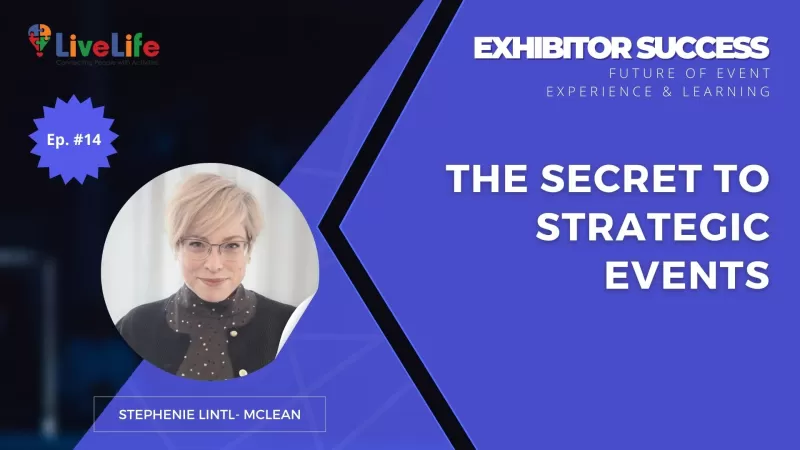
This is the summary based on The FEEL Podcast with Stephenie Lintl-McLean.
Most B2B event teams operate in a state of constant defense. You are fighting for budget, justifying your headcount, and explaining why that last user conference didn't immediately result in ten closed-won deals.
This friction exists because there is a fundamental gap in event strategic alignment. When the C-suite looks at your calendar, they don't see a growth engine; they see a line item that can be trimmed.
Leadership "earns the big bucks" to provide strategic direction. If that direction doesn't trickle down to the event team, you aren't planning a strategy—you are just managing logistics.
Why events are seen as a cost center in B2B organizations
The primary reason events are viewed as cost centers is the "on the fly" nature of B2B decision-making. A competitor announces a roadshow, and suddenly, your VP of Sales demands one too.
When decisions are reactive, they lack a connection to the broader business goals. Leadership views these requests as isolated expenses rather than investments in a long-term framework.
Because there is no visible portfolio strategy, executives cannot see how individual events deliver cumulative value. They see the invoice for the catering, but they don't see the market expansion.
To change this perception, you must stop defending individual events and start defending the portfolio. You must prove that events are a strategic lever, not a series of expensive parties.
How to plan a b2b event portfolio strategy for executive buy in
Strategic alignment is a bidirectional street. It requires top-down communication from leadership and bottom-up communication from the event team.
Why leadership must provide strategic clarity through top down communication
Leadership must define the "what" and the "why." Without strategic clarity, the event team is left guessing which metrics actually matter to the board.
When leadership provides a clear direction—such as "we are prioritizing mid-market retention this year"—the event team can align the entire portfolio to serve that specific goal.
How the event team manages up through bottom up communication
Managing up means telling leadership what is possible with the current resources. You must push back when a new "on the fly" request threatens the integrity of the portfolio.
The event team should present the portfolio as a set of capabilities. Show them what $1M buys in terms of market reach versus what $2M could achieve for profit efficiency.
Defining event tiers to clarify what is possible with current budgets
Not all events are created equal. By categorizing your calendar into tiers (e.g., Tier 1: Flagship, Tier 2: Regional, Tier 3: Executive Dinners), you create a language for resource allocation.
Tiers allow you to show leadership exactly where the budget is going and what the expected output is for each level of investment. It moves the conversation from "can we afford this" to "is this the right tier for this goal."
Strategy Note: If you're struggling to bridge the gap between your event execution and executive expectations, book Free consultation to audit your current alignment framework.
How to use data for event decision making beyond standard ROI
Standard ROI is a trap in B2B. If you only measure "dollars in vs. dollars out," you are ignoring the strategic value of market positioning and product feedback loops.
Why profit efficiency is the ultimate metric for event portfolio success
Profit efficiency looks at how effectively your event portfolio moves the needle on business growth relative to the total spend. It is a more sophisticated "business language" than simple lead counts.
When you talk about profit efficiency, you are speaking the language of the CFO. You are showing how events optimize the customer acquisition cost (CAC) across the entire marketing mix.
Using events as a tool for market expansion rather than just lead gen
Events are often the first point of entry into a new territory or vertical. This is a strategic alignment goal that standard ROI often fails to capture in the short term.
By using data to show how an event increased brand sentiment or opened doors for the sales team in a new market, you demonstrate value that justifies the "cost center" label.
Moving from tactical reporting to high level business language
Stop reporting on how many people scanned a badge. Start reporting on how the event portfolio accelerated pipeline velocity or increased the average contract value (ACV).
As part of a broader system of strategic growth, events must be measured by their ability to solve business problems, not just fill seats. This shift in reporting is the final step in securing your seat at the strategy table.
To hear more about the transition from tactical planning to strategic portfolio management, listen to the full discussion on The FEEL Podcast.

Frequently Asked Questions
Q1: What is the difference between event ROI and event strategic alignment?Event ROI is a tactical metric that measures the financial return of a specific event. Event strategic alignment is a broader framework that ensures every event in a portfolio directly supports the long-term business goals and objectives set by leadership.
Q2: How do I stop my events from being seen as a cost center?You must transition from reporting on tactical metrics (like attendee counts) to business metrics (like profit efficiency and market expansion). Presenting an annual portfolio strategy rather than individual event plans helps leadership see events as a strategic growth lever.
Q3: What does "managing up" look like for an event manager?Managing up involves communicating the capabilities and limitations of the event portfolio to leadership. It means providing data-backed pushback when "on the fly" requests arise and showing how those requests impact the overall strategic goals and budget.
Q4: Why is "strategic clarity" important for event planning?Strategic clarity from leadership provides the necessary direction for the event team to choose the right types of events, target the right audience, and measure the right outcomes. Without it, event teams often default to reactive, tactical execution.
Q5: How do event tiers help with budgeting?Event tiers categorize events based on their scale, cost, and strategic importance. This allows the event team to show leadership exactly how budget is being distributed and what level of impact can be expected from different investment levels.
Q6: What is profit efficiency in the context of B2B events?Profit efficiency is a metric that evaluates how effectively the event portfolio contributes to business growth and profitability. It moves beyond simple lead generation to look at how events optimize the overall sales cycle and customer acquisition costs.
Main Article

Related Articles
Banner
Write a comment