
Does What Is Event Portfolio Management Solve Your Clarity Problem
- The Portfolio Shift: Understanding what is event portfolio management is the only way to scale from single events into a high-ROI business system.
- The Clarity Gap: Most organizations do not have "event problems" but suffer from a lack of clarity caused by fragmented, logistical execution.
- Project Management Roots: Treat every event as a Prince 2 project to move beyond "throwing parties" and toward managing a disciplined investment.
- Strategic Patterns: Stop looking for "local truths" in single events and start identifying the patterns that drive long-term business strategy.
- Stakeholder Alignment: Use a portfolio framework to reconcile the conflicting demands of sales, marketing, and executive leadership teams.
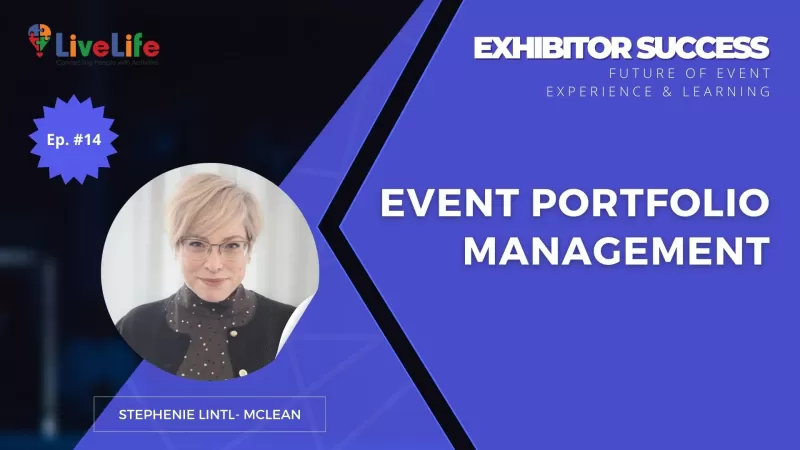
This is the summary based on The FEEL Podcast with Stephenie Lintl-McLean.
What is event portfolio management for business at scale
Most organizations treat events as individual marketing tactics. However, what is event portfolio management for business at scale is actually a project management discipline.
It is the transition from seeing events as "parties" to seeing them as a Prince 2 style portfolio of projects. This shift moves the focus from logistics to investment.
By adopting a project management mindset, you stop managing tasks and start managing assets. This ensures every event serves a specific, measurable business function.
Moving from investment terms to a project management mindset
In finance, a portfolio manager balances risk and return across various assets. In events, the logic is identical but applied to project delivery.
You are not just "running an event." You are managing a project that consumes capital, time, and human resources to produce a specific business outcome.
Why events should be treated as Prince 2 style projects
Prince 2 practitioners focus on business justification and defined roles. Applying this to your events eliminates the "busy work" of 1,001 logistics.
When events are treated as projects within a portfolio, they must justify their existence against the collective goals of the entire organization.
Why your organization has a clarity problem rather than an event problem
Most event teams feel overwhelmed, but the issue isn't a lack of skill. It is a lack of clarity caused by organic, unmanaged growth.
Complexity didn't happen because you were bad at your job. It happened slowly as one event turned into three, and three turned into fifty.
How scope creep turns three events into fifty without a strategic map
Scope creep is the silent killer of event ROI. Without a portfolio view, companies keep adding events and goals without ever removing the underperformers.
This layering of expectations creates a "logistics trap." You become so busy doing the work that you lose sight of why the work matters.
The danger of looking at events as individual tools
When you look at events in isolation, you only see "local truths." One event might look successful because of high attendance, yet fail the broader business.
Individual tools cannot fix systemic problems. Only a portfolio system allows you to see if your total event spend is actually moving the needle.
Are you struggling to find the signal through the noise of your event calendar? Book Free consultation to audit your current event system and regain strategic control.
How to align event goals with stakeholders across the organization
Stakeholder management is often the most exhausting part of event planning. Sales, Marketing, and Leadership all demand different, often conflicting, results.
Sales wants leads, Marketing wants brand awareness, and Leadership wants ROI. Without a portfolio, you are stuck trying to please everyone at every event.
Managing the conflicting expectations of sales marketing and leadership
Event portfolio management allows you to assign specific "jobs" to specific events. One event can be for lead gen, while another is for brand positioning.
This clarity prevents the "everything for everyone" trap. It allows you to tell stakeholders exactly where their needs are being met in the larger system.
How to use portfolio thinking to satisfy diverse stakeholder needs
Portfolio thinking reconciles divergent goals by showing the "collective truth." It proves that while one event might not drive sales, the system as a whole does.
This high-level view builds trust with the C-suite. It moves you from a "cost center" to a strategic partner who understands the business map.
How to decide which events to cut and where to invest more
The hardest part of event management is saying "no." Without data-backed patterns, cutting an event feels like a personal or political attack.
Portfolio management provides the objective framework needed to prune the calendar. It identifies which events are redundant and which are under-invested.
Identifying the local truths versus the strategic patterns
A "local truth" is a single data point, like a high NPS score. A "strategic pattern" is seeing that certain event types consistently fail to convert.
Strategy is built on patterns, not outliers. By looking at the collective, you can see where your resources are being wasted on "vanity" events.
Recognizing when a system is underperforming or over-invested
Are you spending too much on trade shows and not enough on intimate executive roundtables? A portfolio view makes these imbalances immediately obvious.
It allows you to shift budget from low-impact legacy events to high-potential new projects without risking the overall marketing objectives.
How to measure event roi across portfolio systems for long term growth
Measuring ROI on a single event is difficult and often misleading. True ROI is measured across the entire system over a fiscal year.
You must move beyond the logistics of the 1,001 tasks. Clarity comes from seeing how the events work together to move a prospect through the funnel.
Moving beyond the logistics of the 1001 tasks to data clarity
Data clarity is the end goal of event portfolio management. It replaces the "hustle" of planning with the "precision" of strategic management.
When you stop being a "doer" and start being a "portfolio manager," you unlock the ability to scale your impact without scaling your stress.
To hear more about the shift from local truths to strategic patterns, listen to the full episode on The FEEL Podcast.

Frequently Asked Questions
Q1: What is the first step in event portfolio management?The first step is to conduct a full audit of every event your organization hosts or attends. You must move beyond the logistics of each and identify the primary business goal for every single project. This allows you to see the "system" as it currently exists, identifying overlaps and gaps in your strategy.
Q2: How does event portfolio management differ from event planning?Event planning focuses on the "how"—the logistics, venues, and execution of a single date. Event portfolio management focuses on the "why"—how a collection of events serves the broader business strategy. Planning is about the individual project; portfolio management is about the collective ROI of all projects.
Q3: How many events do I need to justify a portfolio approach?While even companies with five events benefit from this thinking, it becomes essential once you reach 10 to 15 events per year. At this scale, "scope creep" and stakeholder fragmentation become unmanageable without a formal project management framework to maintain clarity.
Q4: Can event portfolio management help with budget cuts?Yes. EPM provides the objective data needed to identify which events are "local truths" (looking good on paper but failing the system) versus "strategic patterns" (consistently driving value). This makes it easier to decide which events to cut based on performance rather than office politics.
Q5: What role does project management play in EPM?EPM is rooted in project management disciplines like Prince 2. It treats events as a series of projects with defined business justifications, stages, and quality gates. This discipline prevents events from becoming overly complex "logistics traps" and keeps them aligned with executive goals.
Q6: How do I explain EPM to my stakeholders?Explain it as a shift from managing "parties" to managing "investments." Show them that by looking at the entire portfolio, you can ensure that Sales gets their leads, Marketing gets their brand, and Leadership gets their ROI—all without the chaos of conflicting goals.
Main Article

Related Articles
Banner
Write a comment