
Strategic Growth in Nonprofit Association Marketing
The new era of nonprofit association marketing starts with one mindset shift. Nonprofit association marketing is entering a major turning point — and surprisingly, it begins with a mindset few organizations truly embrace.
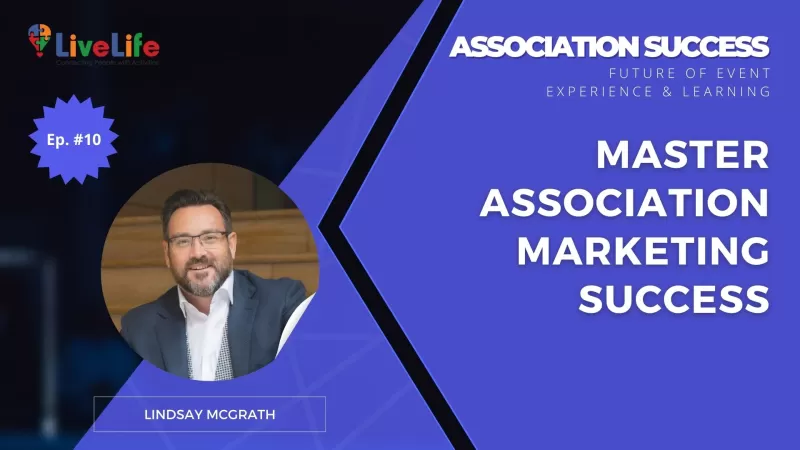
This is the summary based on The FEEL Podcast with Lindsay McGrath.
If your team is still focused on "cost-cutting," "consolidation," or "keeping fees low," you may be unknowingly limiting the very impact your mission is meant to create.
Here's the uncomfortable truth: Most associations are not operating like the strategic marketing organizations they need to be.
And that's exactly the tension unpacked in The FEEL #10: Association as Strategic Marketing Organization (podcast) — where Lindsay McGrath reveals the mindset shift that changes everything.
But before we get deeper, there's one misconception holding many organizations back…
Why Nonprofit Association Marketing Isn't Just "Marketing"
At its core, nonprofit association marketing is not about promotion — it's about sector transformation.
Associations promote to:
- Governments ? we call it advocacy
- Members ? we call it services
- Students ? we call it education
- Consumers ? we call it industry growth
All of these are marketing activities under different labels — yet rarely treated with strategic rigor.
The Surplus-for-Purpose Mindset
One of the strongest insights from the podcast is this: Associations must generate surplus — not for shareholders, but to reinvest back into the industry.
"When the tide rises, it lifts all boats." as shared on The FEEL #12 by Sylvia NebSa
This single mindset shift changes how you:
- Build products
- Price value
- Engage members
- Advocate to government
- Scale events and learning programs
But here's the part most people miss… Surplus is not a profit. It's fuel for impact.
The Hidden Growth Blockers Nobody Talks About
Even the most well-meaning association boards often fixate on operational efficiency instead of strategic expansion.
Here are the three mistakes the podcast highlights — but are rarely discussed openly:
Prioritizing Cost-Cutting Over Value Creation
When the focus is:
- "Reduce staff levels"
- "Trim membership tiers"
- "Lower the annual fee by $100"
…your association ends up reducing its future impact.
Lindsay puts it bluntly: Lowering fees is not an act of member service — it's an act of self-sabotage.
Delivering More With Less (An Impossible Expectation)
Members never say: "Please give us fewer services next year for the same price."
Nonprofit association marketing teams must operate with a growth mindset, because expectations always increase.
Confusing Mission-Driven Work With Restrained Work
Impact does not come from limitation. Impact comes from commercial intelligence applied to purpose.
But there's one strategy rarely discussed that separates thriving associations from declining ones…
The Strategy Most Associations Ignore (But Shouldn't)
High-performing associations map their entire stakeholder ecosystem and treat each group as a customer segment.
- Government ? policy customer
- Students ? education customer
- Members ? product/service customer
- Industry consumers ? awareness customer
Only then can nonprofit association marketing teams design:
- Strategic content
- Programs
- Events
- Value ladders
- Member journeys
This single framework changes how you plan your entire year.
But here's the twist: Most associations still operate with internal-facing thinking instead of market-facing thinking. The podcast dives much deeper into real examples — some will surprise you.
Practical Nonprofit Association Marketing Strategies for 2025
Below are actionable approaches grounded in the insights from The FEEL #10.
Build Outcome-Based Value Propositions
Instead of listing activities, align every initiative to a measurable industry impact:
- Certifications ? workforce readiness
- Events ? commercial growth
- Content ? market positioning
- Advocacy ? regulatory wins
Treat Members as Long-Term Customers
Use retention-first frameworks:
- Segmented onboarding
- Value-tiered membership paths
- Predictive engagement triggers
- Renewal storytelling instead of renewal reminders
Commercialize With Integrity
Commercial does not mean "less mission." Commercial means more ability to fulfill the mission.
Use Event Tech as an Experience Multiplier
The podcast highlights this in detail. The right tech:
- Extends event lifetime
- Deepens member interactions
- Generates data for advocacy
- Attracts sponsors with measurable ROI
Communicate Like a Modern Brand
No more bureaucratic, rigid tone. Nonprofit association marketing thrives on clarity, confidence, and community-driven storytelling.
Closing: The Biggest Shift Is Still Ahead
Nonprofit association marketing is no longer a support function — it is the engine that drives sector-wide impact. But here's the part the article didn't unpack:
The real transformation happens when associations change not just their strategy, but their identity.
And that's where the podcast goes deeper — with real examples, challenges, and the behind-the-scenes truths most organizations overlook.
Want to dive deeper with real case studies and expert insights?
Watch the conversation on The Feel Podcast.
Need personalized guidance on nonprofit association marketing?
Follow Mike Gunawan on Linkedin.

FAQ — Nonprofit Association Marketing (People Also Ask)
Q1: Why is marketing important for nonprofit associations?Because marketing drives the visibility, membership growth, advocacy success, and industry influence needed to fulfill the organization's mission.
Q2: How do associations attract new members?Through segmented messaging, value-led content, strong event experiences, and clear value propositions that connect directly to professional or industry outcomes.
Q3: What makes nonprofit association marketing different from corporate marketing?The goal isn't shareholder profit — it's industry impact. Surplus is reinvested into education, advocacy, and member services.
Q4: How can associations increase member engagement?By offering ongoing value across multiple channels — events, learning, content, advocacy updates — and personalizing touchpoints based on member data.
Q5: What role does technology play in modern associations?Tech enhances events, enables personalization, powers analytics, and helps associations demonstrate measurable outcomes to stakeholders.
Main Article

Related Articles
Banner

Write a comment