
B2B Smarketing Best Practices: Stop Losing Leads to Bad Alignment
- Faster sales cycles occur when both teams agree on what a qualified prospect looks like
- Higher buyer trust comes from matching your booth message with the actual sales conversation
- Immediate follow-up prevents hot leads from cooling off while waiting for a sales call
- Better budget decisions are possible when you see exactly which booth activities generate revenue
- Accurate pipeline data ensures no valuable contact info disappears in messy post-event spreadsheets
- Efficient resource use happens when you separate hot buyers from those who just need info
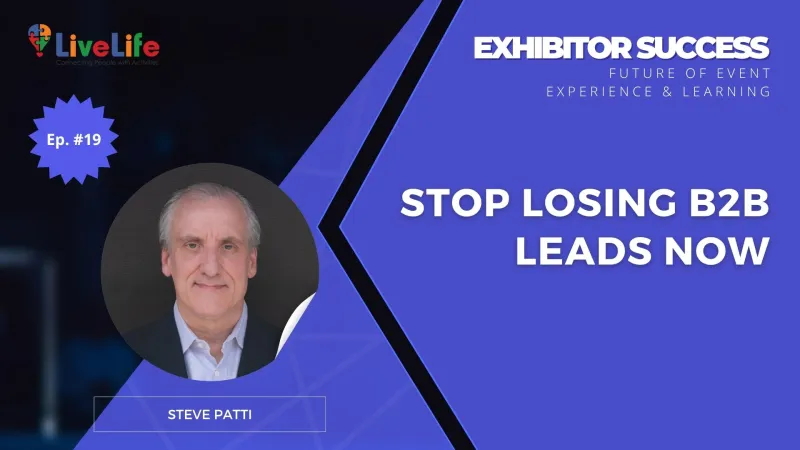
This is the summary based on The FEEL Podcast with Steve Patti.
The first step toward implementing b2b smarketing best practices is defining what a "good" lead actually looks like for both teams. Use this alignment checklist to bridge the gap:
- Define the MQL: Agree on the specific actions or firmographics that qualify a lead for marketing nurture.
- Define the SQL: Specify the pain points or budget signals required before Sales takes over the conversation.
- Document the Handover: Establish a clear timeline for when Sales must contact a lead to prevent interest decay.
Once these definitions are signed off, both teams can stop guessing and start measuring real progress toward revenue.
The Hidden Cost of Narrative Friction
While a documented handover prevents leads from cooling off, it cannot fix a broken message. When the story told in an exhibition booth or a whitepaper doesn't match the conversation with a sales rep, the buyer experiences a jarring disconnect that feels like a red flag.
This happens because many organizations treat Marketing and Sales as separate entities with different vocabularies. In the context of b2b smarketing best practices, this separation is the primary driver of "deal stall." The prospect isn't just buying a solution; they are evaluating the stability of the partner they are about to hire.
Why Buyers Retreat from Misalignment
- Internal Friction as a Proxy: Prospects use your internal coordination as a litmus test. If you cannot align your own teams, they assume you will struggle to support their business after the contract is signed.
- Decision Fatigue: When messaging is inconsistent, the buyer is forced to do the heavy lifting of figuring out which version of your company is the "real" one, often leading them to choose a more "organized" competitor.
- Conflicting Priorities: Marketing often optimizes for broad interest, while Sales focuses on immediate budget, leaving the buyer caught in the middle of two different agendas rather than a single solution.
When these silos remain, the transition from lead to prospect isn't a smooth flow—it's a fracture. The buyer doesn't see two departments; they see a company that lacks a unified vision, which instantly increases the perceived risk of doing business together.
The High Price of Sales and Marketing Misalignment
This perceived risk isn't just a branding issue; it is a direct leak in your revenue bucket.
When teams operate without a shared map, the sales and marketing misalignment costs start to pile up in ways that aren't immediately visible on a balance sheet.
The Chaos of Conflicting Goals
Marketing celebrates a "successful" trade show based on the number of badges scanned, while Sales dismisses those same leads as low-quality noise.
Without shared victory conditions, you end up with two teams sprinting in opposite directions, wasting expensive exhibition budgets on prospects that will never close.
The Silence of the Silo
A lack of feedback loops means Marketing keeps fishing in the wrong pond because Sales never told them the water was empty.
Valuable prospect data stays locked in individual spreadsheets, ensuring that every post-event follow-up feels like a cold start rather than a warm continuation of a conversation.
This disconnect creates a "blame game" culture where Marketing feels undervalued and Sales feels unsupported, leaving the actual revenue to vanish in the gap.
Building a Unified Pipeline Through Shared Data Visibility
Bridging the gap between a busy exhibition booth and a signed contract starts with moving away from isolated spreadsheets and into a unified data environment.
When Sales and Marketing operate from a single source of truth, the transition from a casual booth visitor to a qualified prospect happens without friction or data loss.
This visibility works because it replaces subjective opinions with objective data points that both teams agree on before the event even begins.
- Shared lead scoring: Both teams define exactly what a "hot lead" looks like, ensuring Sales prioritizes the right conversations immediately.
- Closed-loop reporting: Marketing sees which specific booth activities led to actual revenue, allowing for smarter budget allocation in the future.
- Real-time feedback: Sales can provide instant context on lead quality, helping Marketing refine their messaging while the event is still active.
By centralizing this intelligence, you ensure that the momentum gained on the trade show floor isn't wasted during the handoff process.
Success here isn't about working harder; it’s about ensuring that every touchpoint—from the first scan to the final signature—is part of a single, continuous conversation.
Bridging the Gap With a Unified Lead Management System
To turn trade show momentum into revenue, the solution lies in moving away from siloed spreadsheets and toward a unified lead management system.
This alignment ensures that both marketing and sales are working from the same playbook, using shared definitions to determine which leads are ready for a call and which need more nurturing.
When both teams agree on what a "qualified lead" looks like before the event starts, the friction during the post-show handoff disappears.
A shared dashboard provides real-time visibility, allowing marketing to see which booth visitors are converting and sales to understand the specific pain points captured during the initial scan.
This transparency creates a closed-loop feedback system, which is a cornerstone of b2b smarketing best practices.
Marketing learns which content actually helps close deals, while sales receives leads that are already primed for a high-level business conversation.
By treating the trade show as a single, integrated funnel rather than two separate events, you eliminate the "black hole" where leads often vanish after the exhibition ends.
How to Build a High-Conversion Follow-Up Workflow
Building a bridge between teams requires more than just a shared spreadsheet. To implement b2b smarketing best practices, you must define exactly how a lead moves from a booth scan to a closed deal.
Categorize leads by intent
Tag visitors immediately during the conversation. Distinguish between those ready for a technical demo and those who are just gathering initial research.
Set up a tiered response system
Don't treat every lead the same. Create three distinct paths to ensure no one is ignored or over-pressured:
- Path A (Hot): Direct handoff to sales for a discovery call within 48 hours.
- Path B (Warm): Automated email sequence providing the specific case study or resource they requested.
- Path C (Cold): Long-term educational nurturing to keep your brand top-of-mind for future cycles.
Synchronize the data handoff
Ensure your CRM automatically notifies the assigned salesperson the moment a lead is uploaded. This notification should include specific notes on the business challenges discussed at the booth.
This structured approach ensures marketing’s efforts translate into immediate sales activity without the typical post-event lag.
Building Your 72-Hour Post-Show Execution Plan
With a notification system ensuring marketing’s efforts translate into immediate sales activity, the focus shifts to sustaining that momentum. A disciplined lead handoff process prevents the typical post-event lag that kills conversion rates.
- Standardize Lead Scoring: Define exactly what makes a lead "hot" versus "educational" before the exhibition doors even open.
- Set a 24-Hour Contact Rule: Ensure sales makes the first personalized touchpoint using the specific booth notes provided by marketing.
- Hold a Joint Debrief: Meet within 48 hours to identify which booth triggers worked and which buyer questions were left unanswered.
- Audit the CRM Sync: Confirm every conversation note from the floor is visible to the entire team to prevent repetitive questioning.
Implementing these b2b smarketing best practices ensures that the energy from the exhibition floor translates directly into your pipeline rather than gathering dust.
The first step toward growth is identifying where your team communication is breaking down and creating buyer friction.
Consult with a strategist to build a unified smarketing framework that turns your exhibition presence into a predictable revenue engine.

Frequently Asked Questions
Q1: Why do B2B leads often go cold immediately after an exhibition?Leads typically stall due to narrative friction and slow follow-up cycles. If the sales team’s conversation does not match the marketing message delivered at the booth, or if the handover takes longer than 48 hours, the buyer perceives internal disorganization as a risk and retreats to a more organized competitor.
Q2: How can we implement b2b smarketing best practices to improve lead qualification?Start by creating a shared alignment checklist that defines MQLs and SQLs based on specific actions and firmographics. Both teams must agree on what a good lead looks like before an event begins, ensuring Sales prioritizes high-intent prospects while Marketing nurtures those who are only in the research phase.
Q3: What are the hidden sales and marketing misalignment costs for growing firms?Beyond wasted ad spend, misalignment creates a revenue leak through conflicting goals and data silos. When Marketing optimizes for lead volume and Sales for immediate budget, expensive leads are ignored, and valuable prospect data remains locked in individual spreadsheets instead of a unified CRM.
Q4: How does shared data visibility support b2b smarketing best practices?Centralizing intelligence into a single source of truth allows for closed-loop reporting. When both teams can see which specific booth activities or content pieces lead to closed deals, you can move away from subjective opinions and allocate budget toward the tactics that actually drive predictable revenue.
Q5: What is the most common mistake in the B2B lead handoff process?The biggest mistake is treating every lead the same regardless of intent. To fix this, establish a tiered response system: Path A for immediate sales discovery calls within 24 hours, Path B for automated resource sequences, and Path C for long-term educational nurturing to keep your brand top-of-mind.
Q6: How can unified messaging prevent buyers from retreating during a sale?Buyers use your internal coordination as a litmus test for how you will support them post-contract. By ensuring that the story told in whitepapers and exhibition booths is identical to the one told by sales reps, you eliminate decision fatigue and reduce the perceived risk of doing business with your company.

Banner

Write a comment