
Best Strategies to Increase Exhibitor Retention Rates
- Guaranteed prime booth locations by securing floor space before competitors can claim high-traffic spots.
- Instant proof of value through real-time lead snapshots while show floor energy is still high.
- Budget protection against future price increases by locking in exclusive early-bird rates onsite.
- First-pick access to premium corners ensures maximum brand visibility for the upcoming event cycle.
- Measurable sales pipeline growth by turning abstract event costs into concrete performance data.
- Faster renewal cycles by capturing commitments before the post-show slump stalls decision-making.
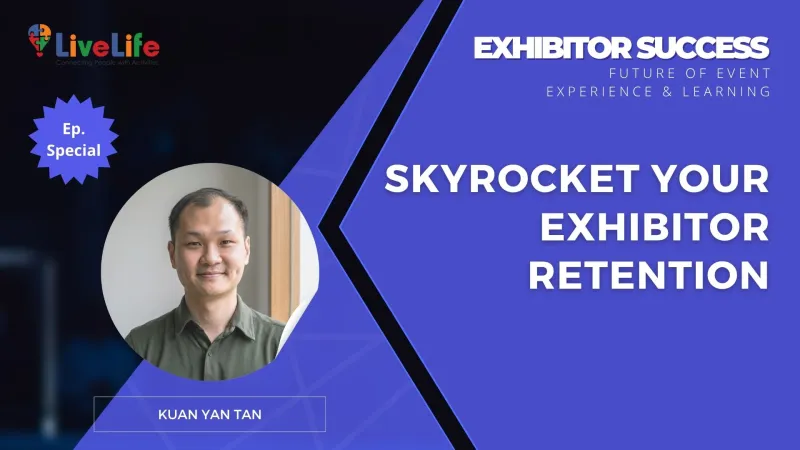
This is the summary based on The FEEL Podcast with Kuan Yan Tan.
Securing renewals starts before the final day. Leverage the high energy of the event to move exhibitors from "considering" to "committed" using a structured onsite re-booking process.
Follow these steps to lock in next year’s floor plan while momentum is high:
- Offer an exclusive onsite rate for exhibitors who sign a letter of intent before move-out.
- Allow high-performing brands to pre-select their booth location for the next cycle.
- Run a quick exit survey to document their lead volume, ensuring they acknowledge the value gained.
How to Build a High-Conversion Onsite Re-booking Framework
Once you have documented lead volume through exit surveys, you must act before the "cooling period" sets in. Transitioning from a satisfied exhibitor to a signed contract requires a structured onsite re-booking program that rewards immediate action while the event energy is still high.
Implement a Tiered Priority Window
- The "Golden Hour": Give your top-performing 20% of brands an exclusive 4-hour window on Day 2 to reclaim their current booth or move to a premium corner.
- General Access: Open the remaining floor plan to all other exhibitors on Day 3, creating a "scarcity" effect that encourages quick decisions.
Validate Lead Quality in Real-Time
Do not wait for exhibitors to analyze data back at the office. Use your event tech to provide a "Mid-Show Performance Snapshot." When a booth manager sees a high count of qualified scans on their dashboard, the decision to renew becomes a logical necessity rather than a financial risk.
Deploy "Show-Floor Only" Incentives
- Price Protection: Offer a freeze on current rates for those who place a deposit before the final keynote.
- Added Value: Include a complimentary digital sponsorship or "featured exhibitor" listing for the following year for onsite sign-ups.
Why the Onsite Window Dictates Future Commitment
While onsite incentives create the initial spark, their effectiveness is rooted in how exhibitors perceive value in the heat of the moment.
During the event, exhibitors are immersed in the environment. They see the foot traffic, engage in face-to-face networking, and witness their competitors’ presence firsthand.
This creates a peak in perceived ROI. At this stage, the event is a tangible asset rather than a line item on a marketing budget.
Once the exhibition ends and the team returns to the office, the focus shifts. The "post-show dip" occurs as the immediate energy of the floor is replaced by the administrative burden of lead processing and budget reconciliation.
The Psychological Shift of the Post-Show Environment
- Emotional vs. Analytical: Onsite decisions are often driven by the momentum of a busy booth. Post-show decisions are filtered through cold analytical reviews where costs are scrutinized more than opportunities.
- The Visibility Gap: When an exhibitor is physically in the hall, the threat of losing a prime location to a competitor feels urgent. Back at the office, that same floor plan feels abstract.
This shift explains why the likelihood of a renewal drops significantly once the physical connection to the event space is broken.
How to Use Post-Event Data to Secure Next Year’s Booking
To stop the floor plan from feeling like a distant memory, you must replace fading emotions with hard numbers.
The goal is to move the conversation from "we think it went well" to "here is exactly how much pipeline we generated."
Build a Standardized Performance Report
Provide every exhibitor with a post-show ROI analysis that visualizes their success before they have time to second-guess the investment.
- Lead Quality Breakdown: Don't just list names; categorize leads by how well they match the exhibitor's target persona.
- Traffic Heatmaps: Show them exactly when their booth was busiest to help them plan staffing for next year.
- Competitor Benchmarking: Provide anonymized data showing how their engagement levels compared to the hall average.
The 60-Day Value Reinforcement Sequence
Use a structured timeline to stay top-of-mind during the critical decision-making window after the event ends.
- Day 7: Deliver the raw lead data and initial traffic highlights while the team is still catching up on emails.
- Day 30: Send a "Success Gap" check-in to see which leads are converting and offer tips on lead conversion tracking.
- Day 60: Present the final impact report alongside the early-bird renewal offer to lock in their spot.
Bridging the Value Gap Through Continuous Performance Data
To stop the leak between the show floor and the six-month renewal mark, the focus must shift from booth logistics to the quality of business outcomes.
Exhibitors stay when they can clearly see the line connecting their investment to their actual sales pipeline. This requires a transition from selling floor space to delivering measurable growth.
The Power of Post-Show Benchmarking
Providing data that goes beyond a simple visitor count is what drives long-term loyalty. When exhibitors receive insights on how their engagement compared to industry averages, they gain a clearer picture of their own performance.
- Intent-Based Analytics: Helping exhibitors distinguish between "brochure collectors" and "decision-makers" validates the show’s quality.
- Year-Round Community Presence: Maintaining brand visibility through digital channels between events prevents the "out of sight, out of mind" churn.
- ROI Clarity: Simplifying the process of measuring exhibitor success makes the renewal decision a logical business move rather than a budget risk.
When an exhibitor understands exactly how to tell if a trade show worked, they are far more likely to commit to the next cycle before the early-bird window closes.
This data-driven approach shifts the conversation from the cost of the booth to the value of the audience, which is the most reliable way to stabilize retention.
How to Build an Exhibitor Retention Workflow That Works
To turn data into actual contracts, you need a repeatable workflow that hits the exhibitor while the value of the event is still top of mind.
The 72-Hour On-Site Check-In
- Conduct a 10-minute "pulse check" at their booth during the final afternoon of the show.
- Capture immediate wins and friction points while the hall energy is still high.
- Secure a soft commitment or "intent to return" before they leave the venue.
The 30-Day Performance Review
- Deliver a customized report comparing their lead count against total high-value traffic.
- Show exactly how many attendees matched their specific target persona or job titles.
- Use this "proof of audience" to justify the marketing spend for the upcoming year.
The Strategic Re-Booking Window
- Open early-bird incentives the same day the performance report is delivered to the exhibitor.
- Link the discount to a specific deadline, creating a clear path from "the show worked" to "we are coming back."
- Prioritize floor space selection for those who commit within this 30-day window.
Steps to Standardize Your Exhibitor Rebooking Workflow
To move from reactive sales to consistent retention, you need a structured timeline that begins before the current show ends.
Follow this framework to lock in your most valuable partners for the next cycle:
- Launch the onsite rebooking window: Offer priority floor selection to exhibitors who commit before the final day of the event.
- Deliver an Impact Report: Within two weeks, send a personalized summary showing attendee demographics and engagement metrics to prove the show's value.
- Automate the 30-day follow-up: Use a dedicated CRM sequence to reach out to those who haven't rebooked, highlighting the dwindling availability of prime spots.
- Review the friction points: Analyze why past exhibitors declined to return and adjust your pricing or booth packages based on their specific feedback.
Establishing these habits transforms your event from a one-off expense into a strategic pillar for your exhibitors' growth.
If you are looking to refine your exhibitor loyalty program or need a structured way to track these metrics, we can help you map out a custom retention roadmap.

Frequently Asked Questions
Q1: How can I launch an onsite re-booking program without interrupting busy exhibitors?Focus on the "Golden Hour" on Day 2 and Day 3 when event energy is highest. Use a structured 10-minute "pulse check" at the booth to document immediate wins and offer exclusive onsite rates or priority booth selection before the move-out phase begins.
Q2: Why do exhibitors fail to renew even after a high-traffic event?This is caused by the "post-show dip" where the immediate excitement of the floor is replaced by administrative burdens. To maintain exhibitor retention, you must replace fading emotions with hard data by delivering a performance report within 7 days that links their investment to their specific sales pipeline.
Q3: What specific metrics are essential for proving event ROI to stakeholders?Go beyond simple lead counts. Provide intent-based analytics that categorize leads by target persona match, traffic heatmaps showing peak booth activity, and anonymized competitor benchmarking to show how their engagement levels compared to the hall average.
Q4: What are the most effective onsite re-booking incentives to drive immediate commitments?Leverage scarcity and price protection. Offer a 4-hour exclusive window for top-tier brands to reclaim their space, followed by a general access window that includes a rate freeze or complimentary digital sponsorship for any exhibitor who signs a letter of intent before the final keynote.
Q5: How do I handle exhibitors who are hesitant to commit immediately after the show?Implement a 60-day value reinforcement sequence. Send raw lead data by Day 7, a "Success Gap" check-in by Day 30 to track lead conversion, and a final impact report by Day 60. This keeps the event’s value top-of-mind during their internal budget reconciliation process.

Banner

Write a comment