
Best Trade Show Booth Staff Training Strategies for Leads
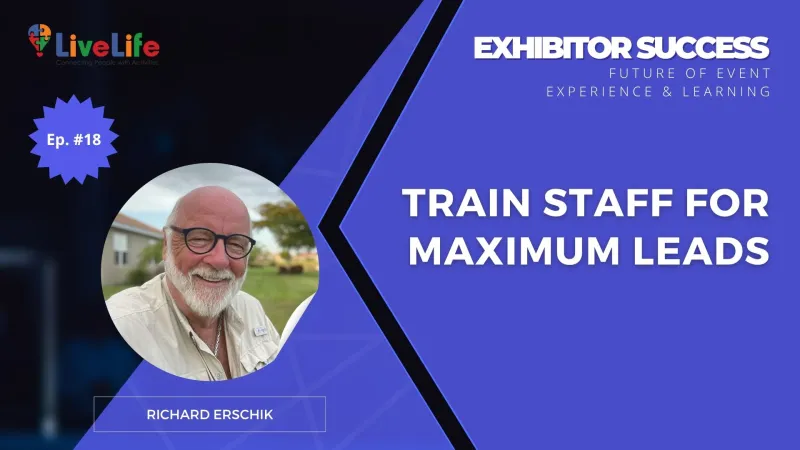
- Hours of wasted sales time are saved by filtering visitors quickly during the event.
- More potential customers are met when staff stand at the carpet line instead of waiting.
- Immediate sales priority goes to hot leads when prospects are categorized during the show.
- Smoother booth operations during busy hours come from preparing for high-traffic chaos in advance.
- Reliable sales data is gathered when staff add specific notes to every badge scan.
- More second meetings are booked when follow-up happens while the booth interaction is still fresh.
- Specific buyer pain points are revealed by asking questions instead of reciting feature lists.
This is the summary based on The FEEL Podcast with Richard Erschik.
To transform your booth from a social hub into a high-performance engine, implement this three-tier staffing framework during your next briefing.
- The Pattern Interrupt: Train staff to stand at the carpet line, using open-ended questions to stop passersby and get more people to visit your booth.
- The 60-Second Filter: Use a rapid checklist to identify project timelines and authority. This is how you tell if a lead is worth following up.
- The CRM Handshake: Categorize leads by "Heat Level" immediately to ensure your sales team knows who to prioritize post-show.
Why Badge Scanning Alone Fails Your Sales Funnel
While categorizing leads by heat level is essential, the breakdown usually happens because staff view badge scanning as the finish line rather than the starting point. When the primary metric is "number of scans," the focus shifts from meaningful conversation to simple data collection.
This mechanical approach creates a significant data gap. Your CRM might show hundreds of leads, but it lacks the nuance of the actual interaction. Without a specific framework for engagement, staff often miss the subtle cues that differentiate a curious passerby from a high-intent buyer.
The root of this issue often stems from two structural failures:
- Volume-based Incentives: Staff are often pressured to "get the numbers," which discourages them from spending time qualifying a lead properly during the lead qualification process.
- Lack of Shared Language: If the person at the booth doesn't know what a "hot lead" actually looks like for your specific business, every scan is treated with the same level of urgency.
This disconnect leads to a post-show bottleneck where sales teams are forced to sort through noise instead of closing deals. When the "why" behind the visitor's interest isn't captured, the data becomes a list of names rather than a list of opportunities.
Turning Booth Interactions into Data-Driven Opportunities
Bridging the gap between a crowded booth and a closed deal requires a fundamental shift in how your team engages with the floor. Instead of viewing the booth as a stage for a monologue, it should be treated as a diagnostic center.
The solution is to train staff to prioritize discovery over delivery. By asking the right questions in the first 60 seconds, they stop being presenters and start being strategic filters for your sales pipeline.
Implementing a Standardized Qualification Framework
A standardized framework ensures every badge scan is backed by context. This system allows staff to categorize visitors based on their specific needs and authority, turning a generic list of names into a prioritized map of opportunities.
The Art of the High-Value Conversation
Effective training focuses on identifying specific pain points rather than reciting features. When staff can link a visitor’s problem to a specific solution, the interaction shifts from a generic chat to a strategic consultation that justifies a follow-up.
Streamlining the Hot Lead Hand-off
The best trade show booth staff training strategies include a "fast-track" protocol for high-intent visitors. This ensures that when a genuine buyer is identified, they are introduced to the right technical expert or closer immediately, maintaining the momentum of the initial spark.
Building Professional Ownership Through Behavioral Education
Transitioning from rigid scripts to a culture of professional growth ensures your team doesn't just occupy space—they drive results. When staff view their role as an educational milestone rather than a manual task, their engagement with visitors becomes more authentic and focused on the long-term sales cycle.
This shift in mindset allows team members to take full ownership of exhibition performance. Instead of waiting for specific instructions, they proactively manage the booth flow and identify where they can add the most value in real-time based on the visitor's unique needs.
Why Behavioral Simulation Outperforms Manuals
- Stress Resilience: Simulating high-traffic chaos prepares the brain to stay calm and professional when the floor becomes crowded.
- Adaptive Communication: Practicing difficult questions helps staff pivot conversations toward your core value proposition without sounding rehearsed or defensive.
- Intuitive Qualification: Education focuses on understanding the intent behind a visitor's question, making it easier to spot high-value prospects naturally.
By prioritizing these behavioral shifts, the booth becomes a dynamic environment where every interaction is handled with the nuance required to maintain momentum and protect your brand reputation.
Turning Insight Into Action With a Standardized Booth Playbook
Once your team understands how to read visitor intent, they need a structured way to capture that data without breaking the flow of conversation. Moving from intuition to execution requires a repeatable lead qualification process that every staff member can follow.
Building Your Centralized Knowledge Hub
Instead of relying on memory, provide your team with a single source of truth. This prevents conflicting answers and ensures your brand message remains consistent across all three days of the event.
- Digital Cheat Sheet: Document the top 10 most common technical questions and their concise answers for quick reference.
- Role Assignment: Designate specific staff as "Qualifiers" (to filter traffic) and "Closers" (to handle deep-dive technical discussions).
- Daily Briefings: Spend 10 minutes every morning reviewing the specific lead targets and logistical updates for that day.
Implementing a High-Value Lead Framework
To move beyond "just scanning badges," use a simple 1-3 ranking system within your lead capture tool to prioritize post-show outreach.
- Rank 1 (Hot): Immediate project need or budget confirmed; requires a call within 24 hours.
- Rank 2 (Warm): General interest with a relevant job title; requires a personalized email within 72 hours.
- Rank 3 (Cold): Information gathering only; add to the long-term newsletter nurture sequence.
A 4-Step Framework to Train Your Booth Team for High-Quality Leads
Once you have defined your lead ranking criteria, your team needs the conversational tools to execute them on the floor. Use this framework to turn your staff into active qualifiers rather than passive observers.
Master the 15-Second Opening
Train staff to avoid "Can I help you?" which invites a quick "No." Instead, use an open-ended question targeting a specific industry pain point. Practice booth staff training strategies that focus on curiosity, not pitching.
Conduct Live Role-Play Scenarios
Even veteran sales reps need to practice the transition from a casual greeting to a qualification question. Run drills where reps have two minutes to identify if a visitor is a Rank 1, 2, or 3 based on your pre-set criteria.
Standardize the Qualification Script
Give your team a specific checklist of three questions that reveal budget, authority, or timeline. This ensures that every lead captured has the same baseline of data for your CRM.
Implement Immediate Lead Tagging
Training must include the technical side: how to use your lead capture app to add context. A lead is only as good as the notes attached to it; ensure staff tag "Warm" or "Cold" immediately after the person walks away.
Turning Booth Conversations Into a Post-Show Action Plan
Once your staff is comfortable tagging leads in real-time, the final step of your training must focus on the hand-off. A lead left in an app for a week is a lead lost to a competitor.
Implement this 24-hour momentum framework to ensure your team’s hard work on the floor actually hits the bottom line:
- Sync and Scrub: Export all lead data within two hours of the show closing to catch typos or missing context while memories are fresh.
- The "Speed to Lead" Rule: Set a mandatory 48-hour window for the first personalized follow-up for any lead tagged as "Warm."
- Context Matching: Ensure the sales team receives the specific notes recorded in the booth so the first call feels like a continuation, not a cold start.
Training your team to think beyond the three days of the event is what separates high-performing exhibitors from those who simply "show up."
If you are looking to refine how your team captures and converts opportunities, a structured review of your current exhibition workflow can highlight exactly where the leaks are happening.

Frequently Asked Questions
Q1: Why does badge scanning often fail to produce a high ROI after the show?Badge scanning fails when staff treat it as the goal rather than a data point. Without a structured lead qualification process to capture context, your CRM fills with "noise" rather than intent. To fix this, shift the metric from the total number of scans to the depth of interaction notes, ensuring every scan is categorized by heat level and specific project timelines.
Q2: How do I stop passersby and get more people to visit my booth without sounding pushy?Implement the "Pattern Interrupt" by training staff to stand at the carpet line rather than behind a counter. Instead of asking "Can I help you?", which invites a quick "No," use open-ended questions targeting specific industry pain points. This forces a cognitive shift in the prospect, moving them from passive walking to an active diagnostic conversation.
Q3: What are the most effective booth staff training strategies for a high-traffic exhibition?The most effective strategies prioritize behavioral simulation over reading manuals. Use live role-play drills to practice the "60-second filter," where staff must identify a prospect's authority and budget within one minute. Training should also include a "fast-track" protocol so high-intent buyers are immediately introduced to technical experts or closers while momentum is high.
Q4: How can we differentiate between a curious visitor and a high-intent buyer in real-time?Use a standardized 1-3 ranking system during your lead qualification process. A Rank 1 lead has a confirmed budget and immediate project need, while a Rank 3 is only gathering information for the future. By tagging these categories in your lead capture app immediately after the person walks away, you eliminate the post-show bottleneck and allow sales teams to prioritize outreach based on urgency.
Q5: What is the biggest mistake teams make during the post-show lead hand-off?The biggest mistake is the "data gap" caused by delayed follow-up and lack of context. Apply the "Speed to Lead" rule: export and scrub your data within two hours of the show closing. Ensure the sales team receives the specific conversational notes recorded in the booth so the first follow-up call feels like a continuation of a strategic consultation rather than a cold start.

Banner
Write a comment