
Effective Trade Show Lead Qualification Process for Sales
- Fewer wasted hours occur when booth staff filter out uninterested visitors in real-time.
- Better sales alignment happens when booth staff and sales reps share the same qualification criteria.
- Faster response times prevent lead decay by reaching prospects while your brand is fresh.
- Instant data syncing protects your sales reps' time by eliminating post-show data entry nightmares.
- Clear lead scoring turns high booth traffic into a predictable, high-value sales pipeline.
- Real-time buyer identification stops competitors from stealing your best leads during the follow-up phase.
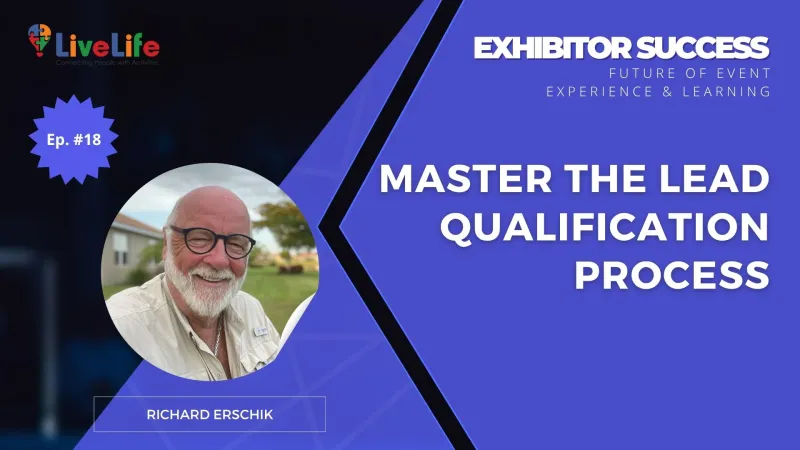
This is the summary based on The FEEL Podcast with Richard Erschik.
To stop wasting time on dead-end conversations, you need a qualification framework that your team can execute in seconds.
Follow these steps to ensure you capture sales-ready leads during the event:
- Define "Sales-Ready": Align with your sales team on the specific criteria that make a lead worth an immediate follow-up.
- Create a Lead Score: Rank visitors as Hot, Warm, or Cold based on their budget, authority, and project timeline.
- Standardize Questions: Give your booth staff three "must-ask" questions to quickly filter out casual browsers.
Aligning Booth Conversations With Sales Priorities
Once these qualifying questions are in place, the focus shifts to creating a shared language between the booth and the back office. The solution lies in a unified lead qualification framework that replaces gut feelings with objective data.
This system works because it forces a shift from collecting business cards to identifying sales readiness. When every team member uses the same criteria—such as the BANT criteria (Budget, Authority, Need, and Timeline)—the data becomes actionable immediately.
- Consistency: It ensures every prospect is measured against the same benchmarks, regardless of which staff member they speak to.
- Efficiency: It allows sales teams to ignore the noise and focus on high-intent buyers who are ready to move forward.
- Clarity: It removes the ambiguity of "good conversations" that often lead to dead ends during the follow-up phase.
By categorizing visitors based on their potential impact rather than their personality, you ensure that the most valuable opportunities are flagged before the show even ends.
The Hidden Cost of Treating Every Booth Visitor Like a Hot Lead
When teams lack a rigid qualification process, they often mistake high booth traffic for actual sales progress.
A crowded booth feels like success, but it usually masks a looming productivity crisis for your sales department once the event ends.
The Post-Show Follow-Up Bottleneck
Without clear prioritization, your sales reps return to the office with a stack of 200 business cards and zero direction on where to start.
They often spend the first critical week chasing "tire kickers" who were only there for the free merchandise or a polite, non-committal chat.
Diminishing Returns on Sales Effort
By the time your team reaches the actual decision-makers, the lead has often gone cold or engaged with a competitor who moved with more precision.
This lack of distinction leads to poor lead quality and a massive drain on resources, turning a high-potential event into a manual data-entry nightmare.
Building a Shared Language for Trade Show Success
To stop the cycle of cold leads and wasted resources, teams must shift from gathering contact info to validating business potential in real-time. This requires a unified framework where marketing and sales agree on the specific signals that indicate a high-value prospect.
Defining the Sales-Ready Threshold
An effective trade show lead qualification process for sales relies on a "scorecard" approach. Instead of guessing, booth staff use a set of 5 to 10 strategic questions to categorize visitors instantly. This ensures that the most promising opportunities are flagged for immediate action, rather than getting buried in a generic database.
- Priority Alignment: Both teams agree on which specific pain points signal an urgent need for your solution.
- Intent Verification: Moving beyond "just looking" to identifying active projects or upcoming budget cycles.
- Resource Optimization: High-touch sales energy is reserved for leads that meet pre-defined sales-ready criteria.
By establishing these benchmarks before the doors open, you transform the booth from a simple data-collection point into a precision-driven filter that protects your sales team’s time and focus.
Turning High Traffic Into High-Value Sales Pipelines
To move away from the "coffee shop" mentality, the booth must operate as a high-speed diagnostic center. The solution lies in a standardized lead scoring system that separates casual browsers from serious buyers in under three minutes.
By implementing a tiered qualification model, you ensure that "interest" is never confused with "intent." This logic allows your team to stop chasing every badge scan and start focusing on the specific business problems the visitor is trying to solve.
Prioritizing Intent Over General Interest
A high-performing booth relies on distinguishing between people who like your product and people who need your solution. This distinction is the core of an effective trade show lead qualification process for sales.
- Hot Leads: Visitors with an active project, a defined budget, and the authority to sign.
- Warm Leads: Individuals researching for the next fiscal year who fit your ideal customer profile.
- Information Seekers: Students, competitors, or low-fit leads who only require automated follow-up.
This structured approach protects your post-show momentum. Instead of returning to the office with a disorganized stack of business cards, your sales team receives a prioritized roadmap of who to call first and why.
How to Build Your Lead Scoring Framework
To turn the tiered follow-up strategy into a reality, you need a repeatable framework for categorizing every person who walks onto your carpet.
This process ensures that "A" leads are identified by data, not just the gut feeling of a tired sales rep at the end of the day.
Step 1: Define Your Lead Scoring Criteria
- Immediate Need: Is the prospect looking for a solution within the next 3 to 6 months?
- Decision Power: Does the person at the booth have the authority to sign off or influence the purchase?
- Problem Fit: Does their specific pain point align directly with your core service?
Step 2: Assign Action-Based Values
Not all interactions are equal. Assign higher points to prospects who engage in high-value activities during the show.
- Low Value (C): Scanned a badge for a giveaway or only took a brochure.
- Medium Value (B): Stayed for a 5-minute conversation or asked about specific pricing.
- High Value (A): Requested a technical demo or booked a follow-up meeting on the spot.
By using a digital lead capture tool with these fields pre-set, your team can categorize prospects with two taps, ensuring the data is ready for the CRM immediately.
Building Your Post-Show Lead Management Framework
Once your team has categorized leads on the floor, the speed of your transition determines your actual conversion rate.
High-value prospects expect a touchpoint while the conversation is still fresh in their minds, usually within 24 to 48 hours.
- Sync data instantly: Transfer digital captures to your CRM immediately to prevent "lead decay" and manual entry errors.
- Send personalized follow-ups: Use the specific pain points recorded in your lead tool to draft "as discussed" emails that feel relevant.
- Segment the hand-off: Assign "Category A" leads directly to senior sales reps while placing "Category B" into an automated nurture sequence.
- Review conversation quality: Audit the notes captured by booth staff to ensure the sales team has enough context for a discovery call.
A structured trade show follow-up strategy ensures that the momentum gained at the booth translates directly into your sales pipeline.
If you are unsure where your current lead flow is breaking down, a structured review can help identify if the gap is in your qualification criteria or your follow-up speed.
You may find it helpful to conduct a strategy audit to refine these steps and ensure your next exhibition delivers a measurable impact on your ROI.

Frequently Asked Questions
Q1: How do I stop sales reps from wasting time on low-quality trade show leads?Implement a tiered lead scoring system—Hot, Warm, and Cold—based on BANT criteria (Budget, Authority, Need, and Timeline). By standardizing three "must-ask" questions regarding specific projects and decision-making power, your booth staff can filter out casual browsers in under three minutes, ensuring your sales team only focuses on high-intent buyers.
Q2: What are the most effective questions for a trade show lead qualification process for sales?Focus on validating business potential rather than general interest. Ask: "Do you have an active project or budget allocated for this fiscal year?" and "What is the specific business problem you are looking to solve today?" These questions shift the conversation from polite chat to identifying actionable sales opportunities that fit your ideal customer profile.
Q3: Why do most sales teams struggle with post-show follow-up?The primary bottleneck is a lack of lead prioritization. Without a qualification framework, reps return to a disorganized stack of business cards and spend the first critical week chasing "tire kickers." This delay allows high-value prospects to go cold or engage with competitors who moved with more precision and speed.
Q4: How should we categorize booth visitors to ensure a high-value sales pipeline?Use an action-based scorecard. Assign "Category A" to visitors who request a technical demo or book a meeting on the spot. "Category B" includes those researching for the next fiscal year who fit your target profile, while "Category C" covers information seekers who only require automated email nurturing rather than a direct sales call.
Q5: What is the fastest way to sync a trade show lead qualification process for sales with a CRM?Use a digital lead capture tool with pre-set qualification fields to categorize prospects with two taps on the floor. This allows for immediate data transfer and prevents manual entry errors, enabling your sales team to reach out to high-priority leads within 24 to 48 hours while the conversation is still fresh.
Q6: What is the "Sales-Ready" threshold for a booth visitor?A lead is considered sales-ready when they meet three specific criteria: they have an immediate business pain point aligning with your solution, they possess the authority to influence the purchase, and they have a defined project window of 3 to 6 months. Anything less should be funneled into a long-term marketing nurture sequence.

Banner
Write a comment