
How to Improve Trade Show Lead Follow Up and Boost ROI
- Faster deal closing happens by reaching out before competitors send their first email.
- More sales appointments result from filtering out window shoppers to focus on real buyers.
- Fewer lost opportunities occur when booth data is synced before the team leaves.
- Higher reply rates come from referencing specific booth conversations instead of using templates.
- Instant prospect trust is built by sending solutions for specific problems mentioned on-site.
- Accurate ROI data is captured by tagging every lead with the specific show name.
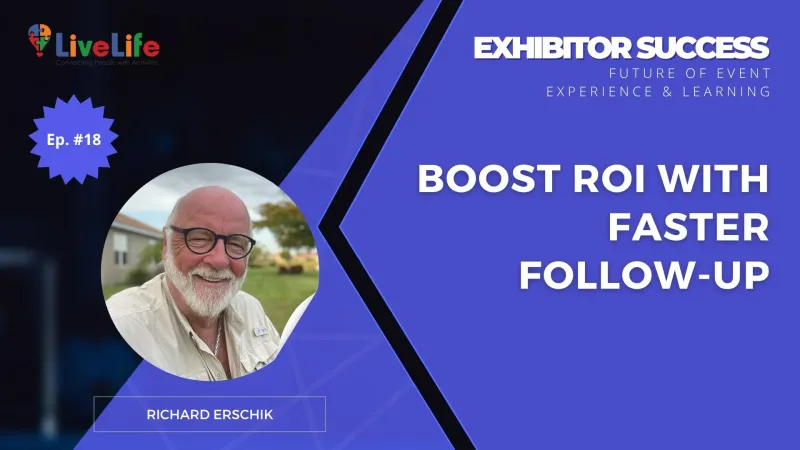
This is the summary based on The FEEL Podcast with Richard Erschik.
To turn those expensive handshakes into revenue, you need a lead qualification system that works in real-time. Stop treating every business card as equal; start prioritizing intent while you are still on the show floor.
- Hot Leads: Follow up within 24 hours while the memory is fresh.
- Warm Leads: Schedule a call within 3 to 5 business days.
- Cold Leads: Move into a long-term email nurture sequence.
Categorizing leads immediately ensures your sales team hits the ground running the moment the event ends.
How to Build a High-Speed Follow-Up Framework
With your leads already categorized, the next step is removing the friction between the event floor and the first outreach. Speed is your biggest competitive advantage when your brand is still fresh in their minds.
Implement a 48-Hour Response Protocol
To ensure no lead goes stale, follow this structured workflow immediately after the show closes:
- Sync data instantly: Upload your scanned leads to your CRM within 12 hours. Do not wait for the team to return to the office or unpack.
- Deploy the contextual email: Send a personalized note to "Hot" leads that references a specific pain point or topic discussed at the booth.
- Assign clear ownership: Tag specific sales reps in the CRM so they receive an automated notification the moment a lead is assigned to their territory.
- Schedule the second touch: Set a reminder for a follow-up call or LinkedIn connection exactly three days after the initial email.
Standardizing these steps prevents leads from sitting in a spreadsheet for weeks. This structured lead response time strategy ensures your sales team moves from "collecting cards" to "closing deals" before the competition even sends their first mailer.
The Bottleneck Between the Booth and the Inbox
Even with a response strategy in place, most teams hit a wall the moment the exhibition floor closes.
The transition from a physical conversation to a digital record is where most high-value opportunities disappear into a black hole of administrative delay.
The Vanity Metric Trap
Success is often measured by the thickness of a stack of business cards rather than the depth of the conversations behind them.
- Volume over value: Reporting 500 leads looks good to management but creates an unmanageable backlog for sales.
- Diluted focus: Reps waste hours calling "window shoppers" while hot prospects grow cold waiting for a reply.
The "Robotic" Outreach Problem
When booth staff fail to record specific pain points, the follow-up email becomes a generic "Thanks for visiting" template.
This lack of data enrichment makes your brand feel forgettable and forces your sales team to restart the conversation from zero.
Without context, your leads view your outreach as spam rather than a continuation of a professional consultation, leading to immediate lead decay.
A Framework to Stop Lead Decay and Reclaim Your ROI
To stop your outreach from feeling like spam, you must replace generic email blasts with a structured verification system. This ensures no high-value conversation is left to cool off or get lost in a cluttered inbox.
The 100% Follow-Up Framework
- Segment within 24 hours: Categorize every lead by "temperature" before the team leaves the event city.
- Initiate human-centric touchpoints: Use a personalized LinkedIn note or a brief phone call to verify the specific pain point discussed at the booth.
- The "Consultation Bridge": Position the first follow-up as a continuation of your booth conversation rather than a hard sales pitch.
Implementing a Human-Centric Lead Scoring Model
Use a simple numerical system to help your CRM automatically route "hot" prospects to your senior sales executives for immediate attention.
- Hot (50+ points): Requested a live demo or shared a specific project timeline and budget.
- Warm (20 points): Engaged with a product expert for more than five minutes but has no immediate timeline.
- Cold (5 points): Scanned a badge primarily for a giveaway or general browsing with no specific problem to solve.
By assigning these values, your team stops guessing who to call first and starts focusing on the conversations most likely to convert.
Operationalizing Your Lead Data: The 48-Hour Execution Plan
Once your team stops guessing and starts scoring, the focus must shift to speed and relevance. To effectively how to improve trade show lead follow up, you need a workflow that treats "Hot" leads as emergencies and "Cold" leads as long-term assets.
Segment Your Outreach by Temperature
- Hot Leads: Personal phone call or direct LinkedIn message within 24 hours. Reference the specific problem they mentioned at the booth.
- Warm Leads: Email within 48 hours containing a "next step" resource, such as a case study or a technical spec sheet they requested.
- Cold Leads: Add to a monthly educational newsletter or a "recap" email to keep your brand visible without being intrusive.
Map Content to the Conversation
Do not send a generic company deck to everyone. If a lead was interested in your renewable energy solutions, their first email should contain a project gallery, not a general corporate history. Match the follow-up material to the specific pain point noted during the badge scan.
Sync Data to Your CRM Immediately
Manual data entry is where leads go to die. Export your scanned data into your CRM within hours of the show closing. Assign clear "owners" for each lead so no one assumes someone else is handling the outreach.
Standardizing Your Post-Show Outreach Sequence
Once ownership is clear within your CRM, the final step is executing a structured outreach sequence that prevents lead decay.
Speed is your biggest advantage, but consistency is what actually closes the deal. Follow this framework to ensure no high-value contact is wasted:
- The 48-Hour Rule: Send the first personalized follow-up within two business days while the conversation is still fresh in their mind.
- Tiered Messaging: Use different templates for "hot" leads versus "information seekers" to ensure the tone matches their specific intent.
- Multi-Channel Touchpoints: Connect on LinkedIn or send a brief personalized video note to stand out from the inevitable post-show email blast.
- Track the Conversion: Tag every lead by the specific event name in your system to accurately calculate your final cost-per-acquisition.
Most trade show investments fail not because of low booth traffic, but because the hand-off between marketing and sales is broken.
If you are unsure where your leads are falling through the cracks, it may be time to audit your current lead qualification system to ensure 100% follow-up and measurable event ROI.

Frequently Asked Questions
Q1: How can I improve trade show lead follow up speed without losing lead quality?To accelerate outreach, sync your scanned leads to a CRM within 12 hours and categorize them by temperature (Hot, Warm, Cold) before the event ends. Implementing a 48-hour response protocol ensures that high-priority prospects receive a personalized message referencing their specific pain points while your brand is still top-of-mind.
Q2: What are the most common mistakes in a post-show lead qualification system?The biggest failures are prioritizing volume over value and sending generic, "robotic" emails. Success is often mismeasured by the number of cards collected rather than the depth of conversation, leading to a backlog where hot prospects grow cold while sales reps waste time on low-intent window shoppers.
Q3: How should I segment leads to ensure the highest ROI?Use a numerical scoring model: assign 50+ points to "Hot" leads who requested a demo or shared a budget, 20 points to "Warm" leads who engaged with experts, and 5 points to "Cold" leads who primarily scanned for giveaways. This allows your team to treat high-value leads as emergencies while placing others into long-term nurture sequences.
Q4: What is the ideal lead response time strategy for "Hot" prospects?Hot leads require a multi-channel touchpoint within 24 to 48 hours. This should include a personal phone call or a direct LinkedIn message that offers a "Consultation Bridge"—positioning the outreach as a continuation of the booth conversation rather than a hard sales pitch.
Q5: How do I prevent lead decay when transitioning from the booth to the office?Remove administrative friction by exporting lead data instantly and assigning clear ownership tags to specific sales reps in your CRM. This prevents leads from sitting in a spreadsheet for weeks and ensures that every contact is matched with content specific to the pain points they discussed during the event.

Banner
Write a comment