
How Booth Staff Should Approach Visitors For Maximum Impact
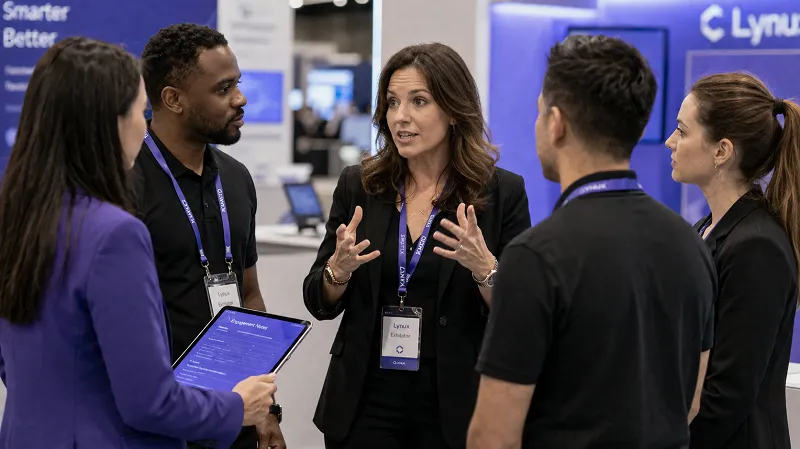
- Most exhibitors kill connection by going straight for the jugular, grabbing the name card and shoving over a brochure before a single human moment has a chance to form.
- The floor isn't a cold call, it's an open dating environment where show management already gathered thousands of warm leads, so your only job is to serve instead of sell.
- Kill the dead stories about your awards and history, make the conversation about the visitor's win in front of their leadership, and you earn the right to their future attention.
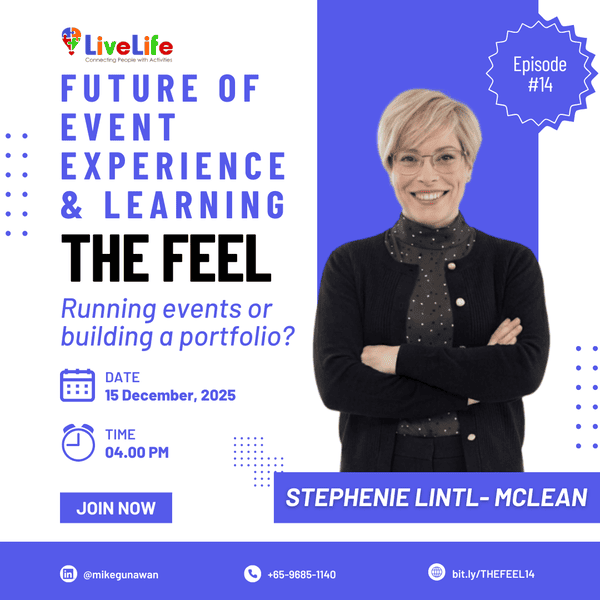
This is the summary based on The FEEL Podcast with Steve Multer.
Most exhibitors walk onto the floor with a taking mindset. They want the lead, the scan, the business card. And they want to cut the conversation as short as possible to get to the next one.
Steve described this as the extreme version of the sales instinct, going for the jugular, the equivalent of meeting someone and immediately blurting out "nice to meet you, shall we go on a date?"
That instinct creates an immediate psychological barrier. The moment a visitor senses you're focused on your own quota, they stop being a person and start being a target. And people can feel that from across the aisle.
Look closely at what the brochure actually signals. Handing someone paper is often a defensive move, a way for a nervous staffer to end the awkwardness of a conversation they don't know how to lead.
But a brochure is a silent salesperson that rarely closes anything on its own. When you lead with paper, you're telling the visitor the interaction is already finished, that you've given them the information and they're free to walk away and drop it in the nearest hotel trash can.
To build a real connection, you have to keep the information alive inside the conversation, not surrender it to a pamphlet.
Then there's the timing problem, which Steve framed with that dating analogy for a reason. Rushing the sales cycle is like proposing marriage five minutes into a first date.
When staff leap straight to "What's your budget?" or "Are you the decision-maker?", they skip clean past the phase where human rapport actually gets built. The fix is a deliberate inversion: slow-play the brand, fast-play the person.
You slow down everything about your company and speed up your genuine curiosity about theirs. That single shift in alignment changes the entire temperature of the interaction.
And it's the exact shift that separates a booth that burns money from one that pays for itself. This one conversation is just a single piece of a much larger discipline: knowing how to staff and run a trade show nooth that drives ROI from the first handshake to the final follow-up.
What to say instead of giving brochures at a booth
If the brochure comes off the table, what does a strong opening actually sound like? The most powerful tool your staffer holds isn't a product demo. It's the spirit of service. Steve put it plainly on the podcast, and it's worth sitting with:
Speaking, selling, they are human endeavors based on service.
Once your staff internalize that, the scary part of approaching strangers quietly dissolves, because you're no longer breaking into anyone's day. You're offering a hand.
When you walk up to someone thinking "how can I serve your needs, how can I make your life easier, how can I make you look stronger in front of your leadership," the whole dynamic flips from taking to giving, and the visitor feels it immediately.
That shift shows up in the actual words. Drop the generic "How are you enjoying the show?" and reach for something built around service instead.
- "How can I be of service to you today?" — This reframes you as a resource rather than a solicitor. You stop being the person breaking into their day and become the person offering to help with it.
- "What's the one problem you're trying to solve at this conference?" — This hands the visitor the microphone and signals the conversation is about their reality, not your capabilities.
- A deeper question instead of a flyer — When a visitor names a specific pain point, the worst reflex is reaching for collateral. Reach for another question. By the time you do offer a resource, it should feel like a custom answer to the problem they just described out loud.
This is the pivot from "here is what I have" to "what are you looking for," and it demands the kind of active listening most booth staff were never trained to do under the noise and pressure of the floor.
If your team keeps defaulting to brochure-dumping, that's your signal to refine the on-site engagement approach and rebuild it around service instead of paper.
How to make booth conversations about the visitor, not the brand
Here's where it gets genuinely hard. Corporations spend millions on branding, signage, and awards, so naturally they want to talk about all of it. But Steve was blunt: your company's history, your market share, your wall of trophies, the glowing things people say about your product, these are what he called dead stories.
To the visitor, they're static facts already sitting on your website. When you tell someone how many awards you've won, you're asking them to applaud you. When you ask them about their challenges, you're offering to applaud them. One of those earns affection. The other earns a polite nod and a slow backward step toward the aisle.
Every person walking that floor is there for a reason, and often that reason is tied directly to their own standing at work. They want a solution that makes them look like a hero to their leadership team.
Steve said it in almost exactly those words: how can I make you stronger at your job, how can I make you look better in front of your leadership? If your staff can identify what that internal win looks like for a visitor, they've earned something no competitor can buy back.
So let me ask you directly: have you ever actually trained your team to listen for that win, or are they still trained to recite the capabilities deck?
Service is the real differentiator, and it doesn't always tie neatly to a same-day sale. If your staffer spends ten minutes genuinely helping a visitor make sense of their situation, even in a way that doesn't route straight to your product, they've built a level of trust no competitor can purchase. You served them.
And in serving them, you won their attention and their affection, which is the whole point. That's the strategy in a single line: be in it for their benefit rather than yours, and you earn the right to their future attention.
How to attract people to your booth without calling them in
One of the biggest fears on the floor is the cold-call feeling, standing in the aisle trying to grab passing strangers before they drift by. But Steve offered a reframe worth holding onto: the trade show floor is an open dating environment.
Show management, whoever the show manager happens to be, already did the cold calling for you. They assembled thousands of qualified people who chose to be there, which makes the floor close to the opposite of a cold room. That changes how your staff should carry themselves the moment they step onto it.
The pull comes from the story you tell. When your booth is built around a solution instead of a product, people are drawn in on their own, and Steve's point was that you don't have to break in on them, they'll come to you to a certain degree if the story is good.
You may not be the most popular booth on the floor, but you're out there for a reason and they're attending for a reason, and between those two reasons a connection is entirely possible. That's the alignment that makes an interaction feel effortless instead of forced.
And this loops right back to why the dread is misplaced. Steve reached for a restaurant to land it, and it's the cleanest version of the whole idea:
It's like walking in the door to a restaurant. They know why you're there. You want to eat. You know why they're there. They want to sell you food.
All that's left is agreeing on which food you'll order and whether it's to your liking. The trade show floor works exactly the same way. You both already know why you're in the room together.
Creating that first connection isn't the brutal cold call people dread, because everyone there is a warm lead, and the only real work left is discovering whether your menu matches their hunger.
The floor was never a gauntlet you have to survive. It's an invitation you get to accept, one intentional, service-first conversation at a time. So before your next show, ask yourself honestly: do you want your booth staff standing guard over a stack of brochures, or do you want them out there earning the right to someone's attention?
That gap, between guarding paper and serving people, is the whole difference between exhibitor success and another floor full of dead stories

Frequently Asked Questions
Q1: What should booth staff say instead of handing out a brochure?According to Steve Multer on The FEEL Podcast, lead with service instead of paper. Openers like "How can I be of service to you today?" or "What's the one problem you're trying to solve at this conference?" reframe the staffer as a resource rather than a solicitor, and keep the information alive inside the conversation instead of surrendering it to a pamphlet the visitor will drop in the nearest hotel trash can.
Q2: Why is everyone at a trade show considered a warm lead?Because show management already did the cold calling for you. They gathered thousands of people who paid money and traveled miles to be in that room, which means everybody there chose to attend for a reason. They may not be a hot lead, but nobody on that floor is cold, so the dread of "bothering" people is misplaced from the start.
Q3: Why shouldn't booth staff talk about their company's awards and history?Because those are what Steve called dead stories. Your market share, your trophies, your company history are static facts a visitor can find on your website. When you tell someone how many awards you've won, you're asking them to applaud you. When you ask about their challenges instead, you're offering to applaud them, and that's what actually earns attention and affection.

Banner
Write a comment