
Why Your Team Fails At How To Talk To Visitors At A Trade Show Booth
- Most booth conversations die because staff broadcast features at visitors instead of communicating with them, treating people as passive targets for a spec sheet rather than protagonists with a problem to solve.
- Steve Multer's inversion mantra — don't tell them what you want to tell them, tell them what they want to hear — forces the story ahead of the pitch, which is exactly where Seth Godin says the real connection lives.
- Whether it's a buyer, a journalist, or a partner standing in front of you, differentiation comes from the quality of the value exchange, not the size of the "nice building" behind you.
This is the summary based on The FEEL Podcast with Steve Multer.
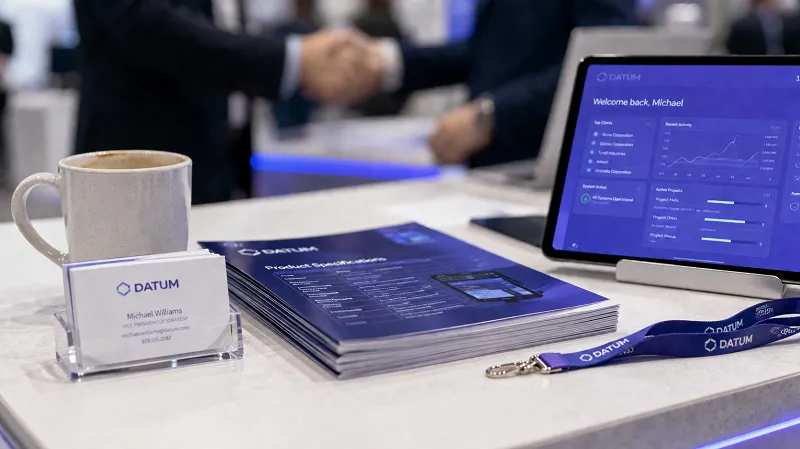
Walk down any aisle at a major exhibition and you'll notice the same quiet failure repeating itself booth after booth. There are the polished builds, the high-definition screens, the carefully printed signage, and then there are the staff members standing behind the counter like part of the furniture, waiting.
Steve Multer described this perfectly on The FEEL Podcast when he said a booth can just "be there like a nice building." The problem is that a nice building doesn't sell anything on its own, and yet most exhibitors pour their entire budget into the structure while treating the human conversation as an afterthought.
When an attendee finally drifts close enough, the staffer usually does one of two things, and both of them quietly kill the interaction. They either offer a limp "How are you enjoying the show?" that invites a shrug and a polite exit, or they launch into a rapid-fire list of product specifications the visitor never asked about.
Steve raised the exact tension I hear from teams all the time: people had heard the advice "don't talk to booth visitors" and walked away confused, asking what on earth they were supposed to do instead. That confusion is the real starting point, and it deserves a clearer answer than most training gives it.
And here's the thing — that conversation problem is really just one piece of a much bigger machine. It sits inside the full discipline of how to staff and run a trade show booth that drives ROI, where the people, the message, and the follow-up all have to pull in the same direction. Get the conversation wrong and the whole investment leaks value, no matter how good the build looks.
Here's the reframe that changes everything, and it's simpler than it sounds. The instruction was never "stop talking to visitors" — it was talk with them, not at them. We want to communicate with the people who step into our booth as much as we possibly can, but the intention behind the words has to shift. When you talk at someone, you're broadcasting your agenda and treating them as a passive recipient of your marketing collateral.
When you talk with someone, you're maximizing the story for the specific person standing in front of you. That single distinction is where exhibitor success quietly begins, and the rest of this breaks down how to make it real for your team.
The "Talk At" vs. "Talk With" Trap That Sabotages Booth Conversations
Most booth staff genuinely believe their job is to broadcast. They've been handed a stack of features, a demo to run, and a vague instruction to "engage," so they do the thing that feels productive: they talk. The trouble is that talking and communicating are not the same act.
When your opening move prioritizes your agenda over the visitor's reason for stopping, you've already lost the exchange before it started, no matter how impressive the booth behind you looks.
Steve's mantra cuts straight to the heart of it, and it's one worth repeating to every person you put on the floor. "Don't tell them what you want to tell them; tell them what they want to hear."
It sounds almost too simple to matter, but executing it is genuinely hard because it asks staff to suppress the urge to talk about their favorite features. The intentional part is the listening — staying in it for the audience rather than for yourself. That's the alignment most teams are missing, and no amount of booth budget compensates for its absence.
The reason this trap is so sticky is that broadcasting feels safe. Reciting specs gives the staffer a sense of control and a script to hide behind, while genuinely communicating requires them to react in real time to a stranger. But a visitor can feel the difference instantly.
When the exchange starts with you instead of them, the visitor keeps walking, and the "nice building" goes right back to doing what it does best — standing there looking expensive.
Why Lead Gen Fails When Your Trade Show Booth Staff Start with Features
Your product features are not the reason a visitor stops at your booth. People stop because they carry a problem they need to solve or an opportunity they're hoping to seize, and they're scanning the floor for someone who might help them do that.
If your opening gambit is a list of technical specs, you've fumbled the initial engagement challenge before the conversation even had a chance to become one. The physical booth — the "nice building" — can only pull them close; it can't hold them.
The real connection lives in the verbal exchange, and this is where Seth Godin's thinking becomes so useful. In his book originally titled All Marketers Are Liars, later re-released as All Marketers Tell Stories, Godin argues that the bond between an organization and a potential client, customer, or even a journalist tracking the industry doesn't form in the features or the benefits of what you're selling.
It forms in the story — the one the audience can invest in, embrace, and then carry out to share with others. Your product is just the tool that helps them reach the ending they actually want.
So what does this mean for the person staffing your booth? It means the story has to come before the pitch, because the pitch only lands if the visitor already cares. A feature is what your product does. A benefit is what it does for them.
The story is how they feel once that benefit is real — the security leader sleeping soundly because a breach never happens, the operations manager who finally patched the recurring headache. Talk about that story first, and the features become supporting evidence rather than the whole clumsy opening act.
Reading Visual Cues Before You Say a Word
Initiating a conversation feels awkward mostly because staffers assume they're interrupting someone's journey across the floor. The fix is to stop thinking of yourself as an interruption and start thinking of yourself as a shortcut to a solution. That reframe lowers the pressure, but it still needs something concrete to act on, and the something is observation.
Watch what the visitor is actually doing before you open your mouth. Are they lingering on a specific demo? Are they scanning your signage, trying to work out what you do?
Those visual cues hand you a far better entry point than any rehearsed line, because they let you ask a question rooted in what already caught the person's attention. Proactive engagement isn't about a magic sentence — it's about noticing the human in front of you and responding to what they've already shown you they care about.
Open-Ended Questions That Create Two-Way Value
"How are you?" is a dead end. It invites a one-word answer and hands the visitor a clean exit. Instead, aim your questions at their intent, the thing that actually brought them into the aisle.
Ask something like "What brought you here today?" or "Which of the challenges on our board resonates most with your team right now?" These force a real answer, and that answer becomes the raw material for everything that follows.
The value has to run both ways, and this is the part teams forget. Yes, you're there to sell, and yes, the visitor came to the event to buy or to find something worth bringing back to leadership — everyone in the exchange knows that.
Differentiation comes from the quality of what passes between you. If a visitor leaves your booth carrying a new perspective or a genuine path toward solving a hard problem, you've set yourself apart from every other nice building on the floor. Isn't that a better outcome than another business card nobody follows up on?
Tailoring the Story for Everyone Walking the Floor
Not everyone who steps into your booth is a buyer, and the inversion mantra still holds for all of them. The media, industry influencers, potential partners — they're all walking the same aisles, and each one is looking for a different story.
A journalist doesn't want your sales pitch; they want a perspective on where the industry is heading or what's genuinely disruptive about your corner of it. Tell the wrong story to the right person and you've wasted the encounter.
The discipline, then, is to read who's actually in front of you and shape the narrative to fit. Are they the innovator hunting for the next big thing, or the fixer trying to patch a hole in a workflow that's been quietly bleeding for months?
Every attendee is looking for something they can bring back and be proud of. Your job is to identify that quickly and hand them a story they're excited to embrace and share with others, because a story that travels does more for you long after the show closes than any spec sheet ever could.
Remember what Steve landed on at the end: we do want to talk to people in our booth, on the conference floor, wherever we're there to staff or promote. It's just that we want to talk to them in the right way and with the right message.
Your booth conversations are the bridge between your physical presence and your digital follow-up. Handle them with intention, keep talking with people instead of at them, and a fleeting hallway moment turns into a qualified lead worth having. So before your team walks the floor next time, ask them one honest question: are they there to broadcast, or are they there to communicate?

Frequently Asked Questions
Q1: What should booth staff actually say to visitors instead of pitching features?Lead with the visitor's intent, not your product. Read what they're doing — lingering on a demo, scanning signage — and ask an open-ended question like "What brought you here today?" The features only matter once the visitor cares about the story behind them, so establish that narrative connection before you name a single spec.
Q2: Isn't starting a conversation just interrupting the visitor's journey?Reframe it. You're not interrupting; you're offering a shortcut to a solution. Steve Multer's point is that we absolutely want to talk with booth visitors as much as possible — the trick is talking with them, not at them, so the initial engagement creates value on both sides rather than broadcasting your agenda.
Q3: How do you talk to non-buyers like media or partners at a booth?The same inversion mantra applies, but the story changes. A journalist doesn't want your sales pitch; they want a perspective on industry trends or genuine disruption. Tailor the narrative to the person in front of you so it's something they're excited to embrace and share with others.

Banner
Write a comment