
5 Strategies for Improving Event Attendee Satisfaction
- Immediate trust with decision makers grows when you solve their specific problems in the first minute.
- Faster technical answers for VIPs occur when you separate high-intent buyers from casual browsers.
- Higher conversion rates happen when live search data allows you to pivot pitches in real time.
- Deeper business discussions flourish in quiet zones designed to remove cognitive load and floor noise.
- Faster internal budget approvals result from providing attendees with pre-formatted business cases and pitch decks.
- Stronger brand recall persists when digital takeaway kits reach attendees before post-show fatigue sets in.
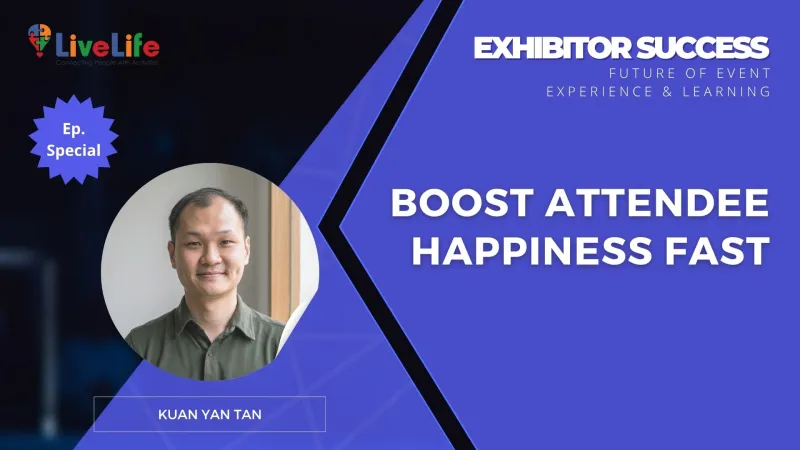
This is the summary based on The FEEL Podcast with Kuan Yan Tan.
Many B2B exhibitions fall into the trap of focusing on booth aesthetics while ignoring the visitor's actual experience. Attendees often leave feeling like just another data point in a lead-gen spreadsheet, frustrated by unmet expectations and generic sales pitches.
This disconnect creates several critical issues for your brand:
- Low engagement rates that make your space feel stagnant
- Negative brand perception among high-value decision-makers
- Wasted budget on expensive handouts that offer zero long-term value
When visitors feel their time is being disrespected, the chance of a meaningful post-show conversation disappears before they even leave the venue.
Prioritizing Relevance Over Physical Giveaways
To fix the disconnect between visitor expectations and booth reality, the focus must shift from generic souvenirs to high-value, personalized interactions.
Attendee satisfaction spikes when a visitor feels their specific business challenge is understood within the first minute of conversation. This requires moving away from "one-size-fits-all" scripts toward a segmented engagement model.
Segmenting the Visitor Journey
Successful exhibitors create distinct paths based on intent levels. A VIP buyer seeking technical specifications should never be trapped in the same queue as a casual browser collecting brochures.
Focusing on Immediate Utility
The most effective strategy for improving event attendee satisfaction is providing immediate utility. This means replacing plastic pens with digital insights, instant industry benchmarks, or expert consultations that solve a problem on the spot.
Respecting the "Time Currency"
When you value a visitor’s time more than your own sales pitch, you build immediate trust. Offering a "fast-track" for qualified leads or pre-booked slots ensures that your most important guests feel prioritized rather than processed.
Why Pre-Event Uncertainty Lowers Your Event Value
When an attendee commits to a trade show, they aren't just booking a ticket; they are gambling with their most limited resource: time. Satisfaction doesn't start at the venue entrance; it begins the moment they wonder if the trip is worth the logistics.
The friction often stems from a lack of pre-event clarity. If a visitor is left guessing about badge pick-up or whether a specific solution provider will be present, their mental load increases. This cognitive heavy lifting creates a negative bias toward the event before it even starts.
The Psychology of the Processed Visitor
Most exhibition organizers treat registration as a data-collection exercise rather than a hospitality touchpoint. When communication is purely transactional, attendees feel like another number in a database rather than a valued guest.
- Information asymmetry: Organizers know the layout and schedule; attendees often feel left in the dark.
- Unresolved logistics: Small doubts about ticketing or access create a "barrier to entry" mindset that dampens enthusiasm.
- Lack of relevance: Generic email blasts fail to address the specific business goals that regional attendees are traveling to solve.
This gap exists because many strategies focus on the "show days" while ignoring the four-week window where attendee anxiety is highest. If the pre-show experience feels disorganized, high-value leads often assume the actual event will be equally underwhelming.
Use AI to Bridge the Information Gap in Real Time
To fix the disconnect between what attendees need and what they find, you must move beyond static maps and schedules. Improving visitor engagement starts with listening to the questions they are asking when they think no one is watching.
Deploy Conversational AI for Instant Answers
Set up a conversational AI tool on your event app to capture "unanswered" questions. This reveals exactly where your floor plan or category list is failing.
- Track every query that returns a "no result" response to find content gaps.
- Update digital signage or app notifications immediately to address these blind spots.
Analyze Real-Time Search Data to Pivot Strategy
Don't wait for a post-show survey to see if your networking lounge was too hidden. Monitor live search trends within your platform to see what topics are spiking. If attendees are searching for specific solutions not featured on the main stage, you can pivot your afternoon networking focus to match that demand.
Identify On-Site Trends to Guide Exhibitors
Use AI insights to provide live briefings to your exhibitors. Tell them exactly what products attendees are looking to source right now. This helps exhibitors align their pitch with actual visitor intent, ensuring no one leaves the floor feeling like they wasted their time.
Designing Environments That Convert Interest Into Commitment
Aligning your product pitch with visitor intent is only half the battle; the physical environment must then sustain that momentum. High-intent attendees are often overwhelmed by the sheer volume of information on the trade show floor.
The most effective strategies for improving event attendee satisfaction focus on removing cognitive load. When logistical friction—like poor connectivity or excessive noise—is eliminated, visitors can focus entirely on the value proposition of your brand.
The Power of Frictionless Engagement
Providing dedicated quiet zones and reliable infrastructure isn't just a courtesy; it is a strategic move to facilitate deeper business discussions. These spaces allow for the transition from a casual booth scan to a serious procurement conversation.
- Optimized Infrastructure: Robust Wi-Fi and charging stations ensure digital demos and lead scanning happen without technical delays.
- Strategic Comfort: Quiet areas provide the mental space needed for decision-makers to evaluate complex solutions away from the floor's chaos.
By prioritizing the attendee's physical and mental comfort, you create a high-trust environment where sourcing needs are met with professional ease, ensuring the visitor's time feels well-spent.
Transforming Attendee Comfort Into Measurable Action
Once you have established a high-trust environment through strategic comfort, the next step is to operationalize that space. You must move from simply providing a place to rest to creating a structured path for engagement.
Designing for Practical Immersion
To turn observers into active participants, focus on booth engagement tactics that require physical or digital interaction. This ensures the attendee is not just listening to a pitch, but experiencing the solution in real-time.
- Interactive Problem-Solving: Use touchscreens or physical prototypes that allow visitors to simulate a fix for a specific industry pain point.
- Personalized Event Agendas: Offer a 10-minute "strategy audit" or mini-consultation that helps attendees prioritize which sessions or booths they should visit next.
Executing the Post-Show Reflection Framework
Attendee satisfaction often peaks after they leave the floor and reflect on their notes. Your goal is to guide that reflection before the "show fatigue" sets in and your brand fades from memory.
- Immediate Value Recaps: Send a digital "Takeaway Kit" within hours of their visit, summarizing the specific solutions discussed at your booth.
- Peer Advocacy Tools: Provide a pre-formatted summary or "Internal Pitch Deck" they can easily share with their CMO or CEO to justify the sourcing need.
Building Your Post-Event Satisfaction Workflow
Empowering your visitors with takeaway kits and pitch decks is only effective if your internal team is synchronized to deliver them instantly.
To turn these satisfaction strategies into a repeatable system, start by auditing your current trade show follow-up process using these steps:
- Map the delivery trigger: Ensure your CRM sends the digital "Takeaway Kit" the moment a badge is scanned, not three days later.
- Standardize the internal deck: Create a modular slide template that your team can customize with booth-specific notes in under five minutes.
- Conduct a 48-hour sentiment review: Instead of counting leads, analyze the specific questions and objections recorded in your booth notes.
- Verify the peer hand-off: Follow up with the visitor to ask if their decision-makers need further clarification on the pitch deck provided.
High attendee satisfaction is the result of reducing the "work" your visitor has to do once they leave your booth and return to their office.
If you are unsure how to align these post-show actions with your specific business goals, we can help you map out a structured exhibition framework that clarifies your path to ROI.


Banner
Write a comment