
What Should Booth Staff Say to Visitors? Use "Weekend Language"
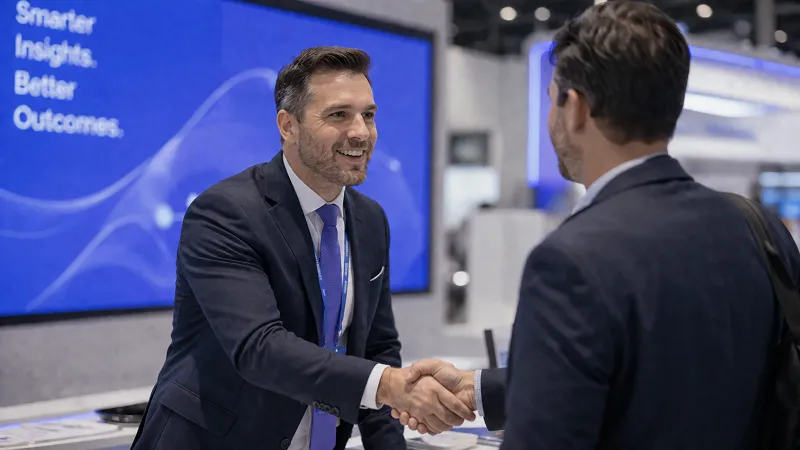
- Most exhibitors nail the easy stuff—carpet, truss, demo pods, coffee—then leave the actual story for last, so the human standing in the booth becomes the weakest part of a six-figure presence instead of the strongest.
- The mission statement off your website was written for boards and search crawlers, not for a person you just met, which is why reciting it kills the conversation before it starts.
- "Weekend Language" is the fix: if you wouldn't say it over a beer on a Saturday, don't say it in the booth on a Tuesday, because the goal is to make a friend, not qualify a data point.
This is the summary based on The FEEL Podcast with Steve Multer.
You have spent six months on this event. The booth looks stunning—plush carpet, monitors humming with high-definition graphics, a coffee station pulling in a steady stream of attendees who just want caffeine before their next session.
Everything you know how to build is standing there, working exactly as planned. And then a visitor walks up, and something in the air shifts.
Your staffer stiffens. They retreat half a step behind the podium, or they launch into a rehearsed pitch stuffed with buzzwords that sounds like a PDF brochure learned to talk.
The visitor nods, smiles politely, palms a branded pen, and melts back into the crowd. That is the last you will ever see of them.
You invested in the padding and the truss. And you left the one thing that actually lands—the human standing in the booth—to figure itself out.
That single gap is where most of the money leaks out. It's also the heart of how to staff and run a trade show booth that drives ROI, because the return was never in the hardware.
Steve Multer put words to this on The FEEL Podcast, and after more than a thousand trade shows he keeps seeing the same pattern in Chicago, in the UK, everywhere. The question of what booth staff should say to visitors at a trade show isn't really about scripts at all.
It's about whether you're speaking like a corporate spokesperson or like a person, and whether you were intentional about that choice long before the doors opened. So let me walk you through the thinking, because the fix is simpler and more surprising than most exhibitors expect.
The Misplaced Investment Behind Salesy Booth Scripts
Steve calls the core problem a misplaced investment, and it starts with what he labels the "easy" work. If you've been in events for a few years, you've learned how to hire a build crew, source a pad through event management, lay carpet, build demo pods, wire in the laptops and monitors, skin the booth, run a truss, get the coffee station going.
None of that is genuinely easy—it takes real skill inside the events world—but it's transactional. You make your phone calls, you check the boxes, and you end up with a physical presence on the floor.
The story is the hard part, so it gets pushed to the back burner and saved for last. As Steve puts it, the heart message of your brand to the customer is the hardest thing to create and the hardest thing to get right across stakeholders, from the executives down the pyramid.
That difficulty is exactly why storytelling becomes an afterthought. Everyone agrees it matters, and then everyone quietly deprioritizes it because alignment on a single message is uncomfortable and carpet color is not.
Here's the part worth sitting with, check this? The front line of impact in that booth is not your 80-inch monitor—it's the human being standing in front of it. A great booth is a strong visual draw, but Steve is blunt that it stays a hollow shell without the right people telling the right story.
When you push the conversation strategy low on your priority list, you've quietly decided that the most memorable, differentiating, emotionally capturing part of your presence deserves the least attention. Real exhibitor success flips that order and treats the story as pre-show work, not a last-minute scramble.
Why the Brand Mission Statement Kills Booth Engagement
There's always a story—Steve is clear on that. Every brand, whether it's HP or Cisco or a two-person startup, knows what it's about on paper. You can pull the mission statement straight off the website. The trouble is that the mission statement was written for boards and for search crawlers, not for human ears at a booth.
When a staffer opens with it, the interaction is dead on arrival because it sounds like recital, not conversation. That gap between paper and person is where engagement quietly dies.
Steve points to a second, sharper gap: the story tends to fracture by department. Events are usually sectored into vertical or horizontal markets depending on who you're selling to, and each business unit wants its own product or capability to be the star.
So the full brand story drifts, and you end up with a competition for story—marketing, sales, product each carrying a different version of the truth to the same floor. Five competing scripts is not a narrative. It's noise wearing a lanyard.
The third layer is tone. Corporate storytelling leans on lengthy, overly descriptive, buzzword-heavy explanations, the kind we all default to Monday through Friday. That register is where booth conversations go to die.
Getting to real clarity means untangling all three knots at once: the deprioritized story, the departmental conflict, and the corporate voice that hides the heart of what you actually do. None of that happens by accident—it takes a deliberate alignment strategy before the show floor ever opens.
How to Talk to People at a Trade Show Booth Without Sounding Salesy
The fix Steve reaches for is a framework called Weekend Language, drawn from the book of the same name that he's a genuine fan of. The idea is that we run a split personality.
Monday through Friday we speak in corporate talk—leverage, end-to-end, ecosystem, synergy—wrapping the heart of our work in long descriptive explanations. Saturday and Sunday, none of that survives. We sit around with friends, share a beer, take a walk, go to some cultural experience, and just talk like people.
So the rule for the booth is refreshingly simple, and it doubles as your training strategy: if you wouldn't say it over a beer on a Saturday, don't say it in the booth on a Tuesday. At a backyard BBQ you don't tell a friend you're optimizing a multi-channel approach to B2B lead generation.
You say you help small business owners get their weekends back by killing the boring paperwork. That's the same truth, told for human ears—casual, relatable, aimed at the outcome a person actually feels.
There's a mindset shift underneath the language, and it's the real engine. Steve's guest recalled a mentor who told him before every meeting: just imagine you're meeting a friend, just make friends. It sounded like nothing at first and made more sense with age.
When your goal is to make a friend instead of qualifying a data point, your body relaxes, your questions open up, you listen more than you pitch, and the visitor's guard drops. That's the emotional capture that turns a booth from a static display into a real moment of engagement someone actually remembers.
Tailoring the Weekend Story to the Vertical in Front of You
Weekend Language stays constant, but the context in front of you moves. Talking to a healthcare executive, your Saturday story lands on patient outcomes; talking to a tech lead, it lands on removing friction.
Tailoring the story doesn't mean sliding back into jargon—it means finding the specific human pain point inside that vertical and naming it plainly. You refine the angle, not the warmth. Same clarity, same person-to-person tone, aimed at whoever is standing in front of the booth.
So before you pick the carpet color, define the weekend version of your brand story and get your team aligned on one heart message they can actually tell. Make that story your first pre-show decision, not your last, and carry it through the in-show conversations and the post-show follow-up so the voice never breaks.
When your staff speaks like friends instead of brochures, you stop merely collecting leads and start creating meaning, memory, and feeling—you earn one honest conversation instead of scanning one more badge.
What would your booth conversations sound like if every staffer walked in planning to make a friend rather than close one?

Frequently Asked Questions
Q1: What should booth staff say to visitors at a trade show instead of a scripted pitch?Speak the way you would at a backyard BBQ, not in a Monday-morning meeting. Steve Multer calls this "Weekend Language"—drop the corporate buzzwords and describe the human outcome you deliver in plain words. The simple test is that if you wouldn't say it over a beer on a Saturday, don't say it in the booth on a Tuesday.
Q2: Why do booth conversations sound salesy in the first place?Because of what Steve calls a misplaced investment. Exhibitors master the "easy" checkboxes—the build crew, the pad, the carpet, the demo pods, the monitors—and push the hardest thing, the brand's heart message, to the back burner. When the story is an afterthought, staff fall back on the mission statement and corporate talk, and the interaction dies on arrival.
Q3: How do you keep the brand story consistent when every department wants its own version?Align on one heart message before the show floor opens. Steve notes the story usually fractures because events are sectored into vertical or horizontal markets, and each business unit wants its product to be the star—leaving five competing scripts. You tailor the same weekend story to the person in front of you (patient outcomes for a healthcare exec, removing friction for a tech lead) without reverting to jargon.

Banner
Write a comment