
Benefits of Exhibiting at Trade Shows for Business
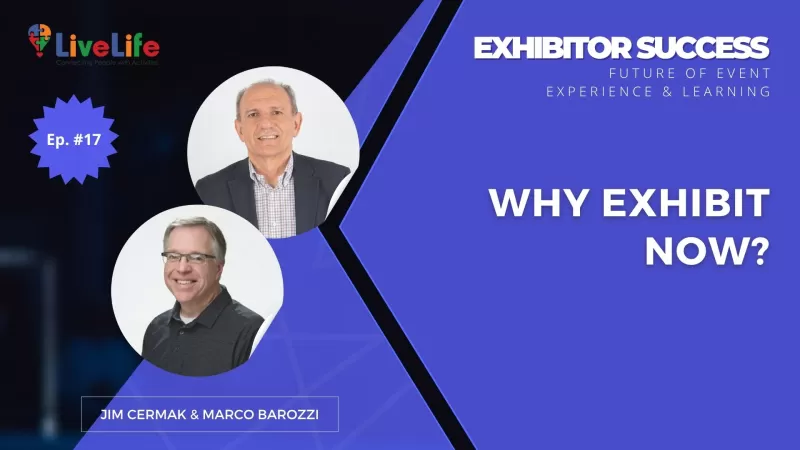
- A guaranteed sales pipeline is built through pre-scheduled meetings with top accounts before the show.
- Immediate buyer interest is generated when hands-on product displays stop casual aisle traffic.
- More time with decision makers results from filtering out low-value visitors with quick questions.
- Real-time market research comes from seeing which competitor features and messages attract the most customers.
- Brand recall increases when digital follow-ups are sent while the prospect is still on-site.
- Faster sales closing occurs when lead urgency is graded to prioritize the hottest deals first.
This is the summary based on The FEEL Podcast with Jim Cermak & Marco Barozzi.
To turn these benefits into actual revenue, you need a framework that moves beyond simply "showing up." Before booking a booth, execute these foundational steps to ensure your investment translates into measurable growth.
- Define one primary goal: Decide if you are hunting for new distributors or closing existing pipeline deals.
- Identify "Must-Win" accounts: List 10 companies you need to meet and reach out to them at least two weeks before the event starts.
- Set a lead threshold: Calculate exactly how many qualified meetings you need to cover the cost of the floor space.
Starting with this clarity prevents the common trap of collecting hundreds of business cards that never turn into customers. A proactive trade show marketing plan ensures your presence is a strategic move rather than just a line item in the annual budget.
Turning Physical Presence Into Tangible Business Trust
To translate these physical advantages into measurable trust, you need a framework for engagement that goes beyond standing behind a counter.
Start by identifying your "sensory hook"—the one thing visitors can only experience at your booth that they cannot get from your website.
- Design for interaction: Position your most tactile product at the edge of the aisle to encourage immediate physical touch.
- Script for curiosity: Replace "Can I help you?" with a specific question about a problem your product solves in real-time.
- Live demonstration schedule: Post a clear timetable for live "stress tests" or teardowns to draw a crowd at peak times.
- Instant digital handoff: Use a tablet to immediately send a personalized "nice to meet you" video or spec sheet while the prospect is still standing there.
Focusing on these high-touch actions ensures you are not just taking up space, but actively moving the needle on your trade show engagement strategy.
Turning High-Intent Conversations Into Actionable Data
With those digital handoffs in motion, the goal shifts to categorizing the sudden influx of interest. Because trade shows condense the sales cycle, you need a trade show lead qualification process that works in seconds, not hours.
The Three-Question Qualification Framework
To capitalize on the "marketplace effect" without getting overwhelmed, use this framework for every visitor who stays longer than two minutes:
- The Problem Filter: Ask, "What is the biggest hurdle in your current workflow today?" This moves the conversation from small talk to pain points.
- The Timeline Check: Ask, "Are you looking to solve this in the current quarter, or are you gathering info for next year?"
- The Decision Map: Ask, "Besides yourself, who else needs to see this data to make a call?"
Immediately after the prospect leaves, use your tablet to tag the lead as "Hot," "Warm," or "Researching."
Record a 10-second voice note or type two keywords about their specific pain point. This ensures that when you return to the office, you aren't staring at a pile of business cards with no context.
The High Cost of Staying Inside Your Own Booth
Even if you manage to organize your leads perfectly, there is a much larger risk: becoming so focused on your own square footage that you ignore the intelligence gathered ten feet away. Many businesses treat their booth like an island, completely missing the real-time market shifts happening around them.
Missing the Intelligence Right Under Your Nose
Most teams fail to notice why crowds are gathering at a competitor’s booth while their own remains quiet. Without active observation, you lose the chance to see which specific product features are triggering excitement and which marketing messages are falling flat with your target audience.
- Observation gaps: Failing to see how competitors handle objections or demonstrate value.
- Missed feedback: Ignoring the unfiltered industry complaints shared by attendees in common areas.
- Brand isolation: Having no clear pulse on where your business actually sits within the current ecosystem.
The Invisible Loss of Potential Partnerships
The mistake is viewing every person on the floor through a "buyer-only" lens. By ignoring the distributors, suppliers, and potential collaborators in the room, you miss the chance to solve scaling problems that your marketing alone cannot fix. You aren't just missing sales; you are missing the infrastructure needed to grow.
Why Most Companies Treat Trade Shows as a Sunk Cost
This missing infrastructure is often the direct result of how the event is categorized in your books. When you view the benefits of exhibiting at trade shows for business as a "marketing expense" rather than a strategic investment, your behavior on the floor changes for the worse.
The biggest risk is falling into the trap of the passive booth. Instead of actively hunting for the distributors or high-value partners mentioned earlier, staff often wait behind a counter for the "perfect lead" to find them.
This passivity creates several critical failures:
- Lead Dilution: Collecting hundreds of business cards from people who only wanted free merchandise.
- Missed Qualification: Failing to ask the hard questions that separate a curious browser from a serious buyer.
- Budget Drainage: High costs for travel and booth design without any mechanism to track if those costs are generating a return.
When your team spends three days checking their phones or talking to each other, the trade show floor becomes a very expensive waiting room. You aren't just losing money; you are losing the momentum your brand needs to break into new markets.
Stop Collecting Business Cards and Start Grading Prospects
To turn that expensive waiting room into a high-performance sales engine, your team needs a system that moves beyond simple greetings.
The real benefits of exhibiting at trade shows for business are only realized when you stop treating every visitor as an equal lead.
Implement a Tiered Lead Qualification Framework
Train your staff to categorize every interaction immediately after the prospect leaves the booth. Use a simple three-tier system to prioritize your post-show energy:
- Tier A (Hot): Decision-maker with an active project and a defined budget. Requires a call within 48 hours.
- Tier B (Warm): Good fit for the product but currently in the research phase. Needs educational nurturing.
- Tier C (Information): Low-priority contact or student who is just gathering general industry knowledge.
Track Movement Through the Sales Funnel
Shift your focus from "how many people we met" to "how many moved to the next stage." Real success is measured by the speed of transition from a booth visit to a scheduled discovery call.
Record specific pain points for Tier A leads directly into your CRM during the event. This data ensures your follow-up is a strategic solution rather than a generic "thank you for visiting" email.
Turning Exhibition Insights Into a Repeatable Growth Framework
Once those specific pain points are captured in your CRM, your follow-up becomes a high-value consultation. However, the real long-term benefits of exhibiting at trade shows for business come from analyzing this data to refine your future presence.
Conduct a Post-Event Strategic Audit
Use this three-step framework to move from "just attending" to a results-driven machine:
- Review Lead Quality: Did your booth attract decision-makers or just "swag seekers"? If the latter, adjust your pre-show messaging for the next event.
- Map Pain Points: Identify the top three challenges mentioned by Tier A leads. Use these insights to create targeted marketing content for your next campaign.
- Calculate True ROI: Move beyond simple booth traffic. Measure success by the number of qualified discovery calls booked within 30 days post-show.
Shifting from a passive attendee to a strategic exhibitor requires a clear look at your current goals and target personas. If you are looking to move past generic booth setups and want a structured way to measure your next event’s performance, a strategic audit can help clarify your path to a higher return on investment.

Frequently Asked Questions
Q1: How do I qualify leads effectively at a trade show?Use a three-question framework to move beyond small talk: identify the prospect's biggest workflow hurdle, determine their solution timeline, and map out the decision-making hierarchy. Immediately tag contacts as Tier A (Hot), Tier B (Warm), or Tier C (Researching) to ensure your sales team prioritizes the highest-value opportunities during follow-up.
Q2: What are the best strategies for increasing trade show booth engagement?To drive traffic, position tactile products at the edge of the aisle to encourage physical interaction and replace passive greetings like "Can I help you?" with specific questions about industry pain points. Implement a live demonstration schedule and use instant digital handoffs, such as sending a spec sheet via tablet, while the prospect is still at your booth.
Q3: How can I measure the actual ROI of exhibiting at a trade show?Shift from tracking booth traffic to measuring the number of qualified discovery calls booked within 30 days post-event. Calculate a lead threshold by determining how many Tier A meetings are required to cover the cost of floor space and travel, and track the conversion rate of "Must-Win" accounts identified during your pre-show planning.
Q4: What should be included in a pre-show trade show marketing plan?A successful plan starts at least two weeks before the event by identifying 10 "Must-Win" accounts and reaching out to schedule meetings. Define one primary goal—such as hunting for new distributors or closing existing pipeline deals—to ensure your presence is a strategic investment rather than a passive marketing expense.
Q5: Why do most companies fail to generate revenue from trade shows?Revenue loss usually stems from "passive booth" behavior, where staff wait for leads rather than actively qualifying them. Without a tiered lead grading system and real-time data entry into a CRM, businesses end up with a high volume of low-quality contacts and no context for personalized follow-up, turning the event into a sunk cost.
Q6: How do I handle trade show follow-up to ensure conversion?Stop sending generic "thank you" emails and instead use the specific pain points recorded in your CRM during the show to provide a high-value consultation. Prioritize Tier A leads for a phone call within 48 hours, while placing Tier B leads into an educational nurturing sequence to move them through the sales funnel.

Banner

Write a comment