
Common Trade Show Exhibitor Mistakes That Kill ROI
- Fewer time-wasting conversations happen when you filter visitors for actual buying intent
- Faster sales calls to profitable prospects happen because of instant lead categorization at the booth
- Zero lost data happens when digital syncing replaces manual business card collection and typing
- Stronger prospect trust is built when marketing and sales teams share the same clear message
- Higher meeting booking rates come from contacting hot leads within the first 48 hours
- Real revenue opportunities appear when you prioritize lead quality over the total number of scans
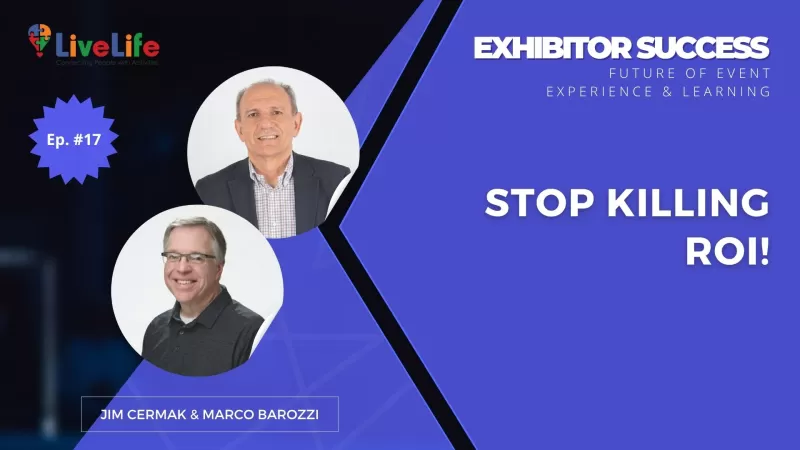
This is the summary based on The FEEL Podcast with Jim Cermak & Marco Barozzi.
Most businesses treat the exhibition floor like a high-stakes gamble. You invest heavily in premium floor space and high-end builds, yet the strategy often stops at simply "showing up."
This passive approach is one of the most common trade show exhibitor mistakes to avoid because it turns a potential goldmine into a sunk cost.
When you lack a specific target or a defined way to measure success, you aren't just wasting budget—you're losing high-value conversations to competitors who arrived with a plan. Without focus, your team merely collects business cards that eventually gather dust.
The Cost of Passive Exhibiting and Poor Lead Quality
When you treat an exhibition as a static event rather than a focused campaign, you are essentially gambling on foot traffic. This passive approach is one of the most common trade show exhibitor mistakes to avoid because it leaves your success entirely to chance.
Without a pre-defined strategy, your team often falls into a "wait and see" trap. Instead of engaging high-value prospects, you end up entertaining "tire-kickers" who have no intention of buying.
- Fragmented Messaging: Your sales team says one thing while your marketing materials say another, confusing potential partners.
- The "Scanner" Trap: Collecting hundreds of badges without qualifying them on the spot, leading to a database full of dead ends.
- Invisible Presence: Relying solely on the organizer's marketing means you are invisible to your specific target audience until they happen to walk past your booth.
This lack of coordination creates a massive disconnect. When marketing doesn't know what sales needs, and sales doesn't know how to filter the crowd, the result is a high volume of unqualified leads that waste everyone's time.
By the time the show ends, you are left with a pile of data but zero insight into which conversations actually hold revenue potential.
Shift From Counting Badges to Filtering for Buying Intent
Solving the "pile of data" problem requires a fundamental shift in how your team views every person who walks into your booth. Instead of aiming for the highest number of scanned badges, the most successful exhibitors prioritize intent-based filtering.
This works because it creates a shared language between marketing and sales before the first flight is even booked. When you stop treating every visitor as a "lead" and start categorizing them based on specific business pain points, the noise disappears.
- Qualification over quantity: A team trained to ask specific "deal-breaker" questions will always outperform a team that simply collects business cards.
- Real-time categorization: By tagging leads based on their urgency and budget during the conversation, you eliminate the post-show guessing game.
- Alignment on Sales-Readiness: When marketing knows exactly what a "hot" lead looks like, they can hand over high-value opportunities that sales actually wants to pursue.
This approach ensures that your total investment is protected by a filter that only lets through the conversations with genuine revenue potential. It moves the needle from "being present" to high-quality lead identification.
Why High-Quality Conversations Often Fail to Become Revenue
Even when you have a system to identify high-value prospects, the momentum often stalls the moment they walk away from your booth. The most expensive mistake isn't failing to find a lead—it is capturing them in a way that makes them impossible to close later.
The Trap of Contextless Data Collection
Collecting a stack of business cards or scanning badges without recording specific intent creates a massive bottleneck for your sales team. When every person is labeled as a "lead" regardless of their actual needs, your follow-up becomes generic, making you look like just another vendor in a crowded inbox.
- Vague notes: Forgetting the specific problem the prospect mentioned during the heat of the show.
- Lack of prioritization: Treating a decision-maker with an immediate budget the same as a casual visitor collecting freebies.
- Information silos: Keeping critical conversation details in a staff member's head instead of a shared, accessible system.
The Post-Show "Black Hole" Effect
The longer the gap between the handshake and the first email, the lower your conversion rate. When data entry takes weeks rather than hours, the prospect’s memory of your brand fades, and your competitors—who acted faster—have already secured the follow-up meeting. Without a bridge between the booth and the CRM, your total investment remains stuck in a spreadsheet.
How to Build a Faster Trade Show Follow-Up Framework
Stopping the "lead leak" requires moving from manual data entry to a structured lead management process before the show even begins.
To ensure your investment doesn't stay trapped in a stack of business cards, implement this post-show action plan:
- Digitalize instantly: Use a lead scanning app that syncs directly with your CRM to eliminate manual typing errors.
- Tier your leads: Tag prospects as "Hot," "Warm," or "Information Only" during the conversation so your sales team knows who to call first.
- Pre-write your templates: Have your follow-up emails ready to send before you even arrive at the venue.
- The 48-hour rule: Send the first personalized touchpoint within two days, while your conversation is still fresh in their mind.
- Conduct a formal debrief: Gather your team within a week to document what worked and what failed while the details are clear.
Fixing these common trade show exhibitor mistakes is often a matter of refining your internal workflow rather than increasing your budget.
If you are looking for a more structured way to evaluate your next exhibition's performance and ROI, a clear measurement framework can help you identify exactly where your strategy needs adjustment.

Frequently Asked Questions
Q1: What are the most common trade show exhibitor mistakes to avoid to ensure a positive ROI?The most damaging mistake is passive exhibiting—investing heavily in a booth but failing to set specific targets or qualification metrics. This leads to the "scanner trap," where teams collect hundreds of low-quality badges without qualifying them on the spot, resulting in a database of dead ends rather than revenue opportunities.
Q2: How do I implement a faster trade show follow-up framework after the event?To avoid the post-show black hole, use a lead scanning app that syncs directly with your CRM for instant digitalization. Pre-write your email templates before the show begins and adhere to the 48-hour rule, ensuring every "Hot" lead receives a personalized touchpoint while the conversation is still fresh in their mind.
Q3: Why do high-volume lead lists often fail to convert into actual sales?Conversion fails when data is contextless. If you treat every visitor as a lead regardless of their budget or urgency, your follow-up becomes generic and easy to ignore. You must shift from counting badges to intent-based filtering by asking "deal-breaker" questions that identify genuine business pain points during the initial interaction.
Q4: How can my team effectively filter for buying intent on a busy exhibition floor?Train your staff to move past small talk and ask specific questions focused on the prospect's immediate needs and decision-making authority. Use real-time categorization to tag prospects as Hot, Warm, or Information Only during the conversation, ensuring sales receives only the high-value opportunities they actually want to pursue.
Q5: What is the best way to capture lead details without relying on business cards?Relying on physical cards leads to vague notes and manual data entry errors. Use a digital lead management system to record specific intent and urgency immediately. This ensures critical conversation details are stored in a shared system rather than a staff member's head, allowing for prioritized follow-up based on revenue potential.

Banner

Write a comment