
How to Evaluate Trade Show Attendee Quality
- Lower exhibition costs result from skipping busy shows that lack real buyers with budgets.
- More closed deals come from focusing on decision-makers instead of general event footfall.
- Better lead quality prevents your staff from wasting months chasing contacts who won't buy.
- Faster project starts emerge from identifying prospects with active needs and technical questions.
- Serviceable sales leads are secured by matching event geography to your company's actual reach.
- Clear follow-up timelines ensure your sales team knows exactly who to call first.
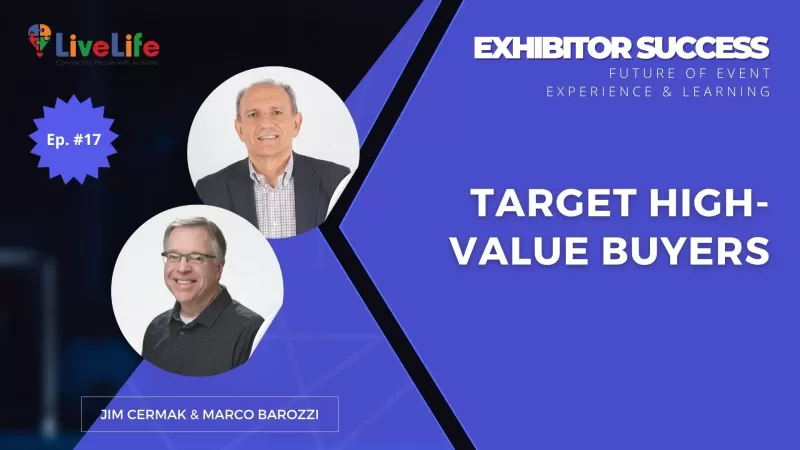
This is the summary based on The FEEL Podcast with Jim Cermak & Marco Barozzi.
To stop guessing and start measuring, you must audit the event’s historical data. Follow this validation framework before booking your next booth:
- Request a detailed visitor report: Ask organizers for specific target audience demographics from the previous two years.
- Verify job titles: Ensure at least 40% of attendees hold decision-making or influencer roles.
- Check industry alignment: Match the attendee list against your ideal customer profile (ICP).
- Scan the exhibitor list: Look for competitors or partners; their presence confirms the right crowd is attending.
The Illusion of High Footfall in Trade Show Reporting
While a busy hall looks impressive, the sheer volume of people often obscures the reality of who is actually walking the floor. Organizers usually sell floor space based on total visitor counts, but this metric is a vanity number that doesn't account for audience demographics.
The disconnect happens because general attendance data fails to distinguish between a casual browser and a decision-maker with an active budget. If an organizer categorizes "Management" broadly, you might be pitching to a junior supervisor instead of a CEO. This lack of granularity is why many brands feel successful during the event, yet see their sales pipeline stall immediately after.
The real issue isn't a lack of interest; it is a lack of buying authority. When the crowd doesn't align with your specific solution, your sales team spends high-value hours on conversations that have no mathematical chance of converting. Understanding this gap is essential to seeing past the "big numbers" promised in marketing brochures.
How to Score Attendee Quality Before You Commit
To avoid the trap of "big numbers" that lead nowhere, you need a systematic way to filter the crowd before the show begins.
Use this checklist to determine if the audience matches your lead qualification criteria and business goals:
- Audit Job Titles: Review the previous year’s attendee report. If more than 30% are students or entry-level staff, your sales team will likely waste time on non-decision makers.
- Verify Vertical Alignment: Cross-reference the "top industries" listed by the organizer with your current most profitable customer segments.
- Check Purchasing Power: Look specifically for the percentage of attendees with "final say" or "recommendation" authority in their companies.
- Analyze Geographic Reach: Ensure the visitor base matches your logistics or service capabilities, especially if you are targeting specific regions in Asia.
Running this quick audit prevents you from investing in a high-traffic event that lacks the specific buyers you need to hit your KPIs.
Prioritizing Decision-Maker Density Over Foot Traffic
Once you confirm the geography aligns with your sales territory, the focus must shift to the professional seniority of the crowd.
High-traffic counts often hide a lack of purchasing authority, which is why evaluating decision-maker density is the most reliable way to predict ROI.
Focusing on Buying Power and Authority
The best trade shows attract high-intent prospects who are actively looking for specific solutions rather than just gathering brochures.
By analyzing the ratio of C-suite executives to general staff in past reports, you can determine if the event is a marketplace for buyers or just a networking hub for peers.
Evaluating Intent Through Engagement Depth
Attendee quality is also revealed by the complexity of the interactions encouraged by the event’s programming.
Events that prioritize technical workshops or closed-door roundtables naturally filter out casual browsers, leaving you with visitors who are further along in the buyer's journey.
Leveraging Behavioral Signals to Validate Attendee Quality
Moving beyond conservative estimation rules requires a shift from passive observation to active filtering. High-quality attendees are identified by their actions and the depth of their inquiry, not just their badge title.
When you focus on how visitors move through a space, you begin to see the difference between a "tourist" and a "buyer" based on their engagement patterns.
Prioritizing Decision-Makers Over Information Seekers
Real quality is found where decision-makers congregate. These individuals often bypass generic displays in favor of technical demonstrations or private consultation areas within a booth.
They aren't looking for a high-level overview; they are searching for a specific solution to a pre-defined business problem. High-quality traffic is characterized by people who arrive with a "shopping list" of requirements rather than a general curiosity.
Identifying High-Intent Buying Signals
- Specific questioning: Moving from "What do you do?" to "How does this integrate with our current stack?"
- Time investment: Willingness to stay for a 15-minute deep-dive rather than just scanning a QR code.
- Follow-up commitment: Providing a specific timeline for a project rather than a vague request for a brochure.
Focusing on these behavioral markers ensures you aren't just counting heads, but measuring the actual B2B lead qualification potential of the room.
Building a Practical Lead Scoring Framework for Your Sales Team
Once you have identified these behavioral markers, you need a system to translate those observations into actionable data for your sales team.
Use this three-tier lead scoring checklist to rank attendee quality immediately after the conversation ends:
- Tier 1: High Intent – Mentioned a specific budget, a live project timeline, or requested a technical demo within the next 14 days.
- Tier 2: Researching – Understands the problem but is currently comparing vendors or waiting for the next fiscal year to begin.
- Tier 3: Passive – General interest but no immediate project; best suited for long-term email nurturing rather than a direct sales call.
To make this work, provide your booth staff with a post-show qualification checklist that includes these three specific questions:
- What is the specific challenge they are trying to solve right now?
- Who else in their organization needs to see this solution?
- What is the agreed-upon next step and the exact date for it?
Applying this framework prevents your sales team from wasting weeks on "polite" contacts who have no intention of buying.
A Step-By-Step Framework to Audit Your Lead Quality
Once you have captured the specific "next step" and follow-up date, you need to turn that data into a formal lead scoring system.
This removes the guesswork from your post-show analysis and ensures your sales team prioritizes the right people immediately.
Follow this checklist to determine how to evaluate trade show attendee quality effectively:
- Verify Decision Power: Did the attendee have the authority to approve a budget or influence the final choice?
- Timeline Alignment: Is their "next step" scheduled for this quarter, or are they just gathering information for next year?
- Pain Point Match: Does their specific problem align directly with your core solution, or is it a fringe use case?
- Engagement Depth: Did they spend more than five minutes at the booth, or was it a quick, passive badge scan?
High-quality leads usually meet at least three of these criteria. By grading your leads immediately, you stop chasing "dead ends" and focus on the 20% of attendees who drive 80% of your revenue.
If you want to refine your exhibition strategy and build a repeatable system for lead qualification, we can help you map out a structured approach for your next event.

Frequently Asked Questions
Q1: Why is high footfall often a misleading metric for trade show success?High footfall is a vanity number that fails to distinguish between casual browsers and actual decision-makers. Organizers often sell floor space based on total volume, but if the crowd lacks buying authority or alignment with your ideal customer profile (ICP), your sales pipeline will stall despite a busy booth.
Q2: How can I verify trade show attendee quality before booking a booth?Request a detailed visitor report from the previous two years and audit the job titles. Ensure at least 40% of attendees hold decision-making or influencer roles. Cross-reference the attendee list against your ICP and check the exhibitor list for competitors; their presence usually confirms the right audience is attending.
Q3: What is the biggest mistake brands make when evaluating attendee demographics?The most common mistake is accepting broad categories like "Management" at face value. This often masks junior supervisors who lack budget authority. To ensure high decision-maker density, you must verify the percentage of C-suite or "final say" attendees to avoid wasting high-value sales hours on non-buyers.
Q4: How do I distinguish between a casual browser and a high-intent buyer on the floor?Identify high-intent signals by the depth of inquiry. A buyer bypasses "What do you do?" and asks "How does this integrate with our current stack?" They are willing to invest 15 minutes in a technical deep-dive and provide a specific project timeline rather than just scanning a badge for a brochure.
Q5: What criteria should be included in a trade show lead qualification checklist?A practical framework should score leads based on decision power, timeline alignment, and pain point match. Tier 1 leads must have a specific budget and a request for a follow-up within 14 days. Grading leads immediately prevents your sales team from chasing "polite" contacts who have no intention of purchasing.

Banner

Write a comment