
Exhibiting vs Attending Trade Shows: Which Wins?
- Physical booths build instant trust and prove your company is a serious player in the industry.
- Private meeting spaces allow for deep-dive technical demonstrations that are impossible to conduct in aisles.
- Exhibitor status protects your reputation from the legal and social risks of roaming the aisles.
- Automated lead capture ensures you never lose a prospect's contact information during busy event hours.
- Pre-booked meetings turn generic hallway chats into high-value sales opportunities before the show begins.
- Fixed booth locations prevent your brand from being overshadowed by competitors with more professional setups.
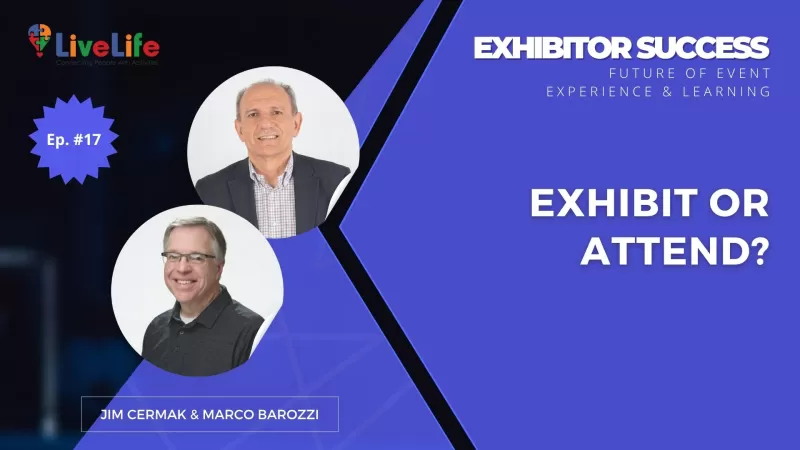
This is the summary based on The FEEL Podcast with Jim Cermak & Marco Barozzi.
To make that choice, start with this 3-step audit of your current objectives. Evaluating the benefits of exhibiting versus attending trade shows requires looking at your internal resources before your event calendar.
- Define the win: Are you hunting for 50+ new sales leads or scouting competitor pricing?
- Check your roster: Do you have a dedicated sales team for a booth, or just one strategist for the floor?
- Map the floor: Determine if your target clients are walking the aisles or hosting their own stands.
This clarity ensures you don't overspend on a booth when a visitor pass would be more effective.
The High Cost of Being Invisible on the Trade Show Floor
Once you have mapped the floor, the danger lies in underestimating the gap between being a guest and being a stakeholder. Many SMEs choose the visitor route to save budget, only to realize they have become invisible in a sea of noise.
When you walk the aisles without a dedicated space, you are essentially a ghost. You are constantly reacting to the environment rather than controlling it, which makes capturing high-quality data nearly impossible.
The pitfalls of a passive presence include:
- Fleeting impact: A 20-minute speaking slot creates a temporary spark that vanishes the moment the next session begins.
- Lack of authority: Without a physical anchor, prospects often view your brand as a transient player rather than a serious market competitor.
- Zero territory control: You cannot host private, deep-dive demonstrations or technical consultations in a crowded hallway or a noisy cafeteria.
Relying solely on a visitor badge often results in a "hit or miss" networking style. You spend three days chasing leads who are actually looking for established booths to solve their specific business problems.
This lack of a physical "home base" creates a broken feedback loop. Without a space to gather insights, you leave the event with a pocket full of business cards but no real understanding of your market standing.
Turning Attendance Data into an Exhibition Roadmap
To fix the broken feedback loop and stop relying on a pocket full of random business cards, you must treat your attendance as a structured data-mining mission. This approach ensures that when you do decide to exhibit, your investment is backed by field-tested evidence rather than guesswork.
Execute a Competitor Gap Analysis
- Audit the "Hot Zones": Identify which booths have the highest dwell time and what specific triggers—such as live demos or specific messaging—are keeping people there.
- Identify Unanswered Questions: Listen to the technical questions visitors ask at competitor booths. If those questions are being ignored or poorly handled, that becomes your primary marketing angle for next year.
Run a Micro-Validation Test
Before committing to a full booth contract, use your time on the floor to qualify the event's potential to deliver a high trade show ROI.
- The 10-Person Interview: Proactively ask ten target personas if they would visit a booth focused specifically on your niche solution.
- Resource Mapping: Document the staffing levels and engagement tactics of the most successful exhibitors to build a realistic operational budget for your future presence.
Converting Authority into High-Value Business Outcomes
Once you have validated interest through persona interviews and mapped your resource requirements, the shift from attending to exhibiting becomes a strategic necessity.
A dedicated booth solves the primary limitation of casual networking: the lack of a controlled environment. While walking the floor relies on chance encounters, a physical stand allows you to dictate the flow of the conversation and the quality of the interaction.
This "home ground" advantage is where trade show lead generation moves from volume to value. It provides a professional stage for deep-dive technical discussions that are impossible to have in a crowded aisle or a noisy coffee shop.
- Environmental Control: You manage the lighting, branding, and noise levels to focus entirely on the prospect's pain points.
- Pre-Qualified Hosting: Instead of chasing leads, you invite pre-vetted prospects to a scheduled demonstration, signaling that your time and solution are high-value.
- Instant Credibility: A booth serves as a physical manifestation of your company’s stability and commitment to the industry, which is essential for closing long-cycle B2B deals.
By establishing this fixed point of contact, you move beyond "checking in" on the industry and begin to actively influence it through direct, high-intent engagement.
The Hidden Risks Of Selling From The Aisles
When you lack a fixed point of authority, the temptation is to "work the aisles" as a roaming attendee. While this seems cost-effective, it often leads to a practice known as suitcasing, which carries significant professional risks.
Attempting to pitch products or services without a booth is frequently viewed as parasitic by both organizers and paying exhibitors. This creates several immediate points of failure for your brand:
- Permanent Ban Risks: Most major trade shows have strict anti-suitcasing policies that can result in immediate expulsion and a lifetime ban from future events.
- Social Friction: Approaching prospects in common areas or outside other people's booths feels intrusive rather than professional.
- Reputational Damage: Industry peers notice who is contributing to the ecosystem and who is merely trying to extract value without investment.
Without the "home base" of a booth, your team is forced into a defensive, nomadic posture. You are constantly looking over your shoulder instead of focusing on high-level strategic conversations.
This creates an environment of high-pressure, low-trust interactions. Instead of being seen as a leader in the space, you risk being labeled as a distraction, damaging the very relationships you traveled to build.
Positioning Yourself as a Destination Rather Than a Distraction
To move away from the high-pressure, low-trust dynamic of roaming the aisles, you must change how you are perceived by the market. The most effective solution is shifting from a seeker to a host. When you secure a dedicated space, you stop being a guest in someone else’s conversation and start facilitating your own.
Creating a Neutral Ground for High-Value Conversations
Exhibiting provides a controlled environment where the power dynamic shifts in your favor. Instead of interrupting a competitor's meeting or catching a prospect in transit, you offer a professional setting that builds brand credibility at trade shows. This physical presence acts as a natural filter, attracting those specifically interested in your solutions rather than forcing you to cold-pitch in a crowded hallway.
Validating Your Market Standing
A booth serves as a tangible signal of stability and commitment to the industry. In the eyes of a B2B buyer, an exhibitor is a permanent fixture in the ecosystem, whereas a visitor is often seen as a transient observer. This perceived permanence is what builds the foundational trust required for long-term sales cycles, transforming a simple introduction into a legitimate business inquiry.
The Hidden Cost Of Being A Ghost At Your Own Industry Event
Relying solely on a visitor pass or a quick speaking slot creates a massive operational gap: you have nowhere to anchor a serious business conversation.
When a high-value prospect expresses interest after a hallway chat, the momentum often dies the moment you have to suggest "finding a coffee shop" or "talking later via email."
Without a dedicated space, you face several critical failures in trade show lead qualification:
- The Vanishing Act: Prospects forget your brand the moment they walk into a competitor’s well-designed booth that offers a tangible experience.
- Zero Environmental Control: You are forced to pitch in noisy, crowded aisles where you cannot demonstrate products or maintain the prospect's undivided attention.
- Data Leakage: You rely on manual notes or business cards that inevitably get lost, rather than a structured, professional lead capture system.
This "transient" approach signals to the market that you are merely testing the waters rather than leading the industry. It makes it nearly impossible to justify the travel costs when you have no way to prove the quality of the people you met.
How to Move From Passive Attending to High-Impact Exhibiting
To move past the "testing the waters" phase, you need a framework that turns your physical presence into a lead generation engine.
Instead of walking the floor hoping for a chance encounter, follow these steps to secure a measurable return on your investment.
- Lock in your primary KPI: Choose one specific metric, such as "15 high-value discovery calls booked," rather than generic "brand awareness."
- Execute a 30-day pre-show campaign: Use your LinkedIn network to schedule meetings at your booth before the event doors even open.
- Implement a real-time qualification system: Use a simple digital form to rank leads as Hot, Warm, or Cold immediately after the conversation ends.
- Standardize the follow-up: Prepare your post-show email sequences before the event starts so you can hit "send" within 24 hours of closing.
Shifting from a visitor to an exhibitor requires more than just a booth; it requires a documented trade show lead generation strategy.
If you are struggling to quantify the value of your next event, it may be time to audit your current approach for structural gaps.
Refining your exhibition framework can help you stop guessing and start seeing clear, attributable growth.

Frequently Asked Questions
Q1: How do I choose between exhibiting versus attending trade shows based on my current resources?Run a 3-step audit: define your primary objective (leads vs. scouting), check if you have the staff to man a booth, and map whether your target clients are visitors or exhibitors. If you need authority and a controlled environment to close deals, exhibiting is necessary to avoid being "invisible" to high-value prospects.
Q2: Why is selling from the aisles considered a high-risk strategy for B2B brands?Attempting to pitch without a booth, known as suitcasing, often results in permanent bans from event organizers. More importantly, it creates social friction and damages your reputation. You are perceived as a transient distraction rather than a committed industry leader, making it difficult to build the trust required for long-cycle deals.
Q3: What are the most common mistakes that lead to poor trade show lead generation?The biggest failures include relying on manual notes that cause "data leakage," lacking a physical anchor for private demonstrations, and failing to pre-qualify leads in real-time. Without a dedicated booth, you lose the ability to control the environment, often resulting in a pocket full of business cards but no actionable sales data.
Q4: How can I validate the potential trade show ROI before committing to a full booth contract?Use a visitor pass to execute a structured data-mining mission. Audit "Hot Zones" to see what triggers engagement at competitor booths and conduct micro-interviews with at least 10 target personas. This field-tested evidence allows you to build a realistic operational budget based on market demand rather than guesswork.
Q5: How does a physical booth help build brand credibility at trade shows compared to a visitor pass?A booth acts as a tangible signal of stability and commitment to the industry. It shifts the power dynamic in your favor, allowing you to host pre-vetted prospects in a professional setting rather than chasing them in noisy hallways. This "home ground" advantage is essential for transforming casual introductions into legitimate, high-intent business inquiries.

Banner
Write a comment