
Best Post Event Sales Follow Up Strategy for B2B Leads
- Closing deals faster results from tagging leads based on how ready they are to buy.
- Building prospect trust comes from referencing specific booth conversations instead of sending generic emails.
- Accurate lead data prevents losing the critical details needed to turn booth visits into revenue.
- Better brand reputation comes from delivering helpful content instead of making aggressive sales pitches.
- Higher response rates happen when follow-ups address the exact pain points mentioned during demos.
- More revenue is earned when organized systems prevent leads from rotting in your inbox.
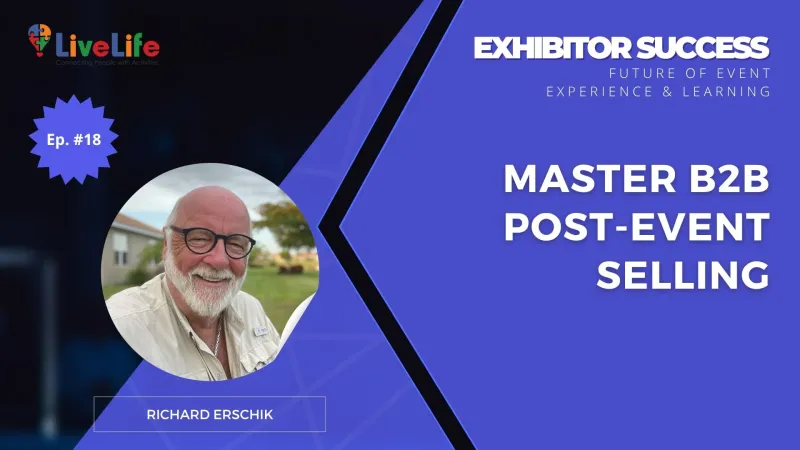
This is the summary based on The FEEL Podcast with Richard Erschik.
To stop leads from rotting in your inbox, you need a lead scoring framework that starts before the show ends. Categorize every contact into three distinct buckets: immediate needs, future interest, and general networking.
Use this 24-hour setup to maintain momentum:
- Tag leads by the specific pain points they mentioned during the demo.
- Upload data to your CRM the same evening to avoid the "Monday morning scramble."
- Assign a priority level based on their current budget timeline.
This structure ensures your outreach feels like a helpful continuation of a conversation rather than an automated cold email.
Aligning Your Outreach with the B2B Buying Journey
Moving beyond simple prioritization requires a shift in how you view the post-show timeline. The most effective strategy treats follow-ups as a multi-stage conversation tailored to the lead's specific temperature rather than a one-off task.
This tiered approach works because it respects the complexity of B2B decision-making. By matching your communication style to the prospect's intent, you avoid the friction caused by aggressive, ill-timed sales pitches.
Why a structured approach improves conversion:
- Reduces Lead Fatigue: Prospects are often overwhelmed after a trade show; relevant, spaced-out communication stands out against a sea of generic "checking in" emails.
- Protects Brand Reputation: Delivering value-based content instead of hard selling builds authority and keeps your brand top-of-mind during the research phase.
- Optimizes Sales Energy: Your team stops wasting time on "cold" leads and focuses on high-value accounts that showed genuine interest in your specific solutions.
By aligning your response with where the prospect actually sits in their journey, you transform a brief booth interaction into a warm, strategic business relationship.
A Tiered Framework to Organize Your Post-Event Leads
Moving from a booth conversation to a closed deal requires a structured way to categorize the data you collected during the exhibition.
Instead of treating every business card the same, use this tiered system to prioritize your sales team’s energy immediately after the event ends.
Tier 1: High-Intent Direct Requests
These are prospects who specifically asked for a quote, a technical spec sheet, or a follow-up meeting. Contact them within 24 to 48 hours.
- Reference a specific detail from your booth conversation in the subject line.
- Provide the exact document or meeting link they requested without extra fluff.
Tier 2: Engaged Solution Seekers
These leads have a problem your product solves but are still in the research phase. Follow up within 5 business days.
- Share a relevant case study or a "how-to" guide focused on their specific industry pain points.
- Connect on LinkedIn to keep your brand visible in their professional feed.
Tier 3: Long-Term Awareness
These are general visitors who fit your target persona but have no immediate project or budget. Add them to a low-frequency nurture sequence.
The goal is to stay top-of-mind through helpful industry insights so you are the first name they recall when their next procurement cycle begins.
How to Build a Repeatable Post-Show Follow-Up Workflow
Moving from a nurture sequence to active sales requires a disciplined schedule. To execute the best post event sales follow up strategy, you need a framework that ensures no lead falls through the cracks while the event is still fresh in their minds.
The 72-Hour Execution Schedule
- Day 1: Send a personalized "Great to meet you" message to high-priority leads. Attach a specific resource or case study mentioned during your booth conversation.
- Day 2: Connect on LinkedIn with a custom note. Reference a specific insight they shared to move the conversation away from a cold pitch.
- Day 3: Send the first value-driven email to your "Solution Curious" segment, focusing on a specific pain point you validated during the event.
A Practical Checklist for Lead Handoff
Clarity between sales and marketing is what prevents lead leakage. Use this checklist to transition booth data into your CRM effectively:
- Sync notes immediately: Upload booth voice memos or handwritten notes into your CRM within 24 hours to capture nuance.
- Assign ownership: Explicitly tag "Hot" leads for immediate Sales calls and "Warm" leads for Marketing nurture tracks.
- Set reminder triggers: Schedule automated prompts for the second and third touchpoints to ensure consistency.
Turning Lead Data Into a High-Conversion Follow-Up Workflow
With your leads categorized and touchpoints scheduled, the focus shifts to making the actual conversation feel earned rather than cold.
To ensure your sales team isn't wasting time on dead ends, implement this feedback loop and intent-driven workflow immediately after the event.
Establish a Post-Show Review Cycle
- Sync weekly: Marketing and Sales should meet for three weeks post-event to adjust "sales-ready" definitions based on actual response quality.
- Refine lead scoring: If "Warm" leads are converting faster than "Hot" ones, update your scoring criteria to reflect real-world behavior.
Leverage Intent Data for Smarter Outreach
Use specific booth interactions to anchor the first call. If a lead spent ten minutes at a specific product demo, that is your primary "intent signal."
- Reference the "Why": Mention the specific pain point the lead discussed at the booth to prove you were listening.
- Share targeted assets: Send a case study specifically related to the product they touched or demoed, rather than a general company brochure.
Why Specificity Outperforms Speed in Post-Show Sales
Moving past generic CRM tagging requires a shift toward context. When you reference the exact pain point a lead shared at your booth, you prove that the conversation wasn't just a data-collection exercise. This creates a bridge between a brief meeting and a long-term business relationship.
Proving You Were Listening
A solution-based follow-up works because it validates the lead's specific challenges. If a visitor spent ten minutes discussing energy efficiency in their warehouse, a follow-up focused on that exact metric carries more weight than a general company overview. This builds immediate credibility by showing you value their time and their specific business needs.
Swapping Brochures for Targeted Proof
High-converting strategies rely on targeted assets rather than broad product catalogs. Sending a general brochure often leads to "inbox fatigue," whereas specific evidence keeps the momentum of the booth demo alive.
- Relevant Case Studies: Showing a lead how you solved a problem identical to the one they described at the event.
- Feature-Specific Content: Providing deep-dives into the exact technology or service they interacted with during the show.
- Procurement Alignment: Matching the depth of information to their specific stage in the buying cycle to avoid overwhelming them.
This tailored approach ensures your brand stays relevant during their specific decision-making window, rather than getting lost in the post-event noise.
A Practical Framework for High-Conversion Follow-Ups
To translate pipeline value into actual revenue, you need a structured system that separates the "browsers" from the "buyers" immediately after the show ends.
Segmenting leads by immediate potential
Avoid treating every lead the same. Use a tiered tagging system based on the specific pain points uncovered during your booth conversations.
- Tier 1 (Hot): Ready for a demo or has an active project within 3 months.
- Tier 2 (Warm): Fits your persona but needs more education or budget approval.
- Tier 3 (Cold): General interest; best for long-term nurturing via email updates.
Creating a multi-touch follow-up schedule
A single email is not a strategy. Implement a three-touch approach over the first two weeks to stay top-of-mind without being intrusive.
- Touch 1 (Day 1-2): Personalized "thank you" referencing a specific topic discussed at the booth.
- Touch 2 (Day 5): Share a relevant case study or technical resource tailored to their industry.
- Touch 3 (Day 12): Direct invitation for a brief discovery call or a personalized product walkthrough.
Bridging the gap between marketing and sales
The best post event sales follow up strategy fails if data is siloed. Ensure your CRM is updated with contextual notes from the floor so sales reps can lead with value rather than generic scripts.
A 4-Step Framework for Faster Lead Conversion
Once those contextual notes are live in your CRM, the handoff from marketing to sales needs to be immediate and structured.
To turn booth conversations into revenue, follow this trade show lead nurturing checklist to ensure no prospect is left behind:
- Segment by intent: Tag leads as Hot (immediate need), Warm (researching), or Cold (future interest) before the event team even leaves the venue.
- Personalize the first touch: Reference the specific pain point or product interest mentioned at the booth instead of sending a generic "thanks for visiting" template.
- Deploy a multi-channel sequence: Combine a LinkedIn connection request with a follow-up email and a discovery call within the first 48 hours post-event.
- Track speed-to-lead: Audit how long it takes for a sales rep to make the first meaningful contact after the lead is captured.
The most common gap in event ROI isn't a lack of leads—it is the momentum lost during the transition from the exhibition floor to the sales pipeline.
If your team is struggling to turn high-traffic booth days into closed deals, a structured review of your post-show workflow can help identify where your funnel is leaking.

Frequently Asked Questions
Q1: How do I build the best post event sales follow up strategy for high-volume trade shows?Success depends on a tiered segmentation model. Instead of treating all leads equally, categorize them into three buckets: immediate needs (Tier 1), future interest (Tier 2), and general networking (Tier 3). Use a 72-hour execution window that combines personalized outreach with specific resources, such as a case study or technical spec sheet mentioned during your booth conversation, to ensure the transition from the show floor to the sales pipeline is seamless.
Q2: What is the most common mistake that causes trade show leads to go cold?The primary cause of lead leakage is "Monday morning scramble," where data sits in a scanner or notebook for days. If you don't upload booth notes and specific pain points to your CRM within 24 hours, your outreach becomes generic. Prospects are often overwhelmed after an event; if your email doesn't reference a specific detail from your conversation, it will be ignored as automated spam.
Q3: When is the ideal time to send the first follow-up email after an exhibition?For high-intent prospects who requested a quote or demo, the first touch should happen within 24 to 48 hours. For "solution seekers" who are still in the research phase, a follow-up within 5 business days is appropriate. This timing respects the B2B buying journey by providing value—like an industry-specific "how-to" guide—exactly when the prospect is beginning their internal procurement review.
Q4: How should I categorize leads to ensure the sales team prioritizes the right accounts?Implement a lead scoring framework before the event starts. Tag leads as "Hot" if they have an active project within 3 months, "Warm" if they fit your persona but lack immediate budget, and "Cold" for long-term awareness. This allows your sales team to focus their energy on high-conversion discovery calls while marketing handles the lower-intent leads through automated nurture sequences.
Q5: Why is a multi-touch sequence better than a single "thank you" email for conversion?A single email is rarely enough to bridge the gap between a brief meeting and a closed deal. A structured post event sales follow up strategy uses at least three touchpoints over two weeks—such as a personalized "great to meet you" note, a LinkedIn connection, and a value-driven resource—to stay top-of-mind. This approach reduces lead fatigue and builds authority by proving you are interested in solving their specific problem, not just making a quick sale.
Q6: What should be included in a trade show lead nurturing checklist to prevent inbox fatigue?Your checklist must prioritize specificity over speed. Ensure every follow-up includes a reference to the "Why" (the specific pain point discussed), a targeted asset (a case study rather than a general brochure), and a clear next step (a meeting link or discovery call invite). Syncing weekly between sales and marketing during the first 21 days post-event is also critical to refine lead scoring based on real-world response quality.

Banner
Write a comment