
Effective Trade Show Booth Lead Qualification Strategies
- Senior sales reps close more deals by letting screeners filter out low-value booth traffic.
- Real-time lead scoring prevents the post-show blur that turns hot prospects into forgotten contacts.
- Faster deal closing happens when follow-up calls address specific pain points identified on-site.
- Sales pipelines stay active because digital lead capture stops post-show data decay.
- Wasted hours disappear when your team disqualifies freebie seekers instead of chasing dead-end leads.
- Immediate revenue opportunities appear when intent-based questions replace standard badge scanning.
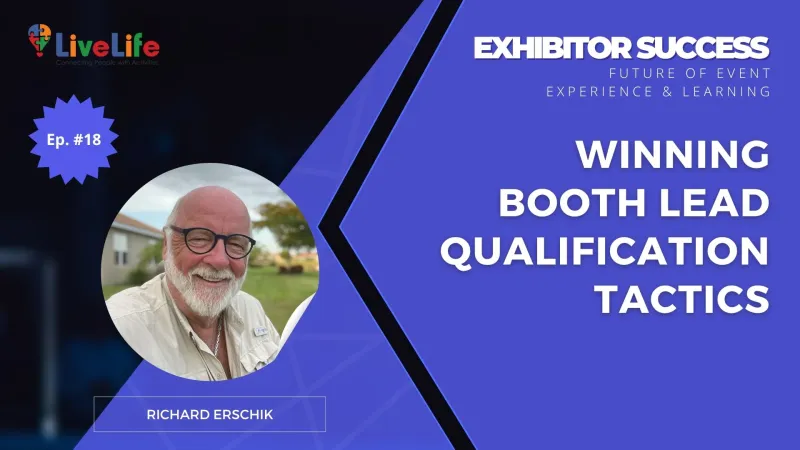
This is the summary based on The FEEL Podcast with Richard Erschik.
Moving from interrogation to connection starts with a tactical filter. Categorize your visitors using a Traffic Light Framework to make split-second decisions without looking dismissive.
- Green: High-intent buyers matching your ideal customer profile.
- Yellow: Potential partners or long-term prospects needing future nurturing.
- Red: Competitors or students seeking freebies.
Assign one team member as the "screener" to handle initial greetings, allowing your senior sales reps to focus exclusively on high-value conversations.
How to Filter Booth Traffic Without Losing the Sale
With your screener in place to deflect non-buyers, your senior reps need a repeatable system to gauge interest levels in under two minutes. This prevents your most expensive talent from getting stuck in long-winded chats that lead nowhere.
Use this structured approach to move from a casual greeting to a qualified lead opportunity:
The three-second visual scan
Before a word is spoken, look for "intent signals." Is the visitor checking the technical specs on your display, or are they just looking for the bowl of chocolates? Train your team to prioritize those interacting with the product over those wandering the aisles.
The "open-ended" qualification framework
Stop asking "Can I help you?" and start using questions that reveal their pain points immediately. These questions force the prospect to provide context, making it easy to see if they fit your ideal customer profile.
- "What specific challenge brought you to the show this year?"
- "How are you currently handling [Problem your product solves]?"
- "What’s the one thing your current provider is missing?"
If the visitor cannot answer these, they are likely a "tire kicker." If they can, they are ready for a deeper technical conversation or a scheduled follow-up.
Moving From Polite Conversation to Strategic Lead Filtering
Once that initial rapport is established, the transition to qualification feels like a natural extension of the dialogue rather than a sudden interrogation.
The most effective strategy involves shifting the focus from "who they are" to "what they are trying to solve right now."
This approach works because it prioritizes high-quality trade show leads over a high volume of generic contacts that rarely convert into revenue.
The Power of Intent-Based Discovery
Instead of simply checking boxes, successful teams look for signals of intent and urgency during the booth interaction.
By identifying the specific gap between a visitor’s current situation and their desired outcome, you can determine if your solution is a genuine fit.
Filtering for fit at the booth ensures that your sales team receives a list of prospects who are actually ready for a follow-up, not just people who liked the giveaway.
This method protects your post-show resources by focusing energy on relationships that have a clear, measurable path toward a closed deal.
A Practical Framework for Real-Time Lead Scoring
Once you have navigated the soft opening and identified a potential need, you must categorize that data instantly. Without a system, every business card looks identical by the time you return to the office.
The Three-Tier Ranking System
Assign every visitor a grade before they even leave your carpet. This prevents the "post-show blur" where you struggle to remember who was actually ready to buy.
- Hot (A): Decision-makers with a defined budget and a clear project timeline of 3–6 months.
- Warm (B): Influencers or end-users who have the problem you solve but no immediate project.
- Cold (C): Information seekers or students who are interested in the industry but have no buying power.
Standardizing Your Lead Capture
Do not rely on scribbled notes on the back of business cards. Use a digital lead capture tool with mandatory fields for your specific qualification criteria.
- Current Solution: Document what they are using now to solve their problem.
- Specific Pain Point: Note the exact frustration they mentioned during your conversation.
- Agreed Next Step: Record whether they requested a live demo, a discovery call, or a case study.
Filtering Noise with a Strategic Qualification Framework
Once you have captured those specific frustrations and agreed on clear next steps, you need a system to weigh that information. A structured qualification framework acts as a high-precision filter, separating genuine buyers from "brochure collectors" who simply enjoyed the booth entertainment.
This approach works because it shifts the focus from raw volume to booth traffic quality. Instead of chasing every badge scan, your team uses the data recorded during the conversation to assign a strategic value to each interaction. This ensures that high-intent prospects are never lost in the shuffle.
A strategic framework provides several advantages:
- Objective clarity: Sales teams no longer have to guess which leads are "hot" based on memory alone.
- Consistent data: Every staff member evaluates prospects against the same business-critical criteria.
- Reduced lead rot: By identifying the "fit" immediately, you prevent high-value opportunities from cooling off during the post-show transition.
By applying B2B lead scoring principles directly on the floor, you ensure that the energy spent during the show translates into a predictable sales pipeline rather than a stack of forgotten business cards.
Moving From Passive Filtering to Active Lead Triage
While booth design filters the crowd, your team needs a structured way to categorize the people who do walk in. The most effective approach is a real-time lead triage system that moves beyond basic contact collection.
This works because it replaces gut feelings with objective data. Instead of a staff member saying "they seemed interested," they can report "they have a specific pain point we solve and a timeline of six months."
A successful qualification framework focuses on three key pillars to identify high-intent prospects:
- Intent over Interest: Distinguishing between someone who likes your freebies and someone facing a genuine business challenge.
- Authority and Timeline: Identifying if the visitor has the power to make decisions or is simply researching for the distant future.
- Specific Pain Points: Pinpointing the exact gap in their current workflow that your solution fills.
By using a unified scoring method on the floor, you eliminate the ambiguity that usually plagues post-show meetings. You aren't just collecting names; you are building a prioritized map for your sales team to follow the moment the exhibition ends.
Turning Raw Data Into Actionable Sales Intelligence
This prioritized map is only possible when you move away from passive collection and toward active, real-time lead scoring on the floor.
The most effective strategy involves a tiered system that categorizes visitors based on their specific needs and timeline while the conversation is still fresh.
By implementing a digital capture system, you solve the "post-show lag" that often kills potential deals before they even start.
This approach works because it allows your team to distinguish between a casual browser and a high-intent buyer in seconds.
- Immediate Clarity: Sales teams can see exactly who needs a call within 24 hours versus who just needs a monthly newsletter.
- Consistency: Every staff member uses the same criteria, ensuring that "hot" means the same thing to everyone on the team.
- Data Integrity: Digital notes captured on-site are far more accurate than memories scribbled on the back of a business card three days later.
When you understand how to tell if a lead is worth following up during the event, you stop wasting time on "chachki" seekers and start focusing on genuine revenue opportunities.
This structure ensures your sales pipeline is fueled by quality data rather than just a high volume of names that lead nowhere.
How to Train Your Team for High-Pressure Lead Qualification
Turning a name into a revenue opportunity requires more than just a scanner; it requires a team that knows how to command the floor under pressure.
In a crowded hall, sales reps often hesitate, waiting for attendees to cross the "invisible line" into the booth. To fix this, you must shift their focus toward a territory mindset where they own the space immediately surrounding your display.
The 3-Second Engagement Rule
Train your staff to make eye contact and offer a non-generic greeting before the prospect passes the booth perimeter. The goal is to interrupt their "walking trance" without sounding like a scripted salesperson.
A Framework for Instant Qualification
- The Problem-First Question: Instead of "Can I help you?", ask "Are you currently dealing with [specific industry pain point]?"
- The 60-Second Filter: If the attendee doesn't match your target persona, teach your team to politely disengage and move to the next person.
- The Contextual Tag: Use your lead capture tool to record one specific "hook" or pain point rather than just scanning a badge and moving on.
This structured booth staff training removes the psychological barrier of "bothering" people. It gives your team a clear lead capture process that prioritizes speed and relevance over polite, aimless conversation.
A 3-Step Framework for Instant Lead Qualification
With your team trained and the psychological barriers removed, you need a repeatable rhythm to maintain speed and accuracy during the show.
This framework ensures no high-value prospect slips through the cracks while your team stays focused on quality over quantity.
- The Discovery Opener: Replace "Can I help you?" with "What specific challenge brought you to the show today?" This identifies active pain points immediately.
- The Value Match: Provide a 30-second solution teaser. If they engage further, they are a Tier 1 lead. If they stay passive, categorize them as Tier 3.
- Digital Tagging: Use your lead retrieval tool to tag leads as "Hot" or "Warm" with a specific note about their timeline before the next person walks in.
The biggest gap in trade show ROI is data decay. Business cards and unrated lists lose 50% of their value every day they sit unprocessed after the event ends.
If you want to ensure your next exhibition results in a measurable sales pipeline, we can help you build a structured lead flow system tailored to your industry goals.

Frequently Asked Questions
Q1: How to filter booth traffic without losing the sale during high-traffic hours?Implement a Traffic Light Framework to categorize visitors instantly. Use a designated "screener" to handle initial greetings and filter out "red" visitors (competitors or freebie seekers), allowing senior sales reps to focus entirely on "green" high-intent buyers who match your ideal customer profile.
Q2: What are the most effective questions for qualifying trade show leads in under two minutes?Shift from "Can I help you?" to open-ended discovery questions that reveal pain points. Ask, "What specific challenge brought you to the show?" or "What is the one thing your current provider is missing?" If a visitor cannot articulate a specific business gap, they are likely a casual browser rather than a buyer.
Q3: How do you distinguish between a high-intent buyer and a casual "tire kicker"?Look for intent signals before speaking, such as a visitor studying technical specs versus looking for giveaways. Use a 60-second solution teaser; high-intent prospects will engage with follow-up questions about implementation or timeline, while low-intent visitors will remain passive or pivot back to generalities.
Q4: What is the biggest mistake teams make when capturing leads on the floor?The most common error is relying on "post-show memory" or scribbled notes on business cards. Lead data loses 50% of its value every day it sits unprocessed. Use a digital capture tool to assign a Tiered Ranking (Hot/Warm/Cold) and record one specific "hook" or pain point while the conversation is still fresh.
Q5: How to filter booth traffic without losing the sale using a tiered scoring system?Standardize your lead capture by grading every interaction before the visitor leaves your booth. Grade "A" leads have a defined budget and 3-6 month timeline, "B" leads have the problem you solve but no immediate project, and "C" leads are information seekers. This ensures your sales team prioritizes the highest revenue opportunities the moment the show ends.
Q6: How can booth staff improve engagement without sounding like an interrogator?Follow the 3-Second Engagement Rule by making eye contact and offering a non-generic, problem-first greeting before the prospect passes your perimeter. Transition the conversation naturally by focusing on the gap between their current situation and their desired outcome, making the qualification feel like a strategic consultation.

Banner
Write a comment