
Strategies for Negotiating Trade Show Booth Space
- Increased foot traffic from prime locations ensures your brand captures the most qualified attendee leads.
- Guaranteed visitor interest begins before the event through pre-show digital promotions and email features.
- Massive brand exposure comes at no extra cost when bundling digital assets with floor space.
- Prime corner spots and future location priority result from securing your exhibition contract early.
- Confirmed high-value meetings occur weeks before doors open through early attendee data access.
- Natural foot traffic from industry giants increases due to booth placement near major leaders.
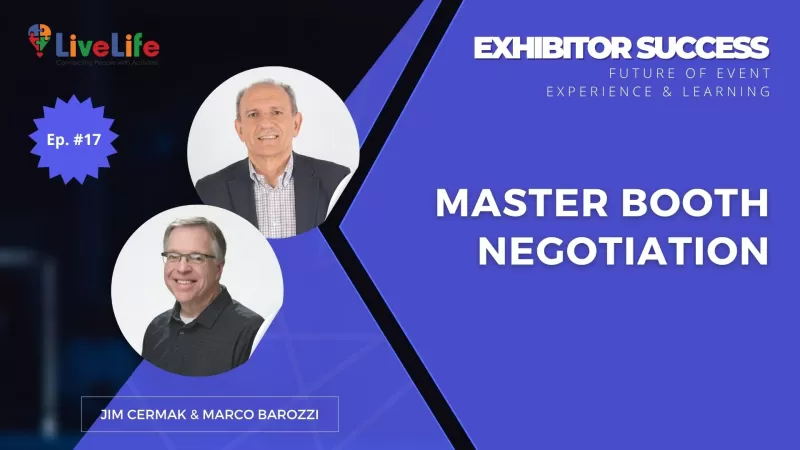
This is the summary based on The FEEL Podcast with Jim Cermak & Marco Barozzi.
The danger begins when you view the trade show floor plan purely through the lens of cost per square meter. This mindset forces you into a defensive position where you simply accept whatever the organizer offers.
By focusing only on the invoice, you overlook critical factors like pillar obstructions or proximity to dead zones. You might save money upfront, but you lose significantly more when your booth location fails to attract high-quality foot traffic throughout the event.
Prioritizing Visibility Assets Over Small Price Discounts
Shifting your focus from the bottom line to the top of the funnel changes the entire negotiation dynamic with event organizers.
While organizers often have rigid pricing tiers, they usually have significant leeway with unsold inventory and high-impact promotional assets.
A successful trade show booth location strategy prioritizes high-traffic zones—such as proximity to the main stage or catering areas—over a minor reduction in square footage costs.
- Securing corner booths: Negotiate to get a premium corner spot at standard inline rates.
- Buffer zones: Request that the space next to you remains empty or restricted to non-competitors.
- Digital real estate: Trade a price concession for inclusion in pre-event email blasts or mobile app push notifications.
These assets cost the organizer almost nothing to provide but directly influence how many qualified leads enter your environment.
By securing these "invisible" benefits, you ensure that your investment translates into actual engagement rather than just a line item on a budget.
How to Secure These "Invisible" Marketing Assets
Once you identify which assets drive the most qualified traffic, you need a structured approach to claim them during the contract phase.
Audit the Sponsorship Prospectus for Unsold Inventory
Before signing, ask the organizer for a list of unsold sponsorship slots. Mention that you are looking for ways to add value to the event beyond just floor space.
Organizers often have "digital bundles" or social media mentions that remain unbooked as the event date nears. These are your primary leverage points for a package deal.
The Negotiation Checklist for Extra Visibility
- The "First-Time" Clause: If you are a new exhibitor, ask for a complimentary logo placement on the event website to help "introduce" your brand to their audience.
- Content Exchange: Offer to provide a high-quality educational blog post for their newsletter in exchange for a dedicated social media shout-out or push notification.
- Lead Data Access: Request early access to the attendee networking app or directory to start booking meetings at least two weeks before the doors open.
Negotiating these items upfront ensures you aren't just buying a square on a map, but a comprehensive visibility package that starts working before you arrive.
Why Visibility Packages Matter More Than Booth Location
Securing a corner plot is a classic move, but it often ignores how modern B2B buyers actually navigate an exhibition. The physical footprint of your booth is only one variable in a much larger equation of trade show ROI.
When you negotiate for early data access or bundled sponsorships, you are essentially buying a head start. Most exhibitors fail because they treat the trade show as a three-day sprint. In reality, the decision-making process for high-value attendees begins weeks before they arrive at the venue.
This "pre-show window" is where the power dynamic shifts. By the time the doors open, many attendees have already finalized their "must-see" list. If your brand isn't on that list because you focused solely on floor coordinates rather than integrated visibility, you are left fighting for the leftover attention of tired foot traffic.
- Digital presence: Influences the attendee's itinerary before they fly in.
- Data access: Allows for strategic positioning rather than passive waiting.
- Brand frequency: Ensures your company name is familiar before the first handshake.
Relying on "hope-based marketing"—expecting people to find you just because you have a nice sign—is why many SMEs struggle to justify their exhibition spend. The gap between a successful show and a quiet booth is often found in the pre-event visibility negotiated months in advance.
Leveraging Bundle Deals to Increase Your Booth Visibility
Closing the gap between a quiet booth and a high-traffic one starts by changing what you negotiate. Instead of haggling solely over the price per square meter, focus on added-value marketing opportunities that organizers often have in surplus.
Organizers are typically more flexible with digital assets than they are with floor space pricing. This works because digital inclusions—like newsletter features or social media shoutouts—cost them very little but provide you with the pre-show "warmth" needed to drive traffic.
- Digital real estate: Negotiate for placement in the "know before you go" emails sent to all registered attendees.
- Speaking slots: Ask for a workshop or seminar slot as a condition of your booking to establish authority before visitors reach the hall.
- Signage rights: Request branding on floor decals or registration counters, which are high-visibility areas that often remain unsold.
By securing these extras during the initial contract phase, you ensure your brand is seen multiple times before a prospect even sets foot on the trade show floor. This multi-touch approach transforms a static booth into an active destination.
Leveraging Early Commitment for Prime Trade Show Locations
Building on that multi-touch visibility, the most effective way to secure a high-impact presence is by shifting how you approach the contract itself.
The most successful brands don't just pick from what’s left; they use their early commitment as leverage to anchor the floor plan.
When you sign early, you provide the organizer with the stability they need to attract other exhibitors, which gives you the upper hand in exhibition package negotiation.
This "anchor" status often opens doors to benefits that aren't listed on a standard price sheet, such as first-right-of-refusal for premium corners.
Organizers are more likely to grant concessions on location or add-on perks when they know your brand is locked in well before the marketing cycle begins.
By treating the space as a strategic asset rather than a line item, you ensure your booth is placed in high-flow zones that naturally filter the right prospects to your door.
A Practical Checklist for Navigating Space Negotiations
Securing a high-traffic spot requires more than just a signed contract. It involves a tactical approach to the floor plan long before the doors open.
Follow these steps to move from a standard exhibitor to a priority partner with the best possible placement:
- Audit the traffic flow: Request the previous year’s heat map or attendee flow data to identify "dead zones" and high-density corridors.
- Shadow the giants: Map out where the industry leaders are located. Position your booth nearby to capture their natural spillover traffic.
- Bundle your commitment: Propose a multi-year or multi-event package. Organizers are more likely to provide prime real estate to guaranteed repeat customers.
- Request "first right of refusal": Secure a clause that gives you the option to keep your spot or upgrade before the general public for the next cycle.
- Define your "Value Add" list: List specific perks like lead scanner credits, digital directory upgrades, or corner-booth fee waivers to use as bargaining chips.
This systematic approach ensures you aren't just buying a square on a map, but investing in a location that forces engagement.
The Step-by-Step Guide to Securing Your Ideal Booth
With your list of bargaining chips ready, the focus shifts to the actual execution of the deal.
Negotiation is not a one-time conversation but a series of checkpoints before the contract is signed.
Timing Your Counter-Offer
- Review the floor plan early: Request the map months in advance to identify high-traffic zones.
- Leverage the early bird discount: Use the saved budget to push for a digital directory upgrade.
- Ask for the unbooked list: If a show is four weeks away and spots remain, your leverage doubles.
Finalizing the Exhibitor Agreement
Do not just sign the standard document; check the exhibitor manual for hidden flexibility in utility costs.
- Request a multi-year lock: Offer to sign for two years if the organizer agrees to freeze current rates.
- Get it in writing: Ensure every verbal promise, like corner-booth fee waivers, is in the final PDF.
Most brands lose money because they accept the first offer. Success comes from treating the organizer as a partner, not a landlord.
If you need help auditing your current exhibition contracts to find these hidden gaps, a structured review can clarify your next move.

Frequently Asked Questions
Q1: How can I improve my trade show booth location strategy beyond just picking a spot on the map?Stop evaluating space by cost per square meter and start auditing traffic flow. Request previous heat maps to identify dead zones and high-density corridors. Position your booth near industry anchors to capture spillover traffic, and prioritize proximity to catering or main stages over minor square footage discounts.
Q2: What are the biggest mistakes to avoid during exhibition package negotiation?The costliest mistake is treating the organizer as a landlord rather than a marketing partner. Don't accept the first offer or focus solely on the floor space invoice. Instead, leverage unsold inventory—like digital directory upgrades, mobile app push notifications, or newsletter features—which cost the organizer nothing but significantly increase your pre-show visibility.
Q3: Why should I prioritize digital assets over a slightly better physical booth location?Modern B2B buyers finalize their "must-see" list weeks before the event. If you aren't in the pre-show email blasts or the networking app, even a prime corner spot won't save you from being ignored. Digital assets ensure you are a destination for qualified leads, rather than a random stop for tired foot traffic.
Q4: What specific "invisible" benefits should I ask for in a trade show contract?Negotiate for a "First-Time Clause" for free logo placement, early access to the attendee directory to book meetings, or a content exchange where you provide an educational blog post for a social media shout-out. These assets drive high-quality engagement and often have more impact on ROI than the physical booth coordinates.
Q5: How can I leverage an early commitment to get a better booth deal?Signing early provides organizers with the stability they need to attract other brands. Use this "anchor" status to negotiate first-right-of-refusal for premium corners, multi-year rate freezes, or the removal of corner-booth fee waivers. Your early deposit is your strongest bargaining chip for securing high-flow zones that naturally filter the right prospects to your door.

Banner

Write a comment