
Effective Alternatives to Expensive Trade Show Floor Booths
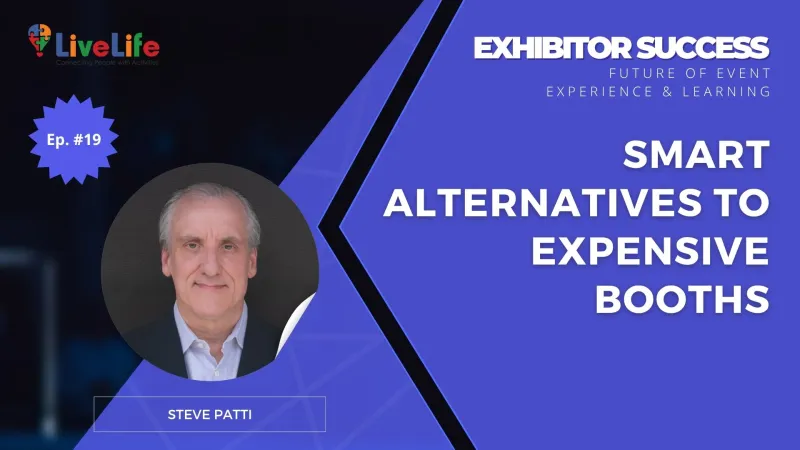
- Higher quality leads come from prioritizing scheduled meetings over the noise of general floor traffic.
- Better sales conversations happen in quiet rooms where prospects can actually hear your value proposition.
- Stronger client trust develops during private dinners compared to brief interactions at a crowded booth.
- Industry leader status is established by hosting exclusive events instead of renting standard floor space.
- Sales teams stay fresh by focusing on pre-booked meetings instead of scanning random badges.
- Shorter sales cycles result from discussing budgets and contracts in private without any interruptions.
This is the summary based on The FEEL Podcast with Steve Patti.
To move away from the "big booth" trap, start by reallocating your budget toward these high-impact alternatives:
- Host Private Off-Site Meetings: Book a suite or nearby cafe for focused 1-on-1 sessions with key accounts.
- Secure Speaking Slots: Position your team as industry experts rather than just another vendor on the floor.
- Sponsor Niche Networking Events: Get your brand in front of a curated list of decision-makers.
This shift requires a targeted event marketing plan that prioritizes pre-booked meetings over waiting for random foot traffic.
Why High-Traffic Booths Often Fail to Convert
Shifting toward niche events and pre-booked meetings works because it addresses a fundamental flaw in the traditional exhibition model: the dilution of attention.
On a crowded trade show floor, your team is often forced into a quantity-over-quality mindset, rushing through interactions just to manage the queue.
The Hidden Cost of Sensory Overload
In a high-decibel environment, potential clients struggle to process complex value propositions, leading to superficial engagements that rarely progress into the sales funnel.
This environment often triggers a defensive response in decision-makers, who may browse anonymously or avoid deep conversations to escape aggressive sales pitches.
The Misalignment of Budget and Impact
When the majority of your marketing spend is tied to physical floor space, you are essentially paying for the "possibility" of a lead rather than the "certainty" of an outcome.
- Low Signal-to-Noise Ratio: A significant percentage of floor traffic consists of non-decision makers or casual observers.
- Energy Depletion: Staff fatigue from repetitive, low-value conversations reduces their effectiveness when a high-value prospect finally arrives.
This imbalance explains why companies can scan hundreds of badges yet see no meaningful impact on their revenue months after the event concludes.
Why Moving Your Presence Off-Floor Protects Your Best Leads
To solve the problem of staff fatigue and low-value noise, you must shift the environment from a public spectacle to a private destination.
Creating a dedicated space away from the main hall ensures that your most valuable conversations happen in a controlled, high-focus setting.
The Off-Floor Luxury Suite Strategy
Hosting key prospects in a nearby luxury suite provides a quiet oasis that contrasts sharply with the convention center chaos.
This approach works because it replaces the "random walk-up" with a curated brand experience, using white-glove services like private transport to signal exclusivity.
Micro-Events for High-Value Relationship Building
Small, 8-to-10 person dinners or "no-sales zone" lounges allow for deeper trust-building that is impossible to achieve at a crowded booth.
These micro-events prioritize relationship acceleration over volume, ensuring your team’s energy is spent exclusively on the leads most likely to close.
Moving From Foot Traffic To High-Intent Networking
Shifting focus from the crowded floor to these intimate settings works because it replaces passive discovery with intentional engagement. When you move the conversation away from the noise, you change the power dynamic from being just another vendor to becoming the host of an exclusive experience.
The Value Of Controlled Environments
Private meeting suites or off-site hubs act as a filter. They ensure that your team is not distracted by "tire-kickers" or competitors scouting your booth. Instead, every minute spent is an investment in high-intent networking with prospects who have already signaled interest by stepping away from the main event to meet you.
- Higher signal-to-noise ratio: You speak only to stakeholders who directly impact your bottom line.
- Psychological safety: Prospects feel more comfortable discussing real pain points and specific budgets behind closed doors.
- Brand authority: Hosting a curated space positions your company as an industry leader rather than a standard participant.
This approach transforms the event from a generic branding exercise into a high-conversion engine. It forces a commitment to quality, ensuring that the marketing budget is utilized only where there is a clear, pre-negotiated path to a signed contract.
High-Intent Meeting Spaces Over High-Traffic Floor Space
Shifting your budget away from the main hall works because it replaces accidental discovery with intentional engagement. When you host prospects in a private suite or a nearby curated space, you eliminate the noise and exhaustion of the trade show floor.
This approach builds authority through exclusivity. Instead of competing for three minutes of a distracted attendee's time, you are offering a focused environment where real business problems are solved.
- Controlled Environment: You dictate the lighting, the seating, and the pace of the conversation without the constant roar of a thousand other booths.
- Higher Perceived Value: Prospects view an invitation to a private executive preview as a premium experience, rather than a generic sales pitch.
- Resource Efficiency: Your best sales talent isn't wasted on scanning badges of low-quality leads; they are reserved for pre-qualified, high-value discussions.
By positioning your brand just outside the "taxed" floor space, you maintain proximity to the event's energy while retaining total control over the user experience.
How to Execute a High-Impact Strategy Outside the Exhibition Hall
Leveraging your team’s time more effectively is only possible when the physical environment supports deep work rather than constant distractions.
Audit Your Product's Demonstration Needs
- Assess physical requirements: Determine if your product truly needs a reinforced floor or simply a stable, high-speed internet connection for a digital walkthrough.
- Prioritize acoustic privacy: If you sell software or high-level consulting, trade "foot traffic" for a quiet space where complex deals can be discussed without shouting.
Execute a Press and Media SEO Strategy
- Pre-event outreach: Contact industry influencers and journalists three weeks early to book exclusive interviews at your off-site location.
- Asset generation: Use the controlled environment of a private suite to record high-quality video content that serves your digital marketing long after the show ends.
Establish New Success Metrics for Private Activations
Success in a private setting is measured by the depth of the relationship, not the volume of the crowd.
- Calculate true CPA: Compare the total spend of a private suite against the number of "SQLs" (Sales Qualified Leads) generated versus generic badge scans.
- Track dwell time: Use your CRM to monitor leads who engaged in deep-dive sessions lasting 20 minutes or more.
Shift the Focus from Foot Traffic to Meaningful Engagement
When you stop chasing volume and start prioritizing dwell time, the strategic advantage of private environments becomes undeniable. Traditional booths often force you to compete with background noise and passing distractions, which naturally dilutes your sales message.
The most effective solution for high-value lead conversion is a controlled environment. Moving your primary interactions off the main floor or into a dedicated suite changes the psychology of the meeting.
- Better Environment Control: You eliminate the "distraction tax" that comes with a busy aisle.
- Perceived Value: An invitation to a private space signals to a prospect that their business warrants a higher level of attention.
- Strategic Depth: You can facilitate technical deep dives and contract discussions that are impossible in a 10x10 booth.
By shifting your investment toward these high-touch alternatives, you aren't just saving on floor space costs. You are creating a filter that separates casual observers from serious buyers, ensuring your sales team spends their energy where it actually impacts the bottom line.
If you are looking for more clarity on how to structure your next event for better ROI, a focused strategy audit can help you identify which high-value alternatives fit your specific sales cycle. A more structured approach ensures your exhibition budget is an investment, not just an expense.

Frequently Asked Questions
Q1: Why is my trade show booth failing to generate high-quality leads?High-traffic booths often suffer from a low signal-to-noise ratio where staff spend energy on casual observers rather than decision-makers. Sensory overload on the floor prevents deep discovery, leading to superficial badge scans that rarely progress through the sales funnel due to the lack of meaningful engagement.
Q2: How can I reallocate my event marketing budget toward high-impact alternatives?Shift funds from expensive floor space to private off-site meetings, speaking slots, and niche networking events. This strategy prioritizes pre-booked sessions with key accounts over random foot traffic, ensuring your spend is tied to specific outcomes rather than the mere possibility of a lead.
Q3: What are the benefits of using private meeting suites over a standard exhibition booth?Private suites provide a controlled environment that eliminates the distraction tax of the main hall. This exclusivity builds brand authority and creates psychological safety, allowing prospects to discuss specific pain points and budgets that they would typically avoid revealing on a crowded, noisy trade show floor.
Q4: What is the most common mistake in measuring trade show ROI?Many companies over-rely on the volume of badge scans rather than the depth of engagement. True success should be measured by dwell time—sessions lasting 20 minutes or more—and the conversion rate of Sales Qualified Leads (SQLs) generated in high-focus settings compared to generic floor interactions.
Q5: How do I transition from chasing foot traffic to high-intent networking?Replace passive discovery with intentional engagement by moving primary interactions off the main floor. Use a targeted pre-event outreach strategy to book exclusive interviews or executive previews in a private hub, ensuring your sales team’s energy is reserved for prospects who have already signaled a high intent to buy.

Banner
Write a comment