
Trade Show vs Proprietary Events: Which Drives ROI?
- Finding new customers is faster when you access a trade show’s pre-built audience
- Closing big deals is easier when you remove competitor noise at private events
- Full prospect attention is guaranteed when you host your own private event
- Lower event costs occur when trade show organizers handle the heavy logistical lifting
- Validating new products is easier with immediate feedback from active trade show buyers
- Better event ROI happens when your format solves your specific sales bottleneck
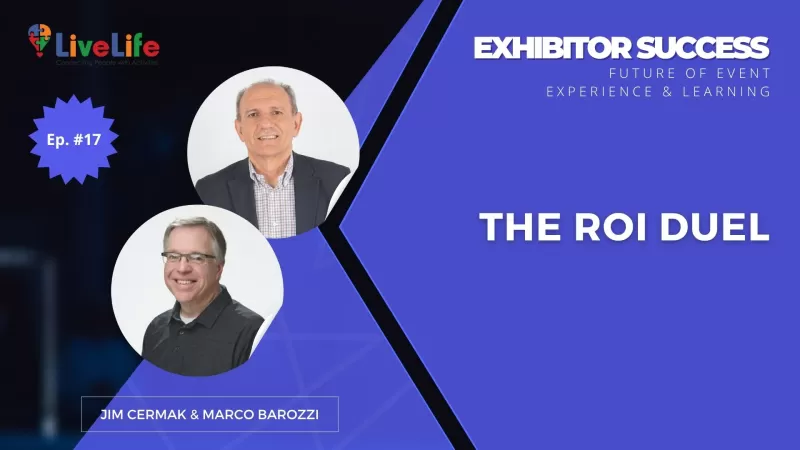
This is the summary based on The FEEL Podcast with Jim Cermak & Marco Barozzi.
- Audience Access: Do you need to meet new people (Trade Show) or deepen ties with existing leads (Proprietary)?
- Execution Capacity: Does your team have the bandwidth to manage event logistics, or do you need a ready-made platform?
- Goal Alignment: Are you hunting for volume or high-value conversions?
Use these three pillars to score your current business needs before allocating your next marketing spend.
How to Score Your Business Needs Before Choosing Your Event Format
Once you recognize the leverage of a pre-built audience, the next step is determining if that volume aligns with your current sales capacity.
Use this three-part framework to score your business needs before allocating your next marketing spend.
Assess Your Database Maturity
- Low Maturity: If your CRM is thin and you need fresh eyes, choose a trade show to tap into their established visitor list.
- High Maturity: If you have a deep list of "warm" prospects who haven't converted, a proprietary event offers the control needed to close them.
Evaluate Your Conversion Objective
Determine if you are hunting for brand awareness or contract signatures.
- Choose trade show exhibiting if you need to benchmark against competitors and fill the top of your funnel.
- Choose proprietary events if your product requires a 2-hour deep dive that a noisy exhibition floor cannot support.
By scoring these pillars, you move from "showing up" to selecting the environment that actually drives your specific KPI.
Matching Your Event Format to the Sales Cycle
By scoring these pillars, you recognize that neither format is a "one-size-fits-all" fix. Instead, each serves as a specific solution to different business growth hurdles.
The Power of High-Volume Discovery
Exhibiting at major trade shows is the most effective solution for broad market visibility. It works because the event organizer handles the heavy lifting of audience acquisition.
This environment is ideal for testing new products or entering a new region. You gain immediate access to a "warm" audience that is already in a purchasing mindset, which is impossible to build from scratch overnight.
The Value of Exclusive Brand Immersion
Hosting a proprietary event is the solution for targeted audience engagement and closing complex, high-ticket deals. It works by removing the "noise" of the exhibition floor.
- Full Attention: Your brand is the only one in the room, eliminating direct competitor comparisons.
- Deep Education: You can facilitate technical workshops that move a lead from "interested" to "convinced."
Strategic success comes from choosing the format that aligns with where your prospects sit in the buying journey.
How to Choose the Right Event Format for Your Business Goals
Mapping your budget to the right format requires a cold look at your current sales pipeline. To turn those cost insights into a concrete plan, use this three-step decision framework to identify which path offers the fastest route to revenue.
The Event Selection Filter:
- Analyze your audience gap: Choose a trade show if you need to fill the top of your funnel with fresh prospects. Host a proprietary event if your target accounts are already in your database and need a high-touch environment to close.
- Audit your internal execution capacity: Trade shows are largely "plug-and-play" logistics managed by the organizers. Proprietary events require a 6-to-12 month planning cycle. If your marketing team is lean, exhibiting is the safer bet for consistency.
- Calculate the cost-per-conversation: Estimate your total spend and divide it by expected high-intent meetings. If a private event costs 4x more per lead than a booth, the intimacy must be strategically vital to justify the spend.
Applying this filter ensures you aren't just "showing up," but selecting the format that solves your specific sales bottleneck. Once you have identified the right format, the focus shifts to how you actually capture value on the floor or in the room.
How to Execute Your Event Strategy Without Wasting Leads
Once you have committed to a format, the priority moves from logistics to lead qualification. Whether you are on a massive exhibition floor or in a private boardroom, your team needs a specific workflow to separate "tourists" from "buyers."
For Trade Show Exhibitors
- The 30-Second Filter: Train your team to ask one open-ended question that identifies a specific pain point immediately. If they don't have the problem you solve, move on politely.
- Digital Capture: Stop using business cards as your primary record. Use a lead scanning app with custom note fields to tag the lead's urgency level while the conversation is fresh.
For Proprietary Event Hosts
- The Pre-Event Brief: Review the LinkedIn profiles and recent company news of every attendee with your sales team 48 hours before the event.
- The Next Step Commitment: Since you own the environment, you have the time to lock in a calendar date. Never end a private session without a scheduled follow-up call.
Execution is about discipline. In a high-traffic trade show, that means speed. In a private event, it means depth.
How to Decide Between a Trade Show and a Private Event
Choosing the right format depends on where your prospects sit in the sales cycle. To make the call, use this practical decision framework based on your current business capacity.
Evaluate Your Primary Objective
- Choose a trade show if you need to fill the top of your funnel with new names and test market interest in a new product quickly.
- Host a private event if you have a list of "warm" prospects who need a final push or a technical deep-dive to close a deal.
Audit Your Internal Resources
Hosting requires a different muscle than exhibiting. Before committing to a proprietary event, ensure you have a dedicated team for logistics, venue management, and personalized outreach.
Run a Budget-to-Value Comparison
- Trade Show: Lower operational overhead, but you are competing for every second of attention.
- Private Event: Higher upfront risk, but significantly higher trade show lead management quality and conversion potential.
Once you have selected the format that aligns with your resources, the focus shifts to ensuring the investment actually pays off through measurable results.
How to Execute Your Event Strategy Choice
Moving from the decision phase to execution requires a structured framework to ensure your investment translates into revenue. Whether you choose the scale of a trade show or the precision of a private event, your focus must shift to data capture and lead velocity.
Use this event performance checklist to validate your strategy and maximize your results:
- Audit Lead Quality: Review your last three events. Did the leads enter the sales pipeline, or did they stall after the first automated follow-up?
- Calculate "Cost-per-Conversation": Move beyond simple booth costs. Measure the total spend divided by the number of high-intent meetings actually held.
- Run a Pilot Event: Before abandoning trade shows entirely, host a small "VIP Roundtable" in the same city to test the private event format with less risk.
- Standardize Qualification: Create a three-point scoring system for your booth staff to use, ensuring only "sales-ready" leads are prioritized post-show.
The gap between a wasted budget and a high-ROI event is usually found in the preparation of these systems, not the event itself.
If you need help identifying which format will drive the highest conversion for your specific industry, a structured strategy audit can provide the clarity needed to optimize your next event calendar.

Frequently Asked Questions
Q1: How do I know if my business should prioritize a trade show or a proprietary event?Base your decision on your current database maturity. If your CRM is thin and you need to fill the top of your funnel with new names, a trade show provides immediate access to an established audience. If you already have a list of warm prospects who need a technical deep dive to convert, a proprietary event offers the controlled, distraction-free environment required to close complex, high-ticket deals.
Q2: What are the most common mistakes when choosing an event format for a lean marketing team?The biggest mistake is overestimating internal execution capacity. Hosting a private event requires a 6-to-12 month planning cycle and heavy logistics management. For teams with limited bandwidth, trade show exhibiting is the more efficient choice because the organizer handles audience acquisition and venue operations, allowing your team to focus strictly on lead qualification and sales velocity.
Q3: Why is cost-per-lead a misleading metric when comparing exhibitions to private roundtables?Trade shows often deliver a lower cost-per-lead due to massive foot traffic, but these leads are frequently low-intent "tourists." Instead, calculate the cost-per-conversation for high-intent meetings. A private event may cost significantly more per attendee, but the intimacy allows for the deep education and "next step" commitments that move prospects through the sales cycle faster than a noisy exhibition floor.
Q4: How can I improve trade show lead management to ensure a higher ROI?Stop using business cards as your primary record and switch to a digital lead scanning app with custom note fields. Train your booth staff to use a 30-second filter—asking one open-ended question to identify a specific pain point immediately. This discipline ensures your team prioritizes sales-ready prospects and captures the urgency level of each lead while the conversation is still fresh.
Q5: What is the best way to test a proprietary event format without high financial risk?Run a pilot "VIP Roundtable" or technical workshop in the same city as a major industry trade show. This allows you to leverage the fact that your target accounts are already in town, reducing your marketing spend on audience recruitment while testing if a private, high-touch environment effectively solves your specific sales bottlenecks.

Banner

Write a comment