
How to Set Strategic Trade Show Goals for Better ROI
- Predictable profit comes from fixed cost-per-lead limits on your total booth spend.
- Valuable market feedback protects your budget even when immediate sales cycles are slow.
- Guaranteed renewals and account expansions result from private executive dinners and roadmap sessions.
- Real-time competitor insights identify product gaps that help your team win more deals.
- Faster sales pipelines come from intent-based lead scores instead of generic badge scans.
- High sales momentum stays strong through immediate lead syncing and fast follow-ups.
- Increased brand awareness extends beyond the booth through influencer walkthroughs and digital press kits.
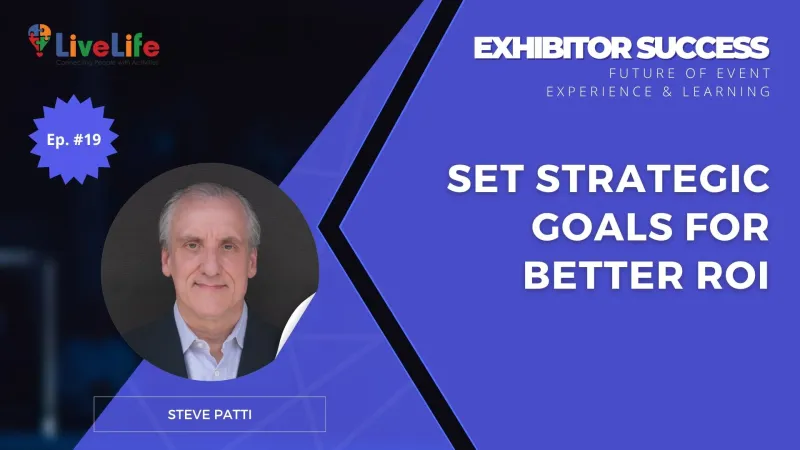
This is the summary based on The FEEL Podcast with Steve Patti.
Most companies treat trade shows like an expensive vacation because they lack a concrete plan. To fix this, you need a framework that turns vague intentions into measurable exhibition targets.
- Select one primary focus: Choose between lead volume, brand authority, or competitor research.
- Assign a Lead Value: Estimate what a single qualified prospect is worth to your sales pipeline.
- Set a Cost per Lead ceiling: Divide your total booth spend by your target lead count to ensure the math works.
Using this checklist ensures your team knows exactly what success looks like before the doors even open.
How Multi-Layered Goals Protect Your Marketing Budget
Once you have your cost per lead ceiling, the next step is ensuring those leads actually convert into revenue by aligning floor activities with broader business objectives.
High-performing exhibitors move beyond simple headcounts. They treat the trade show as a multi-purpose business tool rather than just a sales booth.
The Power of Goal Diversification
Focusing solely on immediate sales often leads to aggressive tactics that alienate high-value prospects. A balanced strategy includes market intelligence and relationship equity.
- Market Intelligence: Validating your product-market fit by gathering direct feedback on new features or competitor positioning.
- Brand Equity: Establishing authority so that post-show follow-ups are met with recognition, not confusion.
This approach works because it creates value even if a lead isn't ready to buy today. It ensures your trade show performance metrics are insulated against the long sales cycles common in B2B industries.
By defining what success looks like for both sales and marketing, you eliminate the "fuzzy" results that usually haunt post-show reports and justify the total investment.
How to Execute Your Trade Show Strategy on the Floor
Moving from high-level definitions to measurable results requires a tactical framework your team can follow during the chaos of the event.
Customer Retention and Upsell Opportunities
To secure renewals and expand accounts, treat the exhibition as a high-touch service hub rather than just a sales booth.
- Pre-book strategic sessions: Lock in 30-minute blocks with current clients three weeks before the show to discuss their roadmap.
- Host "under-the-hood" demos: Create a private space to show existing users upcoming features that solve their specific pain points.
- Schedule executive dinners: Use the evening to move conversations from technical features to long-term financial partnerships.
Tactical Competitive Intelligence Gathering
Gathering intelligence requires a structured approach to ensure the data you bring back is actually useful for your sales team.
- The Mystery Shop: Visit competitor booths during peak hours to observe their primary sales pitch and how they handle objections.
- Test their follow-up: Request information using a neutral domain to benchmark their speed and the quality of their nurture sequence.
- Document feature gaps: Use a simple mobile form for your team to log what competitors are emphasizing versus what they are missing.
Standardizing Your Post-Show Performance Scorecard
Once you have captured those client interviews and benchmarked the competition, you need a framework to translate those observations into financial metrics.
Start by moving away from "total badge scans" and focus on a weighted scoring system that reflects your actual sales cycle. This turns raw data into a clear picture of your marketing ROI.
- Categorize by intent: Assign a point value to specific actions, such as a requested demo (10 points) versus a general brochure download (2 points).
- Calculate the Cost Per Meaningful Conversation: Divide your total show spend by the number of high-intent interactions, rather than total foot traffic.
- Sync with the CRM within 24 hours: Upload your mobile form data and interview notes immediately to prevent lead decay and maintain momentum.
- Audit the content gap: Map the feature gaps you documented against your current product roadmap to prioritize high-value updates.
This structured approach ensures that the insights gathered on-site don't sit in a spreadsheet, but instead drive immediate sales pipeline velocity.
Executing Your Partner and Media Strategy on the Floor
Once you have mapped your product gaps to your roadmap, you can shift from internal planning to active market expansion. The trade show floor is the most efficient environment for securing new distribution channels and media visibility in a single window.
Building Your Channel Partner Pipeline
- Pre-screen and schedule: Use the exhibitor list to identify potential distributors and book "discovery coffee" slots at least two weeks before the event.
- Draft revenue frameworks: Present existing partners with a one-page growth plan that shows how your new features will help them hit their quarterly targets.
- Qualify for fit: Ask potential partners about their current portfolio gaps to ensure your solution is a complementary addition, not a redundant one.
Securing Earned Media Coverage
- The "Exclusive First" pitch: Reach out to attending journalists with a private briefing on the roadmap updates you prioritized during your content audit.
- Host influencer walkthroughs: Invite industry thought leaders for a five-minute booth demo that they can share directly with their LinkedIn followers.
- Prepare a digital press kit: Ensure your media contacts have instant access to high-res images and executive quotes via a simple QR code on-site.
Turn Your Exhibition Strategy Into a Practical Execution Plan
Once you have the media tools and team alignment in place, you need a repeatable system to capture and categorize every interaction. Without a framework, those influencer-driven crowds become meaningless noise rather than measurable business opportunities.
Create a Lead Qualification Framework
Avoid the "card collecting" trap. Use a lead capture process that scores prospects immediately based on their intent and authority during the conversation:
- High Priority: Immediate project need, confirmed budget, and decision-making power.
- Future Opportunity: Strategic fit but currently under contract or in an early research phase.
- General Inquiry: Low-priority contacts or students who only require an automated resource pack.
Set Up Real-Time Performance Tracking
Stop waiting until the show is over to measure your success. Use a digital dashboard to monitor these three metrics daily to see if you are hitting your strategic trade show goals:
- Engagement Gap: The ratio of total booth visitors compared to actual qualified lead scans.
- Dwell Time: The number of high-value technical conversations that lasted more than 10 minutes.
- Digital Reach: Total unique scans of your QR-coded press kits and influencer-shared demo links.
How To Build A Repeatable System For Measuring Trade Show Success
Turning these digital reach metrics and conversation insights into actual revenue requires a structured post-show workflow.
Without a specific execution plan, the data you have gathered on dwell time and scans will likely sit unused in a spreadsheet.
- Standardize Lead Scoring: Within 24 hours, categorize every contact based on conversation depth rather than just their job title.
- Map Digital Touchpoints: Sync every QR scan and demo link click to your CRM to identify which assets influenced the buyer.
- Conduct a Value Debrief: Meet with the sales team to isolate which booth interactions led directly to a scheduled discovery call.
The gap between a busy booth and a profitable one is almost always the speed and quality of this data handoff.
If your current trade show performance tracking feels disorganized, we can help you design a clear measurement framework tailored to your business goals.

Frequently Asked Questions
Q1: How do I calculate the ROI of a trade show strategy?Focus on your Cost Per Lead (CPL) ceiling. Divide your total booth investment by your target number of qualified leads. If a prospect is worth $5,000 to your pipeline and you spend $50,000 on the show, you need at least 10 high-value conversions to break even on the initial investment.
Q2: What is the biggest mistake companies make when setting exhibition targets?The most common error is focusing on total badge scans rather than lead intent. High volume often masks low quality. Instead, use a weighted scoring system that assigns higher point values to specific actions, such as a requested technical demo or a 10-minute "dwell time" conversation.
Q3: What should I prioritize if my trade show performance metrics are consistently low?Shift your focus from broad awareness to high-touch relationship equity. Pre-book 30-minute roadmap sessions with existing clients three weeks before the show. This ensures the event functions as a retention and upsell tool, providing measurable value even if new lead volume fluctuates.
Q4: How can I gather useful competitive intelligence on the show floor?Conduct a structured "mystery shop" during peak hours. Observe which objections their sales team handles most frequently and request information using a neutral domain to benchmark their follow-up speed. Log these feature gaps in a mobile form to immediately update your own product roadmap.
Q5: How do I prevent lead decay in the first 24 hours after a show?Sync all lead data and interview notes to your CRM immediately. Categorize every contact by conversation depth—not just job title—so your sales team can trigger personalized follow-ups while the interaction is still fresh. The gap between a busy booth and a profitable one is the speed of this data handoff.

Banner
Write a comment