
How To Get Speaking Opportunities At Trade Shows For Authority
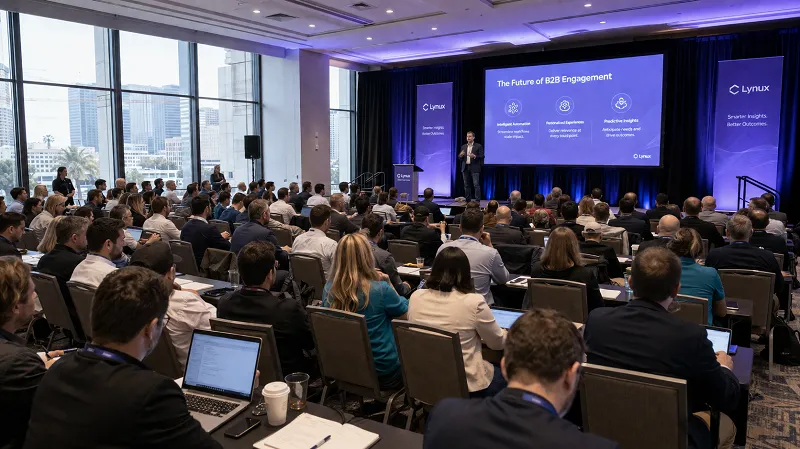
- A booth traps you in one-to-one math where you can only reach as many people as you have staff to shake hands, but a speaking slot flips you onto a one-to-many stage in front of an audience that already self-selected into the room.
- The strongest move isn't demoing your dashboard from a bigger stage — it's running a BYO Laptop hands-on workshop where prospects build or adapt the system themselves, walking out as far deeper leads than any badge scan produces.
- As Steve Multer frames it, speaking isn't only company marketing but personal career equity, because by choosing to lead a room you create the charisma you assumed you were born without.
This is the summary based on The FEEL Podcast with Steve Multer.
There's a particular kind of exhaustion that settles into a B2B marketer's bones around day two of a trade show. You've paid five or six figures for a slab of carpet, a branded backdrop, and the right to hope the right person wanders past your 10x10 space at the precise moment they aren't hunting for a free espresso.
That's the booth grind, and most exhibitors accept it as the cost of doing business without ever questioning whether the physics of the setup are quietly working against them.
Here's the thing worth sitting with: a booth is boxed in by the math of one-to-one interaction. You can only talk to as many people as you have staff to shake hands and scan badges.
But in a conversation on The FEEL Podcast with Steve Multer, a different angle surfaces (check this?) — one most exhibitors leave completely on the table. You don't actually have to exhibit to have a presence.
You can be a speaker. You can host a panel. You can stand on a stage where the audience is already captured, already leaning in, already yours, and that reframes your entire exhibitor success equation before the show floor even opens.
This isn't about abandoning the booth. It's the layer that sits on top of everything you already know about how to staff and run a trade show nooth that drives ROI, turning your presence from a passive gamble into a deliberate strategy you can refine across your pre/in/post-show motion.
So the real question this article wants to answer is simple, and I want you to actually sit with it: are you showing up as the person hoping someone walks by, or as the person the whole room came to hear?
Why Speaking Beats Exhibiting For High-Value Engagement
When you break down what actually happens at a trade show, it comes down to the quality of attention you're capturing. An exhibitor is dealing with what we might call the aisle wanderer — someone whose focus is fragmented across a hundred other booths, a dozen half-conversations, and the growing pull of lunch.
A speaker is dealing with a captured audience. That single distinction is the whole game, and it's where real engagement lives.
Look at the raw arithmetic for a second. In a booth, you're constantly restarting your pitch from zero, one handshake at a time. It's a one-to-one resource drain that flattens your staff by mid-afternoon.
When you secure a speaking slot, you engage on a one-to-many platform instead. As Steve Multer frames it, if you genuinely believe in your story and want to bring it to as many people as possible, you seek the one-to-many stage rather than staying locked in a strictly one-to-one mode.
The psychological gap matters as much as the numbers. People sitting in your session room have self-selected — they scanned the agenda, recognized a problem they actually carry, and decided you might hold the answer.
They aren't drifting past your logo. They're leaning in, and that alignment between their problem and your presence is exactly what a booth interaction almost never manufactures on its own. That's the difference between interrupting someone and being the destination they walked toward.
Workshops That Build Value: Beyond The Dashboard Demo
A common trap for first-time speakers is treating the stage like an oversized booth. They stand up, pull slides of their product interface, and walk the room through their dashboard like a live instruction manual.
Nobody flies to a convention center for that. Explaining a system is passive — it's the thing you do at a booth when someone asks, "So, what do you guys actually do?" The stage deserves sharper clarity than that.
The stronger methodology that surfaces in the conversation is the BYO Laptop hands-on workshop, and it flips the dynamic completely. As Steve Multer describes it, instead of simply explaining the dashboard, you bring people in and show them how to build that dashboard — or adapt it to their own needs — right there in the room. You stop being a vendor and become a facilitator. And the payoff runs in two directions at once:
- Value for the prospect ? by the time the session ends, they haven't just watched your product, they've used it to solve a small, real problem of their own, which makes them a far deeper lead than any badge scan.
- Value for you ? as Steve points out, each of these hands-on moments builds value not only for the people you speak with but for you personally, sharpening your standing as the person who led the room.
That second point is easy to skim past, so slow down on it. This is where the stage stops being a company asset and becomes career equity.
"Nothing gets sold until the story gets told."
That line, drawn from Steve Multer's book, carries the whole idea. The subtitle he and his team labored over says the rest: corporate storytelling for career success and value-driven marketing. Speaking isn't only about the company.
When you get up and demonstrate value, passion, and connection, you build yourself inside your organization and make yourself harder to replace.
From Exhibitor To Leader: Choosing The Stage
Here's the part that trips people up, and it has nothing to do with logistics. Plenty of professionals dodge the stage because they don't feel like natural leaders. They picture themselves as background people, more comfortable behind the booth than in front of the room.
But as Steve Multer points out, drawing on Dave Stachowiak's leadership podcast, leadership isn't something you're simply born with. By choosing to lead, you create charisma.
Sit with that mechanism, because it runs opposite to how most people assume confidence works. The more you get in front of others, take the leadership role, and own it — showing your passion, hunting for chances to tell a great story and connect your brand to a potential customer — the more of a leader you actually become.
You don't wait to feel ready and then step up. You step up, and the readiness follows. You can be uncomfortable and do it anyway; as Steve bluntly puts it, you can fake it till you make it.
So if you tend to prefer the background, run the honest math on it. How much more likely are you to rise in your position, to be noticed and appreciated, if you become the face of the brand on stage?
You don't need to be the best speaker in the world to begin. Grab every opportunity you can find, own the leadership role even when it's awkward, and just give it a shot — because that's where personal growth and exhibitor success finally stop competing and start pulling in the same direction.
Ready to evolve your event narrative? Listen to the full discussion on The FEEL Podcast, where the conversation digs deep into the mechanics of corporate storytelling and the one-to-many platform — and then ask yourself what role you actually want to play the next time the agenda has an open slot.

Frequently Asked Questions
Q1: Do I have to exhibit at a trade show to get a speaking slot?No. As discussed on The FEEL Podcast with Steve Multer, exhibiting and speaking are separate angles — even without a booth, you can expand your role by leading a breakout session, running a hands-on workshop, or hosting a panel, because those stages are storytelling platforms in their own right.
Q2: Why is speaking considered more valuable than working a booth?Because it shifts you from a one-to-one resource drain to a one-to-many platform. A booth forces you to restart your pitch one handshake at a time, while a session room gives you a captured audience that scanned the agenda, recognized a problem, and chose to lean in — a depth of attention the aisle rarely delivers.
Q3: What should I actually present if I get on stage?Not a dashboard walkthrough. Steve's stronger method is the BYO Laptop workshop: instead of explaining your system, you bring people in and show them how to build or adapt it to their own needs in real time, so they leave having used your product to solve a real micro-problem rather than just watching a demo.

Banner
Write a comment