
How to Improve Trade Show Lead Quality KPIs
- High-quality leads close faster than a long list of unqualified badge scans
- Sales teams save time by focusing on buyers instead of chasing booth giveaway hunters
- Immediate follow-up with hot prospects prevents valuable deals from going cold after the show
- Real-time lead grading identifies high-value opportunities before your team even leaves the booth
- Instant sales visibility occurs when lead data syncs directly into your CRM system
- Prospects qualify themselves through automated emails that track their specific interest and intent
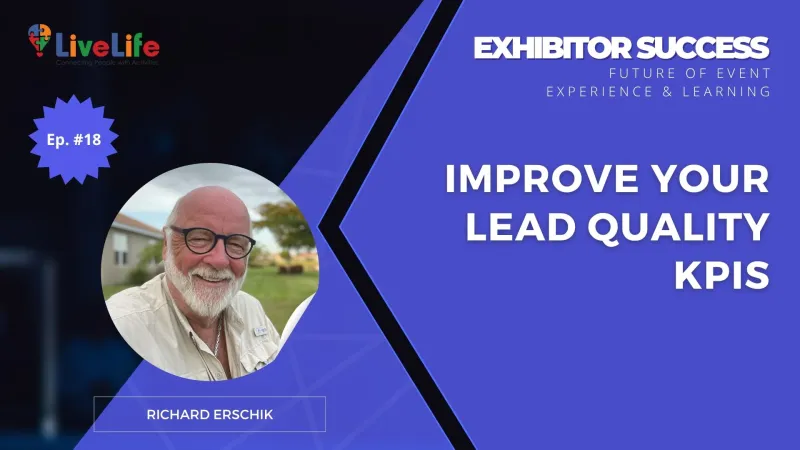
This is the summary based on The FEEL Podcast with Richard Erschik.
To bridge the gap between high lead volume and low sales conversion, start by implementing a Lead Scoring Framework before your next event. This moves your focus from "how many" to "how ready."
- Define Ideal Profiles: List specific job titles that hold buying power in your industry.
- Set Intent Criteria: Identify three qualifying questions that reveal a prospect's budget or project timeline.
- Assign Value: Give higher points to visitors with active pain points versus those just collecting marketing collateral.
Standardizing these criteria ensures your team collects data that actually helps sales prioritize their follow-up efforts immediately.
Build a Practical Lead Scoring Framework for Your Booth
To turn these standards into a working system, you need a lead scoring framework that separates "browsers" from "buyers" in real-time.
Instead of just collecting business cards, use a simple three-tier system to categorize every interaction before the visitor even leaves your booth.
Create a Three-Tier Qualification System
- Tier A (Hot): Decision-makers with an active project, available budget, and a defined timeline (3–6 months).
- Tier B (Warm): Influencers or managers researching solutions for the next budget cycle or future implementation.
- Tier C (Information Only): Students, competitors, or visitors only interested in collecting marketing collateral or merchandise.
Equip Your Team with Targeted Discovery Questions
The quality of your data depends on the questions your team asks during the initial conversation.
Move away from "Can I help you?" and use intent-focused questions to gauge lead quality quickly:
- "What specific challenge brought you to the show today?"
- "How are you currently handling [Problem X] in your workflow?"
- "Who else in your organization is involved in evaluating new solutions for this?"
Documenting these answers immediately allows you to rank leads based on actual business potential rather than just booth traffic volume.
Why High Lead Volumes Often Lead to Zero Revenue
Once you identify who is involved in the decision-making process, it becomes clear why simply counting heads is a dangerous strategy for growth.
The gap between a "scanned badge" and a "signed contract" is usually filled with noise. When marketing celebrates 500 scans, sales often sees 500 names with no context, leading to immediate friction between departments.
The Hidden Cost of Unfiltered Data
High volumes of unqualified leads create a massive operational bottleneck. If your team spends weeks chasing visitors who were only interested in booth giveaways, they lose the critical window to engage actual buyers.
This dilution of effort is why many trade show investments feel like a loss, despite a "busy" booth.
Why Sales Teams Ignore Trade Show Leads
Sales teams prioritize leads based on the likelihood of closing. Without data on budget or authority, trade show leads are treated no differently than cold calls.
The lack of specific sales-qualified lead criteria during the event means the most valuable opportunities stay buried under a mountain of generic contact info.
Build a Lead Scoring Framework That Filters Noise
To stop treating hot leads like cold calls, you need a grading system that happens in real-time. This shifts your focus from how many badges you scanned to how many buyers you actually found.
Create a Simple In-Booth Scoring System
Assign a point value to specific behaviors or answers during the conversation. A visitor who asks about integration is worth more than someone just grabbing a branded pen.
- Hot (A): Immediate project, defined budget, decision-maker status.
- Warm (B): Researching for next quarter, has specific technical questions.
- Cold (C): Just browsing, no current project, or looking for general information.
Capture Intent Data Through Specific Questions
Use your lead capture app to mandate three "intent" fields. Instead of an open "Notes" box, use dropdowns for "Implementation Timeline" and "Current Pain Point." This data gives sales the context they need for a personalized follow-up.
Let Prospects Qualify Themselves After the Show
Deploy an automated email within 24 hours that offers two distinct resource paths. One link for a "Market Overview" and another for a "Pricing & ROI Calculator." Those who click the calculator are signaling high intent and should be prioritized immediately.
A Framework for Vetting Trade Show Leads Before the Sales Handoff
Once marketing takes ownership of the post-show follow-up, the focus shifts to filtering the noise through a structured vetting process. This prevents sales teams from wasting time on "swag hunters" and keeps them focused on high-intent prospects.
Define Your Sales-Ready Criteria
Before the event ends, establish exactly what constitutes a qualified lead. Use a simple checklist to score interactions based on specific behaviors and firmographics:
- Authority: Does the contact have decision-making power or significant influence?
- Need: Did they identify a specific pain point your product solves?
- Timeline: Are they looking for a solution within the next 3–6 months?
- Engagement: Did they request a specific follow-up action, like a demo or a pricing sheet?
Implement a Tiered Scoring System
Assign every lead a grade (A, B, or C) based on their booth interaction. Tier A leads get an immediate personal call, while Tier C leads enter an automated marketing nurture sequence. This ensures your lead qualification process remains rigorous, only passing vetted opportunities to the sales floor to maximize ROI.
A Step-By-Step Framework for Scoring Your Trade Show Leads
To turn these categorized tiers into actual revenue, you need a repeatable workflow that triggers the moment the booth closes. Relying on memory or manual sorting days later is where most high-quality opportunities are lost.
1. Assign Immediate Point Values
Use your lead capture tool to tag prospects based on specific "quality signals" during the conversation. For example, a visitor requesting a live demo gets 10 points, while someone just scanning for a giveaway gets 2.
2. Establish the 24-Hour Follow-Up Rule
Your Tier A prospects expect a personal touch while the conversation is still fresh. Use a tiered response timeline to stay organized:
- Tier A: Personal email or phone call within 24 hours.
- Tier B: LinkedIn connection and a specific case study sent within 48 hours.
- Tier C: Entry into an automated educational email sequence within 3 days.
3. Sync with Your CRM System
Avoid the "spreadsheet trap." Upload leads directly into your CRM with the event name and lead grade as mandatory fields. This allows you to track exactly which events produce the highest conversion rates over time.
A Practical Framework to Finalize Your Lead Quality Strategy
Once your CRM is capturing lead grades and event sources, you can shift from guessing to measuring. This final step closes the loop between marketing data and sales reality.
To consistently improve trade show lead quality KPIs, you must audit the transition from the booth to the sales pipeline using this post-event framework:
- Review lead-to-opportunity velocity: Measure how much faster "Grade A" leads move to a discovery call compared to non-graded leads.
- Conduct a 30-day sales debrief: Ask your sales team if the "qualified" criteria used at the booth matched the actual quality of the conversations they had afterward.
- Calculate cost per qualified lead: Move beyond "cost per lead" and focus on the investment required to secure one high-intent prospect.
- Refine your qualifying questions: If "Grade A" leads are stalling, your booth questions might be too broad; tighten them for the next show.
Success in high-stakes exhibitions comes down to how well you filter noise before it reaches your sales team’s desk. By treating every event as a data point, you turn a one-off marketing expense into a predictable lead generation engine.
If you are finding it difficult to translate booth traffic into measurable revenue, a structured review of your lead capture criteria can help identify exactly where your ROI is leaking.

Frequently Asked Questions
Q1: Why do high trade show lead volumes often fail to generate revenue?High volumes create operational bottlenecks where sales teams waste time chasing "swag hunters" instead of buyers. Without a lead scoring framework, hot prospects are buried under generic contact data, causing sales to treat every lead like a cold call and miss the critical 24-hour follow-up window.
Q2: How do I build a lead scoring framework for a trade show booth?Implement a three-tier system (A, B, C) directly in your lead capture app. Categorize visitors based on authority, budget, and timeline before they leave the booth. Assign higher point values to specific high-intent behaviors, such as requesting a live demo or an ROI calculator, versus simply scanning for a giveaway.
Q3: What are the best discovery questions to gauge lead intent quickly?Move away from "Can I help you?" and use targeted questions like: "What specific challenge brought you to the show today?" or "Who else in your organization is involved in evaluating new solutions?" Use dropdown fields in your capture tool for implementation timelines to ensure data is structured for immediate sales prioritization.
Q4: How does a tiered lead qualification process improve sales conversion?A tiered process ensures resources are allocated based on lead temperature. Tier A leads receive a personal phone call within 24 hours, while Tier C leads are moved to an automated educational nurture sequence. This prevents your sales team from being spread too thin and keeps them focused on prospects with active projects.
Q5: What is the biggest mistake companies make when handing leads to sales?The most common error is the "spreadsheet trap"—sending sales a list of names without context or intent data. Leads should be synced directly to your CRM with assigned grades and specific pain points documented. This allows sales to skip the "introduction" phase and move straight into a personalized discovery call.

Banner

Write a comment