
How to Allocate Trade Show Budget Without Waste
- Proper budget splits protect your cash for the activities that actually generate sales revenue
- Digital pre-show ads book meetings with key buyers before you even arrive at the venue
- Digital lead tools identify ready-to-buy prospects and shorten your overall sales cycle
- Dedicated follow-up resources prevent expensive leads from disappearing once the trade show ends
- Instant data syncing removes manual paperwork and gets your sales team closing deals faster
- Better booth technology turns your display into a reliable filter for high-quality leads
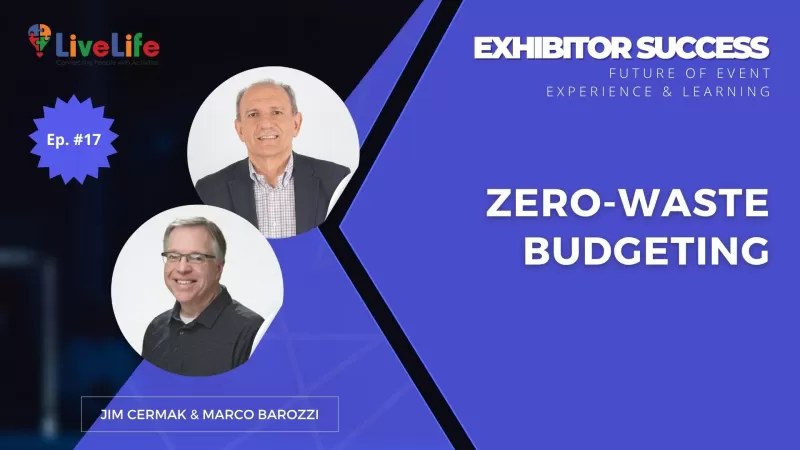
This is the summary based on The FEEL Podcast with Jim Cermak & Marco Barozzi.
To stop the financial leak, start by applying the 30-30-40 framework to your total investment. This simple structure prevents common overspending on aesthetics while neglecting the activities that actually drive revenue.
- 30% for booth space costs: This covers your floor rental and basic utilities.
- 30% for exhibit design: Focus on high-impact physical assets and logistics.
- 40% for promotion: Dedicate this to pre-show marketing and staff training.
Mapping your spend this way ensures you aren't just buying floor space, but actively buying the attention of the right buyers.
The Financial Trap of the All-In Booth Design
Focusing purely on the physical footprint often leads to overlooking the hidden costs of exhibitions that actually drive results.
Many businesses pour their entire budget into a "wow-factor" booth, leaving almost nothing for the activities that turn visitors into leads.
This lopsided spending creates several critical issues that drain your marketing budget and ruin your potential ROI:
- The Vanity Metric Trap: Paying a premium for high-traffic zones filled with "swag hunters" instead of your actual decision-makers.
- Zero Post-Show Buffer: Spending so much on the floor space that there is no capital left for the critical follow-up phase.
- The Logistics Sinkhole: Unexpected shipping, drayage, and electricity fees that eat into your actual marketing funds.
- The "Ghost" Booth: Having a stunning display but no budget to train staff or run pre-show ads to tell people you are there.
When the show ends, these companies are left with a beautiful structure but no measurable pipeline to justify the massive expense.
By failing to account for these leaks, your trade show marketing budget allocation becomes a sunk cost rather than a strategic investment.
How to Distribute Your Trade Show Investment Effectively
To prevent your budget from becoming a sunk cost, you must move away from "booth-first" spending. Use this framework to ensure every dollar supports actual lead generation.
Apply the 30-30-40 Allocation Rule
Rather than exhausting your funds on the floor space alone, distribute your resources across these three critical phases to ensure a measurable pipeline:
- 30% Pre-Show Promotion: Invest in targeted LinkedIn ads and digital outreach to book meetings before the doors even open.
- 30% On-Site Experience: Focus on high-quality staff training and lead capture technology rather than just expensive furniture.
- 40% Post-Show Nurturing: Reserve a significant portion of your budget for immediate follow-ups and personalized content for new prospects.
Categorize by Strategic Impact
Audit your expenses by grouping them into "Fixed Logistics" and "Variable Growth" costs. This helps you see where you can trim fat to fuel results.
Prioritize spending on elements that directly lower your cost per lead, such as interactive demos or better qualification tools, over purely aesthetic booth upgrades.
Investing in Engagement Tools That Filter High-Intent Visitors
Once you prioritize lead quality over volume, your budget allocation must shift toward tools that capture visitor intent. Successful exhibitors move away from passive spending on large floor spaces and redirect those funds into interactive systems that qualify prospects on the spot.
This strategy works because it solves the biggest post-show problem: a bloated list of cold leads. By investing in digital qualification tools or interactive demos, you create a high-performance filter that identifies who is ready to buy and who is just browsing.
- Pre-show digital targeting: Ensures your specific target persona knows exactly where to find you.
- Lead qualification tech: Captures specific pain points and budget authority in real-time.
- Interactive touchpoints: Replaces static posters with experiences that track what features interest the visitor most.
Focusing your spend here ensures the booth functions as a strategic filter. Instead of just "being there," you are actively using your budget to shorten the sales cycle by delivering high-intent data directly to your sales team.
Investing in Digital Engagement Over Physical Decor
Once your team is scaled to your space, the focus must shift from how the booth looks to how it performs as a data engine.
High-performing exhibitors prioritize lead retrieval systems and interactive touchpoints over expensive, one-time-use physical structures.
This strategic shift works because it transforms your booth from a passive display into an active filter for high-intent prospects.
- Real-time Qualification: Digital tools allow visitors to self-select their interests, saving your team hours of manual sorting.
- CRM Integration: Direct data flow ensures that hot leads do not get lost in a stack of business cards after the show ends.
- Scalable Insights: Technology provides hard data on which parts of your presentation actually captured visitor attention.
By allocating budget to these engagement layers, you ensure that every dollar spent on floor space is backed by a system that captures measurable value.
This creates a seamless bridge between the physical interaction on the floor and the digital follow-up required to eventually close the sale.
A Practical Framework for Trade Show Budget Allocation
To turn this bridge into a functioning sales engine, you need a concrete framework for distributing your capital. Instead of guessing, apply a structured trade show expense breakdown to ensure every phase of the event is funded.
The 40-30-30 Rule for Resource Distribution
A common mistake is sinking 80% of the budget into the physical booth. To capture actual value, consider this balanced allocation model:
- 40% Core Infrastructure: Floor space rental, booth design, and basic utilities.
- 30% Promotion and Engagement: Pre-show digital ads, lead magnets, and interactive technology for the booth.
- 30% Logistics and People: Staff travel, specialized training, and post-show lead management systems.
Your Essential Budgeting Checklist
Before committing to a specific show, run your numbers through this priority list to ensure you aren't leaving gaps in your sales funnel:
- Digital Visibility: Budget for LinkedIn targeting to reach attendees before they arrive.
- Lead Capture Tech: Avoid paper forms; invest in software that syncs with your CRM.
- Follow-up Automation: Set aside funds for the content and tools needed to reach out within 48 hours.
A Practical Framework To Finalize Your Trade Show Budget
With your lead capture and follow-up tools selected, the final step is consolidating these costs into a repeatable trade show budget checklist that ensures every dollar supports a measurable outcome.
- Allocate 15% to Post-Show Engagement: Do not spend your entire budget on the booth; reserve funds for the high-speed follow-up content and CRM workflows discussed earlier.
- Map Line Items to KPIs: If a cost doesn't directly contribute to lead volume, brand awareness, or data collection, reconsider its necessity.
- Set a 10% Contingency Fund: Unexpected on-site logistics or last-minute promotional opportunities often arise; having a buffer prevents budget overruns.
- Audit Your Tech Stack: Ensure your CRM integration costs are accounted for upfront to avoid the "hidden cost" of manual data entry delays after the event.
The biggest gap in exhibition planning isn't the size of the budget, but the lack of trade show ROI tracking from the moment the doors open.
If you are unsure how to balance your specific industry costs with these performance goals, a structured audit of your previous event data can provide the clarity needed for your next show.

Frequently Asked Questions
Q1: How should I structure my trade show budget allocation to ensure a positive ROI?Apply the 30-30-40 framework to prevent overspending on aesthetics. Allocate 30% for floor space and utilities, 30% for exhibit design and logistics, and 40% for pre-show promotion and staff training. This balance ensures you aren't just buying space, but actively buying the attention of the right buyers.
Q2: What is the most common mistake in a trade show expense breakdown?The biggest financial leak is "booth-first" spending, where the entire budget is exhausted on the physical footprint. This leaves zero capital for post-show follow-up or lead nurturing. To avoid this, reserve at least 15% of your total investment specifically for immediate post-event engagement and CRM integration.
Q3: Why should I shift funds from booth decor to lead qualification technology?Expensive decor is a vanity metric that attracts "swag hunters" rather than decision-makers. Investing in digital qualification tools and interactive demos transforms your booth into a data engine. These tools filter high-intent visitors and capture specific pain points in real-time, delivering a pre-qualified pipeline to your sales team.
Q4: How do I prevent unexpected logistics costs from draining my trade show budget allocation?Audit your "Fixed Logistics" vs. "Variable Growth" costs early. Always set aside a 10% contingency fund for "logistics sinkholes" like drayage, electrical fees, and last-minute shipping. If costs spike, trim from the physical booth upgrades rather than cutting the promotional budget that drives traffic to the space.
Q5: What are the essential line items for a high-performance "Ghost-free" booth?To ensure your booth performs, prioritize three areas: pre-show digital targeting (LinkedIn ads) to book meetings in advance, lead capture software that syncs directly with your CRM, and specialized staff training. These elements ensure that even a smaller physical footprint generates more measurable value than a massive, passive display.

Banner

Write a comment