
How to Train Sales Team for Exhibitions and Close More Leads
- Immediate attention for high-value decision-makers prevents your best prospects from walking away unnoticed.
- Stronger booth engagement stops potential buyers from walking away and starts more sales conversations.
- Faster follow-up times for hot leads occur when teams score prospects immediately after every conversation.
- Higher conversion rates come from using specific visitor data to send personalized post-show emails.
- Increased buyer trust results from smooth team hand-offs that prevent confusing or duplicate follow-up calls.
- Higher revenue returns happen when staff focus on qualified buyers instead of casual swag hunters.
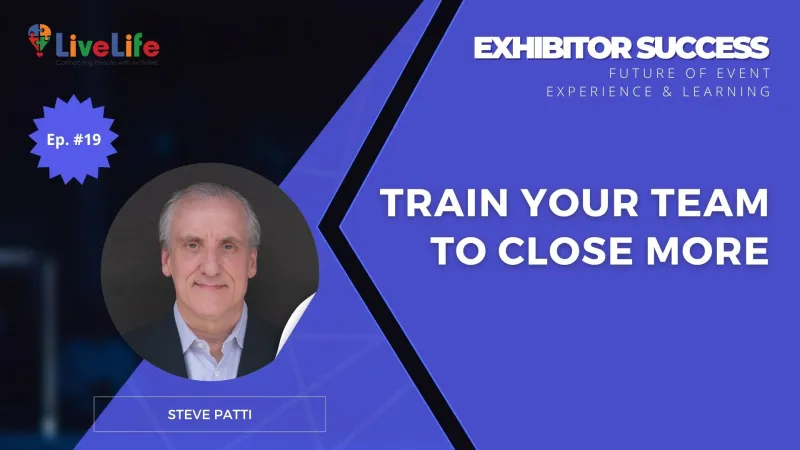
This is the summary based on The FEEL Podcast with Steve Patti.
Building that trust starts with a clear operational framework. Use this booth staff training checklist to align your team before the doors open:
- Role Assignment: Designate specific members as "Engagers" to greet passersby, and "Qualifiers" to filter high-value prospects for deeper conversations.
- The 10-Second Pitch: Drill a concise opening that addresses a specific visitor pain point rather than listing product features.
- Lead Capture Drill: Run live simulations using your digital scanning tools to ensure zero technical friction during peak exhibition hours.
Why Traditional Sales Skills Fail on the Trade Show Floor
Perfecting a pitch and testing your scanners is only half the battle. The real friction often stems from a fundamental misunderstanding of exhibition engagement versus standard office-based sales.
In a typical B2B setting, you have the luxury of time and a captive audience. At a trade show, the environment is chaotic, loud, and physically draining. When teams aren't specifically calibrated for this pace, they default to "passive hosting"—waiting for someone to ask a question rather than proactively steering the conversation.
This happens because the psychological pressure of a crowded hall causes staff to retreat into comfortable, low-stakes conversations. Without a framework to handle high-speed interactions, your best sales people often spend thirty minutes talking to a "tire kicker" while three high-value decision-makers walk past the booth unnoticed.
The gap isn't a lack of product knowledge; it is a failure to adapt booth staff behavior to a high-volume, low-attention environment where every second of eye contact is a finite resource.
The Friction of an Uncoordinated Booth Floor
When eye contact is your most limited resource, a lack of coordination creates a visible friction that prospects can feel. Without a practiced flow, your staff operates in silos rather than as a synchronized unit.
The Failure of Booth Staff Simulation
Without practicing high-traffic scenarios, teams often suffer from "tunnel vision." They stay buried in a single conversation with a low-value visitor while high-value decision-makers hover nearby and eventually walk away unnoticed.
Staff who haven't practiced handling "disinterested" or "phone-distracted" behavior often lose confidence. This results in defensive body language that actively repels potential leads from ever entering the booth space.
The Broken Baton Pass in Lead Handoffs
The "four business card" mistake is a classic symptom of a team without clear roles. When a prospect leaves with multiple contacts, the follow-up process becomes a fragmented mess that signals internal disorganization.
A junior staffer who cannot smoothly transition a technical query to a senior director often looks "panic-stricken" under pressure. This momentary lapse in a professional handoff is enough to make a qualified buyer doubt your team’s overall competence.
The High Cost of Treating Every Booth Visitor the Same
This lack of composure during a handoff often masks a deeper, more expensive issue: the inability to filter the crowd. When your team struggles to manage the basic flow of conversation, they naturally default to treating every visitor with the same level of intensity.
This "first-come, first-served" approach is a disaster for your exhibition ROI. While your best sales reps are stuck explaining basic product features to a student or a competitor’s researcher, the C-level executive from a multinational firm walks past your booth unnoticed.
The failure to identify high-intent signals early leads to several critical failures:
- Diluted Focus: Staff spend 80% of their energy on "swag hunters" who have zero buying power.
- CRM Pollution: Your database gets filled with "dead" leads, making it nearly impossible to tell if a lead is worth following up later.
- Missed Opportunities: High-value prospects feel ignored because your team is too busy scanning badges of low-priority visitors.
Without a clear method to rank interest in real-time, your team ends up collecting quantity over quality. This creates a massive bottleneck for the sales department, who must eventually sift through hundreds of cold contacts to find the few that actually matter.
The High Cost of Generic Lead Data
When your team isn't trained to categorize conversations on the spot, you don't just lose time—you lose the momentum built during the event.
Back at the office, your sales reps are often handed a spreadsheet of names with zero context. They cannot distinguish between a CEO ready to sign and a casual visitor just looking for free merchandise.
The "One-Size-Fits-All" Follow-Up Trap
This lack of clarity forces your team into a cycle of generic outreach that kills conversion rates:
- Sending the same "Thanks for visiting" email to every contact regardless of their needs.
- Wasting high-value sales hours calling low-intent "tire-kickers."
- Allowing hot prospects to go cold because they were buried at the bottom of a disorganized list.
Without a specific system for how to tell if a lead is worth following up immediately, the energy from the trade show floor evaporates. The result is a sales team that views exhibition leads as "low quality," leading to a total breakdown in the post-show process.
A Framework for Instant Lead Scoring at the Booth
To stop the post-show energy from evaporating, your team needs a scoring system that takes less than ten seconds to apply after a conversation ends.
This simple habit prevents the "low quality" label from sticking to leads that actually have high potential but get lost in the shuffle.
The ABC Lead Scoring Framework
Train your staff to categorize every badge scan or business card immediately using these lead qualification criteria:
- Category A (Hot): Has an immediate need, a defined budget, and the authority to buy. These require follow-up within 48 hours.
- Category B (Warm): Interested but has a longer timeline (6–12 months) or needs internal approval. These enter a specific nurture sequence.
- Category C (Information): Just browsing or looking for general industry knowledge. These are low priority for sales but good for long-term marketing.
Standardizing the Discovery Questions
Instead of passive openers, train your team to use three specific questions to gauge intent quickly:
- "What specific challenge brought you to the show today?"
- "How are you currently handling [Problem X]?"
- "What is your timeline for making a decision on a new solution?"
Documenting these answers directly on the lead capture app ensures the sales team has the context they need to start a real conversation later.
A Three-Step Framework to Standardize Your Exhibition Sales Protocol
Having the right tools is only half the battle; your team needs a repeatable rhythm to use them effectively. Transitioning from manual notes to digital lead capture requires a shift in how your staff manages booth flow.
- Role-play the "Timeline" question: Practice asking about decision windows naturally so it feels like a consultation rather than an interrogation.
- Sync the tech stack: Ensure every team member can log a lead and tag the "Context" field in under 60 seconds to avoid booth bottlenecks.
- Define the 24-hour hand-off: Establish exactly who owns the data once it hits the CRM to prevent the "post-show silence" that kills most deals.
When these steps become second nature, your exhibition presence shifts from a simple branding exercise to a high-performance sales engine with measurable output.
If you are looking to refine your team’s approach or need a structured way to audit your current lead capture system, we can help you map out a clear strategy for your next event.

Frequently Asked Questions
Q1: Why do traditional sales techniques often fail during trade show engagements?Standard B2B sales rely on a captive audience and ample time, whereas trade shows are chaotic, high-volume environments. Staff often default to "passive hosting," waiting for questions rather than proactively steering conversations. This leads to "tunnel vision," where reps spend too much time with low-value visitors while high-intent decision-makers pass by unnoticed.
Q2: How can booth staff training prevent the "broken baton pass" during lead handoffs?Assign specific roles like "Engagers" to greet passersby and "Qualifiers" to filter prospects. Use live simulations to practice transitioning a technical query from a junior staffer to a senior director. A synchronized handoff maintains professional composure and prevents the prospect from receiving multiple, fragmented follow-ups from different team members.
Q3: What is the most effective way to manage exhibition lead capture for better ROI?Adopt the ABC scoring framework immediately after every interaction. Category A leads have immediate needs and authority, requiring follow-up within 48 hours. Category B are for long-term nurturing, and Category C are for general marketing. Tagging these categories in your digital tool within 60 seconds prevents CRM pollution and ensures the sales team prioritizes high-value targets.
Q4: What specific discovery questions should staff use to filter high-traffic crowds?Avoid generic openers and use intent-focused questions: "What specific challenge brought you to the show today?", "How are you currently handling [Problem X]?", and "What is your timeline for making a decision?" These questions force visitors to reveal their pain points and buying authority quickly, allowing your team to rank interest in real-time.
Q5: How do you avoid the "one-size-fits-all" follow-up trap after an event?The gap usually occurs because lead data lacks context. Ensure every team member logs specific answers to discovery questions directly into the lead capture app. This allows your sales department to send personalized outreach based on the prospect's actual needs rather than a generic "thanks for visiting" email that kills conversion rates.

Banner
Write a comment