
Improving Sales Accountability for Trade Show Leads
- Faster response times ensure sales teams contact high-intent prospects while the conversation is still fresh
- Clean CRM data eliminates messy spreadsheets and prevents valuable contact information from being lost
- Consistent lead follow-up stops reps from cherry-picking and ensures every viable opportunity gets handled
- Increased deal velocity happens when a strict 48-hour follow-up window keeps show floor momentum alive
- Long-term pipeline growth occurs when automated sequences turn cold badge scans into future customers
- Accurate ROI reporting proves exactly which events generate revenue and which ones waste money
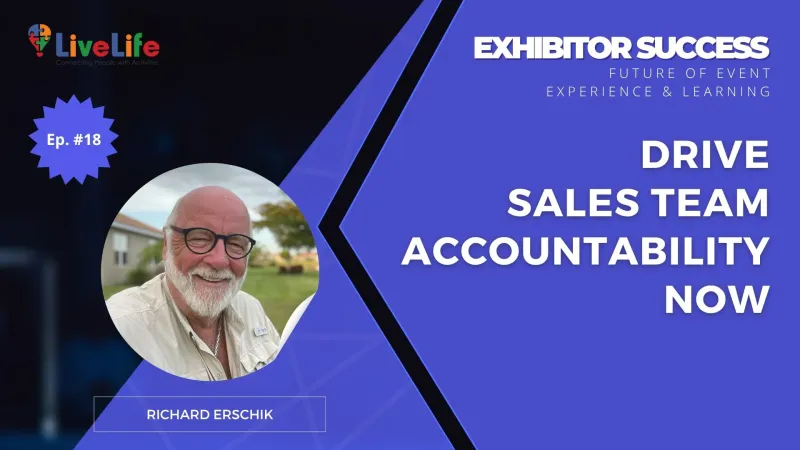
This is the summary based on The FEEL Podcast with Richard Erschik.
Building a framework for real-time lead grading - To stop leads from getting lost in messy spreadsheets, you need a standardized lead capture system that grades prospects while the conversation is still fresh.
Implement these three steps immediately on the show floor to ensure data integrity:
- Define Mandatory Fields: Require sales staff to record specific pain points and budget, not just contact details.
- Set Scoring Tiers: Use a simple A-B-C system based on authority and project timeline.
- Automate Syncing: Push data to your CRM every hour to give management instant visibility into lead quality.
Why Trade Show Leads Often Disappear Into a Black Hole
Once data is pushed to the CRM, a new challenge emerges: the human element of sales follow-up. Even with the best syncing tools, accountability often breaks down because of how sales teams perceive event-sourced data.
The primary reason accountability fails is the natural tendency for sales teams to "cherry-pick" immediate opportunities. When a rep sees a list of new leads, they instinctively hunt for the small percentage ready to buy today, often neglecting the majority of the pipeline that requires consistent nurturing.
The Conflict Between Short-Term Quotas and Long-Term Nurturing
Sales performance is usually measured by monthly or quarterly targets. Because trade show leads often involve a longer sales cycle, they are frequently dismissed as low quality simply because they aren't ready to sign a contract immediately.
- The Attribution Gap: Without a locked-in digital trail, it becomes difficult to prove that a closed deal six months later actually originated at the booth.
- Information Decay: The context of a conversation fades quickly; the longer a lead sits without a status update, the less likely a salesperson is to take ownership of it.
- Subjective Reporting: Manual updates allow for personal bias, where reps may downplay event leads to prioritize their own self-sourced prospects.
This disconnect creates a cycle where marketing feels the event was a success based on volume, while sales feels the event was a waste of time based on immediate conversion.
How to Build a High-Accountability Lead Handoff System
To move past subjective reporting and "cherry-picking," you need a standardized process that forces transparency. This framework ensures the high-intent 11% are prioritized without getting lost in manual spreadsheets.
Standardize Your Lead Scoring Criteria
Replace vague notes with a binary qualification checklist. Before a lead leaves the booth, the staff must answer three "yes/no" questions regarding budget, timeline, and authority. This removes personal bias from the initial data entry.
Implement the 24-Hour Digital Sync
- Eliminate manual entry: Use a lead capture app that syncs directly to your CRM to prevent data decay.
- Instant notification: Set up automated alerts for sales reps the moment a "High Intent" lead is tagged.
- Timestamping: Track exactly when a lead was assigned to measure the speed of the first touchpoint.
Establish a 48-Hour Feedback Loop
Accountability fails when there is no "closing the loop." Require sales reps to update the lead status within 48 hours of the event's end. This identifies exactly where the sales follow-up timeline is breaking down and keeps the momentum from the show floor alive.
Closing the Accountability Gap Through Quality Over Quantity
Accountability often collapses because sales teams perceive trade show leads as low-quality "badge scans" rather than genuine opportunities.
To fix this, the solution lies in shifting the focus from lead volume to specific intent signals captured during the conversation.
When sales knows a lead has been vetted against pre-agreed criteria, the psychological barrier to following up disappears.
This alignment ensures that the 48-hour update window mentioned previously isn't viewed as a administrative chore, but as a high-priority revenue task.
Prioritizing High-Intent Interactions
A successful strategy involves grading booth interactions based on the depth of the conversation rather than just contact information.
This creates a natural hierarchy in your CRM, allowing sales to tackle "hot" prospects first without feeling overwhelmed by a list of generic names.
Leveraging Real-Time Visibility
By using the CRM as the single source of truth, accountability becomes a byproduct of transparency rather than a result of constant reminders.
When lead progress is visible to both marketing and management, it is easier to identify exactly where the momentum is stalling without the need for micromanagement.
This visibility transforms the post-show process from a guessing game into a data-driven pipeline where every lead has a clear owner and a defined next step.
How to Build a High-Accountability Nurture Workflow
Once you have visibility over your pipeline, the next step is automating the heavy lifting for leads that aren't ready to buy today.
This prevents "lead leakage" where potential deals are forgotten simply because they didn't have an immediate project on the table.
Segment leads by conversation intent
- Immediate: Direct hand-off to sales for a discovery call within 48 hours.
- Educational: Add to a 6-month marketing track focused on industry insights and problem-solving.
- Future Project: Set a CRM reminder for three months before their stated project timeline.
Deploy automated educational sequences
Create a series of three emails that address the specific pain points heard most often during booth conversations.
Instead of a generic "checking in" email, provide a case study or a checklist that helps them solve a problem related to your product.
Set triggers for sales re-entry
Define "hand-raiser" behaviors, such as clicking a pricing link or downloading a technical spec sheet from your nurture emails.
When these triggers occur, the lead should automatically move back to the sales-ready list for immediate human follow-up.
Operationalizing Revenue Attribution for Every Lead
Once you have identified your active hand-raisers, you must close the loop by linking their behavior directly to your bottom line. This turns "booth activity" into "verifiable revenue."
Create a Closed-Loop Reporting System
To ensure total sales accountability, follow this framework to audit your results:
- Source Tagging: Ensure every lead is tagged with the specific event name and year in your CRM before the show ends.
- The PO Audit: At 90 and 180 days post-show, run a report matching all new Purchase Orders against your original trade show lead list.
- Revenue Attribution: Calculate the total contract value of these matched leads to determine your actual event ROI.
Audit Your CRM for Lead-to-Deal Matching
Stop relying on anecdotal evidence from the sales team about how the event "felt." Instead, require a mandatory "Lead Source" field update for every deal created in the following quarter.
This data-first approach removes the guesswork. It forces a clear look at which leads converted into paying customers and which ones stalled, allowing you to refine your follow-up intensity based on hard numbers rather than subjective feedback.
Steps to Standardize Your Lead Handoff Process
With these hard numbers in hand, you can move from observation to execution. Accountability usually fails because the transition from the booth to the CRM is too vague.
To fix this, implement a strict 48-hour lead handoff process. Marketing should clean and upload data within 24 hours, and Sales must initiate the first meaningful contact within the next 24.
Use a simple status-tagging system in your CRM to keep the momentum high:
- Hot: Immediate call required for active decision-makers.
- Warm: Specific case studies or pricing sent to info-seekers.
- Cold: Long-term email nurture for future potential.
Schedule a "Post-Show Audit" exactly 30 days after the event. Review which leads moved to the next stage and identify exactly where the friction occurred in the follow-up chain.
This structure ensures that the investment you made in the exhibition booth translates into actual pipeline growth rather than just a stack of business cards.
If you are seeing a gap between booth scans and closed deals, a structured review of your current tracking system can help identify where the revenue is leaking.

Frequently Asked Questions
Q1: How do I stop sales reps from cherry-picking trade show leads?Replace vague notes with a binary qualification checklist. Force booth staff to answer specific yes/no questions regarding budget, authority, and timeline before the lead is saved. When sales reps see objective data instead of subjective "good talk" comments, they are more likely to follow up on vetted opportunities.
Q2: What is the most effective way to implement real-time lead grading at an event?Use a lead capture app that syncs to your CRM every hour rather than waiting until the show ends. Define mandatory fields for pain points and project urgency, then assign an A-B-C tiering system. This ensures high-intent prospects are flagged for immediate action while the conversation is still fresh in the prospect's mind.
Q3: Why do trade show leads often fail to convert after being pushed to the CRM?The primary cause is information decay and the lack of a 48-hour feedback loop. If sales reps aren't required to update a lead's status within two days, the context of the booth conversation fades, and the lead is often ignored in favor of self-sourced prospects. Transparency in the CRM prevents these leads from falling into a black hole.
Q4: How does a standardized lead grading system solve the attribution gap?By tagging every lead with a specific event source and intent grade at the moment of capture, you create a permanent digital trail. This allows you to run a PO audit at 90 or 180 days, matching new purchase orders against your original event list to prove exactly which deals originated at the booth.
Q5: How do I handle event leads that arenSegment these leads into automated, educational nurture tracks rather than handing them directly to sales. Use three-part email sequences that address specific pain points recorded during the show. Set CRM triggers to alert a salesperson only when the prospect performs a "hand-raiser" action, such as clicking a pricing link or downloading a technical spec sheet.
Q6: What is the biggest mistake companies make with post-show lead handoffs?The biggest mistake is focusing on lead volume over specific intent signals. Sending a massive, unvetted list of "badge scans" to sales creates a psychological barrier to follow-up. Instead, filter the list to prioritize the top 10-15% of high-intent interactions for immediate human contact, while automating the rest.

Banner

Write a comment