
Event Technology: The Strategic Engine Driving the Future of Exhibitions
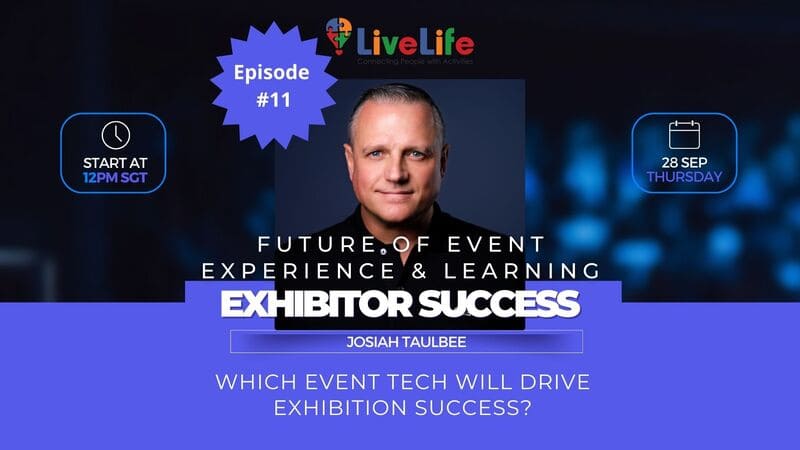
Why event technology feels broken (even when it shouldn't)? Event technology promises efficiency, clarity, and data-driven growth.
This is the summary based on The FEEL Podcast with Josiah Taulbee.
Yet in real life, many organisers feel the opposite: The tech stacks feel scattered, the workflows feel heavier, exhibitors complain about poor ROI, and leadership keeps asking, "Why are we still not seeing improvement?"
If you've ever felt this disconnect… you're not alone.
During The FEEL #11: Which Event Tech Will Drive Exhibition Success?, Josiah Taulbee uncovered a truth rarely spoken in the industry:
"Event technology doesn't fail because it's bad. It fails because the ecosystem behind it isn't understood."
This article is your strategic, emotional, and deeply practical guide to transforming how you view, choose, integrate, and optimise event technology.
Let's begin with the one shift that changes everything: Event technology is not a tool. It's an ecosystem.
Why EventTech Matters More Than Ever
The exhibition industry is shifting faster than at any point in history.
Hybrid expectations, attendee data, AI-driven matchmaking, sustainable operations, exhibitor analytics, and real-time insights are no longer "nice to have".
They are baseline expectations.
But most organisers still treat event technology as a checklist — not a strategic foundation.
The core problem is too much innovation and too little structure.
Hundreds of tools exist, yet:
- data doesn't connect
- workflows aren't aligned
- teams choose tech emotionally (not strategically)
- vendors use inconsistent terminology
- organisers don't know how to evaluate platforms
- exhibitors operate with outdated assumptions
The FEEL #11 podcast highlighted a wake-up call: Without a classification system, event technology can't evolve.
This is exactly why the Certified EventTech Classification Initiative (CECI) exists — to bring clarity to a chaotic landscape.
Understanding EventTech: More Than Just Software
What is event technology? Event technology is a multi-layer system made of tools, people, hardware, integrations, services, and data models.
The three layers of event technology:
Layer 1 — Software
Registration, mobile apps, match-making, CRM sync, analytics dashboards, lead retrieval, virtual platforms.
Layer 2 — Hardware
Smart badges, scanning devices, kiosks, IoT sensors, digital signage, sound & lighting systems.
Layer 3 — Services
Integration support, onboarding, on-site operation teams, data cleaning, custom reporting, hardware set-up.
Most organisers think only about software. This is why your "stack" feels incomplete.
Once you see event technology as an ecosystem, every decision becomes clearer.
The Chaos of Today's EventTech Landscape
Across the industry:
- 1,700+ unique terms are used
- 450+ companies claim to offer "event tech"
- identical features are described differently
- buyers struggle to compare platforms
- vendors use marketing language instead of standard definitions
When organizations finally adopt a unified language, the benefits of standardizing event technology become immediately clear—from reducing confusion to accelerating platform selection and integration.
Standardisation is the only way forward. Why standardization matters? A shared taxonomy enables:
- fair comparison
- clear expectations
- trust in vendor capabilities
- better procurement decisions
- more efficient integrations
- stronger training and education
CECI's classification system is not just a framework — it is the first real attempt at universal structure in event technology.
With CECI's structure now taking shape, the industry can begin defining the next steps in event tech standardisation to ensure long-term alignment and global adoption.
The Five Dimensions of Modern EventTech
To understand event technology correctly, you must evaluate it across five dimensions. Below are the dimensions of event tech solutions:
- Lifecycle Dimension — Pre-event → In-event → Post-event. If your technology doesn't connect across all three, you will lose data, time, and momentum.
- User Dimension — Organisers, exhibitors, sponsors, attendees. Each needs different workflows and capabilities.
- Experience Dimension — Digital, physical, hybrid. The tool must support all three — not just one.
- Platform Dimension — "All-in-one" means nothing unless the platform truly unifies the user experience and data model.
- Data Dimension — This is the most important — your single source of truth.
Great event technology always aligns these dimensions.
How to Select the Right Event Technology (Without Regret)
Most painful purchases happen because organisers make decisions emotionally:
- choosing tools that look "cool"
- rushing procurement
- ignoring integrations
- not evaluating the entire user journey
Stop choosing event technology based on features. Start choosing based on outcomes.
The five-step smart event tech selection tips for organisers:
- Define success clearly — What change are you expecting? Lead capture? Visitor flow? Data insights?
- Map user personas — Exhibitors, attendees, internal teams, contractors.
- Evaluate integrations early — If it doesn't connect, it will fail.
- Build use-case scenarios — Ask vendors to demo real workflows based on your personas.
- Pilot before purchase — A 14-day structured test exposes hidden issues instantly.
This approach eliminates 80% of the industry's selection mistakes.
EventTech Management: The Most Overlooked Skill
Event technology doesn't collapse because tools break — it collapses because ownership is missing.
The six pillars of event technology management:
- Begin with outcomes — Never adopt tech without a measurable goal.
- Assign a tech champion — One person, fully accountable. No shared responsibility.
- Align people + hardware + software — Tools must work together, not alone.
- Rehearse the ecosystem — Tech rehearsals are non-negotiable for exhibitions.
- Consolidate where possible — Fewer tools = fewer failures = cleaner data.
- Build tech confidence — Train teams early. Train them often. Train exhibitors too.
Strong management turns good tools into great results.
Building a Strategic Event Data Framework
Data is the single biggest competitive advantage in exhibitions — but only when it's structured.
The 6 components of a modern event data strategy:
- Clear data objectives
What decisions will this data influence? - Mapped data sources
Registration → Badge scans → App usage → Exhibitor leads → Post-event surveys. - Unified data model
If your data is scattered, your insights will be fake. - Integration-first planning
Don't fix integration issues after the event — solve them before. - Storytelling and visualization
Data must be understood instantly by leadership. - Post-event intelligence
Insights after the event matter more than insights before it.
This is where exhibitions compete in the next decade.
Designing an EventTech Strategy That Scales
A strategy is not a document — it is alignment between purpose, tools, people, and outcomes.
The five foundations of a real event technology strategy:
- Begin with why, not what
- Audit your entire ecosystem
- Build for integration
- Measure with intention
- Establish a tech governance structure
When your strategy is strong, your technology performs effortlessly.
Where Exhibitors Should Begin Their EventTech Journey
Exhibitors often feel lost with tech. They don't know where to begin. You outlined the three best starting points for initiating an event tech strategy:
- Data Collection & Integration
Lead capture → CRM → analytics. - Visitor Experience Optimization
Make the booth simple, intuitive, and efficient. - Post-Event Intelligence
Follow-up is the real ROI — and technology drives it.
Stakeholder Mapping: The Missing Ingredient in Event Success
Mapping stakeholders saves time, reduces conflict, and increases ROI.
It clarifies:
- who influences decisions & based on what criteria?
- who owns workflows & what are their roles & responsibilities?
- who feels pain & what are their challenges & problems?
- who controls budget & what is their budget/constraint?
- who manages tech & what they need to manage?
Stakeholder mapping isn't optional. It is the blueprint for operational success.
EventTech Certification: The Future of Trust
The industry is headed toward a world where event technology must be verified — not just marketed.
Certification will unlock:
- buyer trust
- vendor accountability
- clarity in capability
- repeatability in results
CECI is building the first global standard for event technology certification.
The Power of Collective Collaboration
No vendor, organiser, or association can standardize event technology alone. Certified EventTech Classification Initiative (CECI) brings the entire ecosystem together:
- vendors
- organisers
- educators
- consultants
- associations
This collaboration will define the next decade of innovation.
Closing — The One Missing Insight You Must Not Ignore
Event technology is not just about innovation. It is about clarity, alignment, and strategy.
You now have the blueprint — but the deeper frameworks, real examples, debated perspectives, and the behind-the-scenes reasoning can only be understood by listening to the experts who shaped this conversation.
To unlock the final missing piece, you must hear the full discussion.
Watch the conversation on The Feel Podcast.
Need personalized guidance on event technology?
Follow Mike Gunawan on Linkedin

FAQ — Based on Google
Q1: What is event technology?It is the ecosystem of software, hardware, and services used to plan, operate, and analyze events and exhibitions.
Q2: Why is event technology important?It enhances experience, accelerates operations, and generates measurable ROI.
Q3: What tools are considered event technology?Registration systems, mobile apps, smart badges, lead retrieval, matchmaking, data analytics.
Q4: How do I choose the right event technology?Define goals, evaluate integrations early, map user personas, test real scenarios, and pilot the system.
Q5: What is event tech standardization?A unified classification system that allows fair comparison and shared language across the industry.
Banner
Write a comment